Nature tidbits [30th October 2025]
Google claim a significant ‘quantum advantage’ by quantum-echoes algorithms that they say is 13,000 faster than classical algorithms, but it is unclear from the nature article where and when their algorithms can be used, apparently missing to apply to realistic scientific applications… (Along with a paper on an “atom-array architecture that enables continuous operation with reloading rates of up to 30,000 initialized qubits per second while preserving coherence across a rearranged large-scale qubit array”.)
On the Trump vs. Science scene, a predicted drop in PhD admissions as an adaptation to (uncertain) Trump’s cuts, bans, visa restrictions, and other attempts at arm-bending and blackmailing (And the novelty of me receiving applications from the US, a first!) Some U.S. departments have simply cancelled PhD admissions… But some universities have so far resisted the Orange pressure. Namely, the MIT, Brown University, (good old) Penn, UCLA, the University of Virginia (albeit agreeing to a deal), Dartmouth College, and the University of Arizona in Tucson. Vanderbilt has given in. (UT Austin and Harvard seem to be continuing the discussion with the Trump administration.) Meanwhile, China is zooming past! The issue also contains articles on how fundamental science discoveries have had hugely practical consequences, in case one need argue with a sceptic.
As a less urgent issue, some researchers at Institut Pasteur in Paris identified new diseases that did not help Napoléon’s Grande Armée as it retreated from Moscow, from the DNA of 13 soldiers buried in Lithuania. (With nature failing to give credit to the painter Adolph Northen for his famous “Napoleon’s retreat from Moscow” illustrating the story, attributed to the researchers in the paper!)
In this period of ERC announcements of their grantees, an analysis of the two-digit rise in applications. Unsurprising, given the international context. Along with a decrease in funding due to a lack of adjustment against inflation since 2007. (Incidentally, I found out this week that Torsten Elßin—at the Max Planck Institute for Astrophysics—I visited once had been selected for a Synergy grant on a 3D Milky Way Atlas. Along another cosmology Synergy grant at MPA on the Epoch of Reionization.)
A runner’s must-read that starts with the statement “the human body has a ‘metabolic ceiling’ that even the most extreme athletes cannot surpass”. Which would be 2.4 times the basal metabolic rate (BMR) for extended periods—by which the authors mean 30 weeks and over!, not a half-marathon. Not so exciting a paper in the end.
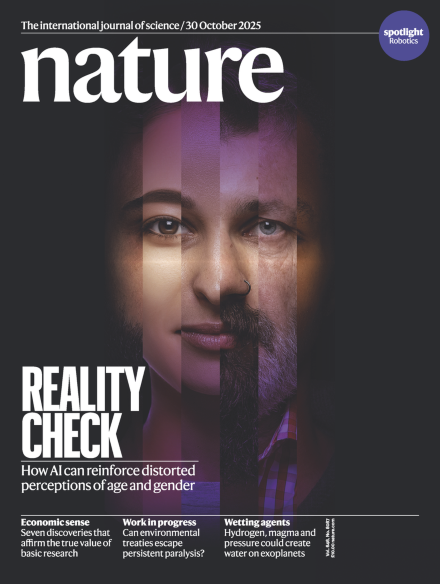
As predicted by the cover, a Royal Society meeting acknowledging the AI language models killed Turing’ test and questioning the next one. Since assessing the capacities and limitations of novel AIs and AGIs sounds more relevant and societally important. To wit, “;the Turing test of the future should question whether an AI is safe, reliable and provides meaningful benefit, he said, and should also ask who bears the cost of that benefit”. (As discussed in the book review of The Means of Prediction: How AI Really Works (and Who Benefits) by Maximilian Kasy, in the same volume. And yet another paper on AI biases.)
Leave a Reply