Archive for Turing’s test

Nature tidbits [23 October 2025]

Posted in Books, Kids, pictures, Running, Travel, University life with tags , , , , , , , , , , , , , , , , , , , , , , , , , , , , , , , , , , , , , , , , , , , , , , on November 27, 2025 by xi'an

In this October issue of nature, plenty of the “usual” topics, namely AI and Trump.2.0 wrecking balls, along with two cosmology entries that related to my trip to the early universe last week, and a pros-and-cons opposition about animal testing,

a discussion on the nature of the “little red dots” that have been recently observed and whose nature remains open, the most popular explanation (I was given during lunch) being black holes surrounded by gas (even though I cannot understand why the gas is not attracted by the black hole!) [and would have produced a more exciting cover!]

a review of the recent book Discordance: The Troubled History of the Hubble Constant by Jim Baggott, entitled Why we still don’t understand the Universe — even after a century of dispute! A review that regrets that more time is spent on the Hubble “constant” (which varies with time!) rather than more controversial issues like dark matter and dark energy (And strangely bemoans that the book is focussed on scientific developments, missing sociological ones. Duh?! (Bonus for a picture of suit-and-tie Edwin Hubble sitting at the centre of a telescope),

two entries on the well-being [or lack thereof] of PhD students, with nothing particularly surprising (eg, inclusivity and respect help!), and Brazil, Australia and Italy ranking top locations but in a comparative study that does not mention France (as often in international comparisons found in Nature) despite the place being in the top 10 countries delivering PhD degrees, not that I believe PhD students are particularly well-treated in French academia!, the (unexplained) surprise being Italy ranking so high given the close resemblance between the two countries (low stipends, shortage of postdoc and permanent positions, high teaching loads for the advisor, limited travel budgets),

a conference (purposedly) made of AI-written papers reviewed by AI referees, Agents4Science 2025, how universities are rushed into adapting to AI-fluent students, whose skills are changing, and the rise in fake authors produced by paper mills, with a limited range of acceptable solutions,

why Trump 2.0‘s blackmail on pharmaceutical companies is counter-productive and likely to slow down progress, and why his massive increase of highly qualified scientists is shooting (or nuking) USelf in the foot, given the huge proportion) of im/emigrated Nobel prize winners (for physics, chemistry, and medicine), along the (post-) Nobel prize in economics is a direct or indirect reply to this regression by awarding the Prize to economists who worked on the importance of creativity and science on growth (not very surprising at first look!)

Nature tidbits [30th October 2025]

Posted in Books, Kids, pictures, Running, Travel, University life with tags , , , , , , , , , , , , , , , , , , , , , , , , , , , , , on November 22, 2025 by xi'an

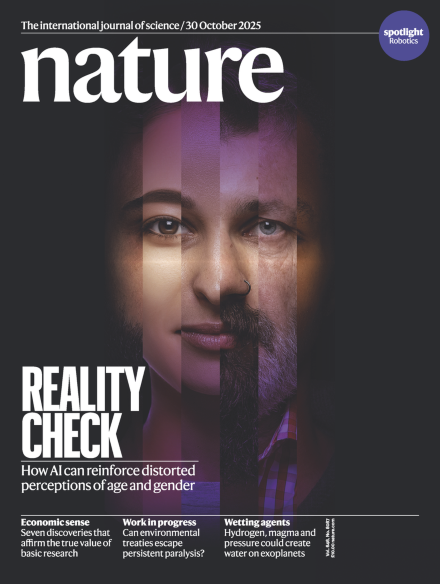
In this October issue of nature, items of interest (to me) [already highlighted in an emailed News Highlight]:

Google claim a significant ‘quantum advantage’ by quantum-echoes algorithms that they say is 13,000 faster than classical algorithms, but it is unclear from the nature article where and when their algorithms can be used, apparently missing to apply to realistic scientific applications… (Along with a paper on an “atom-array architecture that enables continuous operation with reloading rates of up to 30,000 initialized qubits per second while preserving coherence across a rearranged large-scale qubit array”.)

On the Trump vs. Science scene, a predicted drop in PhD admissions as an adaptation to (uncertain) Trump’s cuts, bans, visa restrictions, and other attempts at arm-bending and blackmailing  (And the novelty of me receiving applications from the US, a first!) Some U.S. departments have simply cancelled PhD admissions… But some universities have so far resisted the Orange pressure. Namely, the MIT, Brown University, (good old) Penn, UCLA, the University of Virginia (albeit agreeing to a deal), Dartmouth College, and the University of Arizona in Tucson. Vanderbilt has given in. (UT Austin and Harvard seem to be continuing the discussion with the Trump administration.) Meanwhile, China is zooming past! The issue also contains articles on how fundamental science discoveries have had hugely practical consequences, in case one need argue with a sceptic.

As a less urgent issue, some researchers at Institut Pasteur in Paris identified new diseases that did not help Napoléon’s Grande Armée as it retreated from Moscow, from the DNA of 13 soldiers buried in Lithuania. (With nature failing to give credit to the painter Adolph Northen for his famous “Napoleon’s retreat from Moscow” illustrating the story, attributed to the researchers in the paper!)

In this period of ERC announcements of their grantees, an analysis of the two-digit rise in applications. Unsurprising, given the international context. Along with a decrease in funding due to a lack of adjustment against inflation since 2007. (Incidentally, I found out this week that Torsten Elßin—at the Max Planck Institute for Astrophysics—I visited once had been selected for a Synergy grant on a 3D Milky Way Atlas. Along another cosmology Synergy grant at MPA on the Epoch of Reionization.)

A runner’s must-read that starts with the statement “the human body has a ‘metabolic ceiling’ that even the most extreme athletes cannot surpass”. Which would be 2.4 times the basal metabolic rate (BMR) for extended periods—by which the authors mean 30 weeks and over!, not a half-marathon. Not so exciting a paper in the end.

As predicted by the cover, a Royal Society meeting acknowledging the AI language models killed Turing’ test and questioning the next one. Since assessing the capacities and limitations of novel AIs and AGIs sounds more relevant and societally important. To wit, “;the Turing test of the future should question whether an AI is safe, reliable and provides meaningful benefit, he said, and should also ask who bears the cost of that benefit”. (As discussed in the book review of The Means of Prediction: How AI Really Works (and Who Benefits) by Maximilian Kasy, in the same volume. And yet another paper on AI biases.)

anything and everything and ChatGPT

Posted in Books, Kids, Statistics, University life with tags , , , , , , , , on December 21, 2022 by xi'an

Just another run at the veneer of logic (and LaTeX) in nonsensical replies from ChatGPT!

versus

Significance and artificial intelligence

Posted in Books, Kids, pictures, Statistics, University life with tags , , , , , , , , , , , , , on March 19, 2015 by xi'an

As my sorry excuse of an Internet provider has been unable to fix my broken connection for several days, I had more time to read and enjoy the latest Significance I received last week. Plenty of interesting entries, once again! Even though, faithful to my idiosyncrasies, I must definitely criticise the cover (but you may also skip till the end of the paragraph!): It shows a pile of exams higher than the page frame on a student table in a classroom and a vague silhouette sitting behind the exams. I do not know whether or not this is intentional but the silhouette has definitely been added to the original picture (and presumably the exams as well!), because the seat and blackboard behind this silhouette show through it. If this is intentional, does that mean that the poor soul grading this endless pile of exams has long turned into a wraith?! If not intentional, that’s poor workmanship for a magazine usually apt at making the most from the graphical side. (And then I could go on and on about the clearly independent choice of illustrations by the managing editor rather than the author(s) of the article…) End of the digression! Or maybe not because there also was an ugly graph from Knowledge is Beautiful about the causes of plane crashes that made pie-charts look great… Not that all the graphs in the book are bad, far from it!

“The development of full artificial intelligence could spell the end of the human race.’ S. Hawkins

The central theme of the magazine is artificial intelligence (and machine learning). A point I wanted to mention in a post following the recent doom-like messages of Gates and Hawking about AIs taking over humanity à la Blade Runner… or in Turing’s test. As if they had not already impacted our life so much and in so many ways. And no all positive or for the common good. Witness the ultra-fast codes on the stock market. Witness the self-replicating and modifying computer viruses. Witness the increasingly autonomous military drones. Or witness my silly Internet issue, where I cannot get hold of a person who can tell me what the problem is and what the company is doing to solve it (if anything!), but instead have to listen to endless phone automata that tell me to press “1 if…” and “3 else”, and that my incident ticket has last been updated three days ago… But at the same time the tone of The Independent tribune by Hawking, Russell, Tegmark, and Wilczek is somewhat misguided, if I may object to such luminaries!, and playing on science fiction themes that have been repeated so many times that they are now ingrained, rather than strong scientific arguments. Military robots that could improve themselves to the point of evading their conceptors are surely frightening but much less realistic than a nuclear reaction that could not be stopped in a Fukushima plant. Or than the long-term impacts of genetically modified crops and animals. Or than the current proposals of climate engineering. Or than the emerging nano-particles.

“If we build systems that are game-theoretic or utility maximisers, we won’t get what we’re hoping for.” P. Norvig

The discussion of this scare in Significance does not contribute much in my opinion. It starts with the concept of a perfect Bayesian agent, supposedly the state of an AI creating paperclips, which (who?) ends up using the entire Earth’s resources to make more paperclips. The other articles in this cover story are more relevant, as for instance how AI moved from pure logic to statistical or probabilist intelligence. With Yee Whye Teh discussing Bayesian networks and the example of Google translation (including a perfect translation into French of an English sentence).

the most human human

Posted in Books, University life with tags , , , , , , , , , , , , , , on May 24, 2013 by xi'an

“…the story of Homo sapiens trying to stake a claim on shifting ground, flanked on both sides by beast and machine, pinned between meat and math.” (p.13)

No typo in the title, this is truly how this book by Brian Christian is called. It was kindly sent to me by my friends from BUY and I realised I could still write with my right hand when commenting on the margin. (I also found the most marvellous proof to a major theorem but the margin was just too small…)  “The most human human: What artificial intelligence teaches us about being alive” is about the Turing test, designed to test whether an unknown interlocutor is a human or a machine. And eventually doomed to fail.

“The final test, for me, was to give the most uniquely human performance I could in Brighton, to attempt a successful defense against the machines.” (p.15)

What I had not realised earlier is that there is a competition every year running this test against a few AIs and a small group of humans, the judges (blindly) giving votes for each entity and selecting as a result the most human computer. And also the most human … human! This competition is called the Loebner Prize and it was taking place in Brighton, this most English of English seaside towns, in 2008 when Brian Christian took part in it (as a human, obviously!).

“Though both [sides] have made progress, the `algorithmic’ side of the field [of computer science] has, from Turing on, completely dominated the more `statistical’ side. That is, until recently.” (p.65)

I enjoyed the book, much more for the questions it brought out than for the answers it proposed, as the latter sounded unnecessarily conflictual to me, i.e. adopting a “us vs.’em” posture and whining about humanity not fighting hard enough to keep ahead of AIs… I dislike this idea of the AIs being the ennemy and of “humanity lost” the year AIs would fool the judges. While I enjoy the sci’ fi’ literature where this antagonism is exacerbated, from Blade Runner to Hyperion, to Neuromancer, I do not extrapolate those fantasised settings to the real world. For one thing, AIs are designed by humans, so having them winning this test (or winning against chess grand-masters) is a celebration of the human spirit, not a defeat! For another thing, we are talking about a fairly limited aspect of “humanity”, namely the ability to sustain a limited discussion with a set of judges on a restricted number of topics. I would be more worried if a humanoid robot managed to fool me by chatting with me for a whole transatlantic flight. For yet another thing, I do not see how this could reflect on the human race as a whole and indicate that it is regressing in any way. At most, it shows the judges were not trying hard enough (the questions reported in The most human human were not that exciting!) and maybe the human competitors had not intended to be perceived as humans.

“Does this suggest, I wonder, that entropy may be fractal?” (p.239)

Another issue that irked me in the author’s perspective is that he trained and elaborated a complex strategy to win the prize (sorry for the mini-spoiler: in case you did  not know, Brian did finish as the most human human). I do not know if this worry fear to appear less human than an AI was genuine or if it provided a convenient canvas for writing the book around the philosophical question of what makes us human(s). But it mostly highlights the artificial nature of the test, namely that one has to think in advance on the way conversations will be conducted, rather than engage into a genuine conversation with a stranger. This deserves the least human human label, in retrospect!

“So even if you’ve never heard of [Shanon entropy] beofre, something in your head intuits [it] every time you open your mouth.” (p.232)

The book spend a large amount of text/time on the victory of Deep Blue over Gary Kasparov (or, rather, on the defeat of Kasparov against Deep Blue), bemoaning the fact as the end of a golden age. I do not see the problem (and preferred the approach of Nate Silver‘s). The design of the Deep Blue software was a monument to the human mind, the victory did not diminish Kasparov who remains one of the greatest chess players ever, and I am not aware it changed chess playing (except when some players started cheating with the help of hidden computers!). The fact that players started learning more and more chess openings was a trend much before this competition. As noted in The most human human,  checkers had to change its rules once a complete analysis of the game had led to  a status-quo in the games. And this was before the computer era. In Glasgow, Scotland, in 1863. Just to draw another comparison: I like playing Sudoku and the fact that I designed a poor R code to solve Sudokus does not prevent me from playing, while my playing sometimes leads to improving the R code. The game of go could have been mentioned as well, since it proves harder to solve by AIs. But there is no reason this should not happen in a more or less near future…

“…we are ordering appetizers and saying something about Wikipedia, something about Thomas  Bayes, something about vegetarian dining…” (p.266)

While the author produces an interesting range of arguments about language, intelligence, humanity, he missed a part about the statistical modelling of languages, apart from a very brief mention of a Markov dependence. Which would have related to the AIs perspective. The overall flow is nice but somehow meandering and lacking in substance. Esp. in the last chapters. On a minor level, I also find that there are too many quotes from Hofstadter’ Gödel, Escher and Bach, as well as references to pop culture. I was surprised to find Thomas Bayes mentioned in the above quote, as it did not appear earlier, except in a back-note.

“A girl on the stairs listen to her father / Beat up her mother” C.D. Wright,  Tours

As a side note to Andrew, there was no mention made of Alan Turing’s chess rules in the book, even though both Turing and chess were central themes. I actually wondered if a Turing test could apply to AIs playing Turing’s chess: they would have to be carried by a small enough computer so that the robot could run around the house in a reasonable time. (I do not think chess-boxing should be considered in this case!)