Archive for MIT

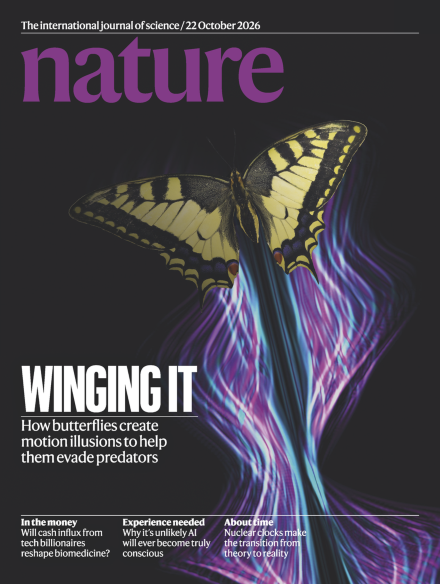
nAIture tidbits (Oct 2026)

Posted in Books, Kids, Statistics, Travel, University life with tags , , , , , , , , , , , , , , , , , , , , , , , , , , , , , , on November 25, 2026 by xi'an

Two Nature pieces in the 1 October and 22 October issues hit close to home, since they deal with overwhelming AI progress impacting academia. Fast and furious. Everywhere and everyone I visit, the apocalAIpse is the first and main topic of conversation. Before we engage into research discussions, and even then…

The first article is about deal[ing] with students’ AI use. The paradigm shift has already happened: an overwhelming majority of university students use (or abuse) generative AI for assessed work… Even with personal tutees, engaged in long-term projects, I find it extremely depressing that some of them return every week with LLM-produced codes and documents that they do not fully understand (and even less assess). Following earlier opinion articles like why universities need to radically rethink exams, Gen Z scepticism towards AI, or PhD students who write dissertations with AI, Nature here gathers some strategies from educators, alas mostly on a defensive mood. But the trAIn has already left the station and few of us have the luxury to opt to stay on the platform and play the sage on the stage!

  • AI part of the assignment. Tulane students summarize sources with three different LLMs, critique the results, and earn extra points for spotting hallucinated references. Toronto students build an agent-based marketplace to model Adam Smith’s theory and write about the transcripts. (With the already outdated argument that copycat students are easy to spot, thanks to hallucinated references!) Some places rely on university AI detectors while admitting it is a lost arms race.
  • Document the work. Students hand in AI chat logs (Chang’an University, China) or documents with a revision history.
  • Assessment back to pen & paper. In-class essays and exams with no devices (Virginia), in-class pitches instead of take-home infographics (Cal State LA), and oral exams, like one-to-one sessions explaining specific lines of code (San José State). Take-home work is pass/fail (Eindhoven). (With the imposition on educators’ time when facing large cohorts.)
  • The Trojan horse. Hide an invisible prompt in assignments (again a short-term solution).

The other paper hits at the submission tsunAImi that journals and preprint servers are facing, with the Polsongate being only the visible tip of the iceberg. ArXiv versus AI slop: will capping preprint submissions work? discusses arXiv’s new policy barring excessive volumes of submissions. Following earlier preventive policies like rejecting computer-science literature reviews, requesting endorsement, and banning authors with hallucinated references. Again, defensive measures with short-term efficiency since the LLMs are able to address them (eg when asked to check for valid references or using Lean to assess the logic of a proof). And not addressing the elephants in the room, namely (i) the readability, validity, originality, and impact on the field of the document and (ii) the capacity to separate the wheat from the chaff in an ocean of preprints. (I already fail to keep track of arXivals in computational statistics…)

Nature tidbits [23 October 2025]

Posted in Books, Kids, pictures, Running, Travel, University life with tags , , , , , , , , , , , , , , , , , , , , , , , , , , , , , , , , , , , , , , , , , , , , , , on November 27, 2025 by xi'an

In this October issue of nature, plenty of the “usual” topics, namely AI and Trump.2.0 wrecking balls, along with two cosmology entries that related to my trip to the early universe last week, and a pros-and-cons opposition about animal testing,

a discussion on the nature of the “little red dots” that have been recently observed and whose nature remains open, the most popular explanation (I was given during lunch) being black holes surrounded by gas (even though I cannot understand why the gas is not attracted by the black hole!) [and would have produced a more exciting cover!]

a review of the recent book Discordance: The Troubled History of the Hubble Constant by Jim Baggott, entitled Why we still don’t understand the Universe — even after a century of dispute! A review that regrets that more time is spent on the Hubble “constant” (which varies with time!) rather than more controversial issues like dark matter and dark energy (And strangely bemoans that the book is focussed on scientific developments, missing sociological ones. Duh?! (Bonus for a picture of suit-and-tie Edwin Hubble sitting at the centre of a telescope),

two entries on the well-being [or lack thereof] of PhD students, with nothing particularly surprising (eg, inclusivity and respect help!), and Brazil, Australia and Italy ranking top locations but in a comparative study that does not mention France (as often in international comparisons found in Nature) despite the place being in the top 10 countries delivering PhD degrees, not that I believe PhD students are particularly well-treated in French academia!, the (unexplained) surprise being Italy ranking so high given the close resemblance between the two countries (low stipends, shortage of postdoc and permanent positions, high teaching loads for the advisor, limited travel budgets),

a conference (purposedly) made of AI-written papers reviewed by AI referees, Agents4Science 2025, how universities are rushed into adapting to AI-fluent students, whose skills are changing, and the rise in fake authors produced by paper mills, with a limited range of acceptable solutions,

why Trump 2.0‘s blackmail on pharmaceutical companies is counter-productive and likely to slow down progress, and why his massive increase of highly qualified scientists is shooting (or nuking) USelf in the foot, given the huge proportion) of im/emigrated Nobel prize winners (for physics, chemistry, and medicine), along the (post-) Nobel prize in economics is a direct or indirect reply to this regression by awarding the Prize to economists who worked on the importance of creativity and science on growth (not very surprising at first look!)

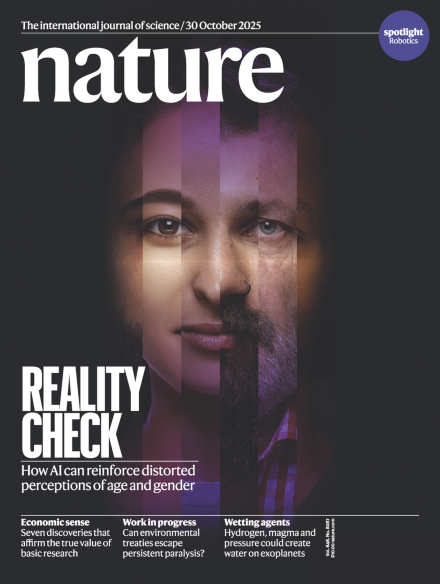
Nature tidbits [30th October 2025]

Posted in Books, Kids, pictures, Running, Travel, University life with tags , , , , , , , , , , , , , , , , , , , , , , , , , , , , , on November 22, 2025 by xi'an

In this October issue of nature, items of interest (to me) [already highlighted in an emailed News Highlight]:

Google claim a significant ‘quantum advantage’ by quantum-echoes algorithms that they say is 13,000 faster than classical algorithms, but it is unclear from the nature article where and when their algorithms can be used, apparently missing to apply to realistic scientific applications… (Along with a paper on an “atom-array architecture that enables continuous operation with reloading rates of up to 30,000 initialized qubits per second while preserving coherence across a rearranged large-scale qubit array”.)

On the Trump vs. Science scene, a predicted drop in PhD admissions as an adaptation to (uncertain) Trump’s cuts, bans, visa restrictions, and other attempts at arm-bending and blackmailing  (And the novelty of me receiving applications from the US, a first!) Some U.S. departments have simply cancelled PhD admissions… But some universities have so far resisted the Orange pressure. Namely, the MIT, Brown University, (good old) Penn, UCLA, the University of Virginia (albeit agreeing to a deal), Dartmouth College, and the University of Arizona in Tucson. Vanderbilt has given in. (UT Austin and Harvard seem to be continuing the discussion with the Trump administration.) Meanwhile, China is zooming past! The issue also contains articles on how fundamental science discoveries have had hugely practical consequences, in case one need argue with a sceptic.

As a less urgent issue, some researchers at Institut Pasteur in Paris identified new diseases that did not help Napoléon’s Grande Armée as it retreated from Moscow, from the DNA of 13 soldiers buried in Lithuania. (With nature failing to give credit to the painter Adolph Northen for his famous “Napoleon’s retreat from Moscow” illustrating the story, attributed to the researchers in the paper!)

In this period of ERC announcements of their grantees, an analysis of the two-digit rise in applications. Unsurprising, given the international context. Along with a decrease in funding due to a lack of adjustment against inflation since 2007. (Incidentally, I found out this week that Torsten Elßin—at the Max Planck Institute for Astrophysics—I visited once had been selected for a Synergy grant on a 3D Milky Way Atlas. Along another cosmology Synergy grant at MPA on the Epoch of Reionization.)

A runner’s must-read that starts with the statement “the human body has a ‘metabolic ceiling’ that even the most extreme athletes cannot surpass”. Which would be 2.4 times the basal metabolic rate (BMR) for extended periods—by which the authors mean 30 weeks and over!, not a half-marathon. Not so exciting a paper in the end.

As predicted by the cover, a Royal Society meeting acknowledging the AI language models killed Turing’ test and questioning the next one. Since assessing the capacities and limitations of novel AIs and AGIs sounds more relevant and societally important. To wit, “;the Turing test of the future should question whether an AI is safe, reliable and provides meaningful benefit, he said, and should also ask who bears the cost of that benefit”. (As discussed in the book review of The Means of Prediction: How AI Really Works (and Who Benefits) by Maximilian Kasy, in the same volume. And yet another paper on AI biases.)

Duh?!

Posted in Books, Mountains, pictures with tags , , , , , , , , , , , on October 24, 2024 by xi'an

[ex?] Paris-Saclay univerXity

Posted in Kids, pictures, University life with tags , , , , , , , , , on November 5, 2017 by xi'an

In the plane to Warwick last Tuesday, I read a fairly long and pessimistic article in Le Monde about the future of the Paris-Saclay university. This debate presumably makes no sense outside French circles, for it relates to the century-old opposition between universities and grandes écoles, these selective engineering and business schools that operate independently from the university structure. In the sense that the selection and the schooling of their students is completely separated, meaning these students may never attend a university program if they choose to do so. But not so independently in terms of hiring part-time professors from universities and sharing resources for their Master programs. And depending on the same agencies (like CNRS) for funding their research program.

Anyway, the core message of this article was that the influence of former students from Polytechnique [aka X] in the high administration is such that they can prevent the integration of the different engineer schools on the Saclay plateau into the intended superstructure of the Paris-Saclay university. And turn this somewhat megalomanic Paris-Saclay project initiated by Nicolas Sarkozy into a mere geographical superposition of separate institutions, with very unequal State funding, perpetuating the two speed regime for public higher education… And a ever more confusing international image that will not help an inch moving up the Shanghai ranking (a major reason for Sarkozy pushing this project). Very French indeed!