
a discussion on the nature of the “little red dots” that have been recently observed and whose nature remains open, the most popular explanation (I was given during lunch) being black holes surrounded by gas (even though I cannot understand why the gas is not attracted by the black hole!) [and would have produced a more exciting cover!]
a review of the recent book Discordance: The Troubled History of the Hubble Constant by Jim Baggott, entitled Why we still don’t understand the Universe — even after a century of dispute! A review that regrets that more time is spent on the Hubble “constant” (which varies with time!) rather than more controversial issues like dark matter and dark energy (And strangely bemoans that the book is focussed on scientific developments, missing sociological ones. Duh?! (Bonus for a picture of suit-and-tie Edwin Hubble sitting at the centre of a telescope),
two entries on the well-being [or lack thereof] of PhD students, with nothing particularly surprising (eg, inclusivity and respect help!), and Brazil, Australia and Italy ranking top locations but in a comparative study that does not mention France (as often in international comparisons found in Nature) despite the place being in the top 10 countries delivering PhD degrees, not that I believe PhD students are particularly well-treated in French academia!, the (unexplained) surprise being Italy ranking so high given the close resemblance between the two countries (low stipends, shortage of postdoc and permanent positions, high teaching loads for the advisor, limited travel budgets),
a conference (purposedly) made of AI-written papers reviewed by AI referees, Agents4Science 2025, how universities are rushed into adapting to AI-fluent students, whose skills are changing, and the rise in fake authors produced by paper mills, with a limited range of acceptable solutions,
why Trump 2.0‘s blackmail on pharmaceutical companies is counter-productive and likely to slow down progress, and why his massive increase of highly qualified scientists is shooting (or nuking) USelf in the foot, given the huge proportion) of im/emigrated Nobel prize winners (for physics, chemistry, and medicine), along the (post-) Nobel prize in economics is a direct or indirect reply to this regression by awarding the Prize to economists who worked on the importance of creativity and science on growth (not very surprising at first look!)

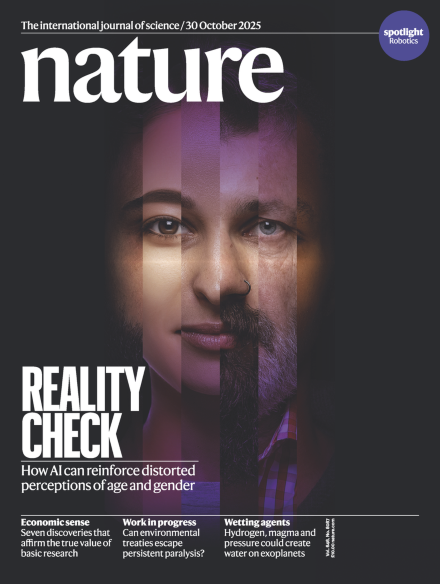 In
In  While in Puerto Varas for BNP13, I tried to summit the nearby
  When we started again the wind had strengthened with the incoming dawn, rising to a point where we could hardly stand up to it, and our guide eventually decided to turn back, as it was only to get worse in the remaining 600m to the top, confirming the earlier prediction of 70km/hour winds… Yichin was of the same opinion and hence we reluctantly turned back down to the bottom of the slope, with the wind mostly on our back and a pleasant steady gradient descent. (Although my tights are still sensitive three days after the climb!) Surprisingly I was not feeling particularly cold (and with the right face protection my nose was not close to frozen, which happened on Monte Rosa in 2016). Even after seeing my best North Face mitt been blown away within a second of loosing grip of it! (Anyone with a spare left hand down mitt?! Because it had to be
  Obviously, this was quite disappointing as I had planned the climb for weeks, brought all the layers to face a potential -20⁰ windchill, was in good enough shape, did not feel any


