
Archive for Austin

Nature tidbits [23 October 2025]

Posted in Books, Kids, pictures, Running, Travel, University life with tags , , , , , , , , , , , , , , , , , , , , , , , , , , , , , , , , , , , , , , , , , , , , , , on November 27, 2025 by xi'an

In this October issue of nature, plenty of the “usual” topics, namely AI and Trump.2.0 wrecking balls, along with two cosmology entries that related to my trip to the early universe last week, and a pros-and-cons opposition about animal testing,

a discussion on the nature of the “little red dots” that have been recently observed and whose nature remains open, the most popular explanation (I was given during lunch) being black holes surrounded by gas (even though I cannot understand why the gas is not attracted by the black hole!) [and would have produced a more exciting cover!]

a review of the recent book Discordance: The Troubled History of the Hubble Constant by Jim Baggott, entitled Why we still don’t understand the Universe — even after a century of dispute! A review that regrets that more time is spent on the Hubble “constant” (which varies with time!) rather than more controversial issues like dark matter and dark energy (And strangely bemoans that the book is focussed on scientific developments, missing sociological ones. Duh?! (Bonus for a picture of suit-and-tie Edwin Hubble sitting at the centre of a telescope),

two entries on the well-being [or lack thereof] of PhD students, with nothing particularly surprising (eg, inclusivity and respect help!), and Brazil, Australia and Italy ranking top locations but in a comparative study that does not mention France (as often in international comparisons found in Nature) despite the place being in the top 10 countries delivering PhD degrees, not that I believe PhD students are particularly well-treated in French academia!, the (unexplained) surprise being Italy ranking so high given the close resemblance between the two countries (low stipends, shortage of postdoc and permanent positions, high teaching loads for the advisor, limited travel budgets),

a conference (purposedly) made of AI-written papers reviewed by AI referees, Agents4Science 2025, how universities are rushed into adapting to AI-fluent students, whose skills are changing, and the rise in fake authors produced by paper mills, with a limited range of acceptable solutions,

why Trump 2.0‘s blackmail on pharmaceutical companies is counter-productive and likely to slow down progress, and why his massive increase of highly qualified scientists is shooting (or nuking) USelf in the foot, given the huge proportion) of im/emigrated Nobel prize winners (for physics, chemistry, and medicine), along the (post-) Nobel prize in economics is a direct or indirect reply to this regression by awarding the Prize to economists who worked on the importance of creativity and science on growth (not very surprising at first look!)

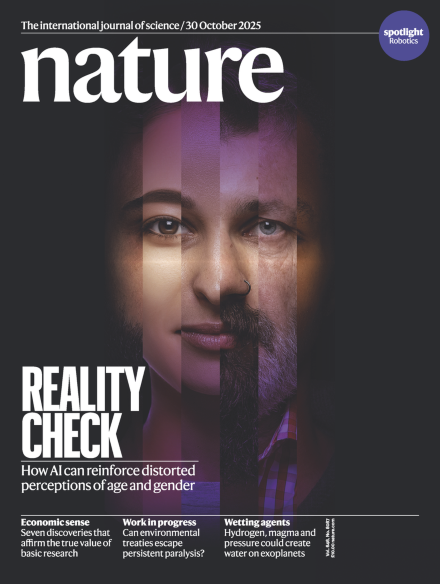
Nature tidbits [30th October 2025]

Posted in Books, Kids, pictures, Running, Travel, University life with tags , , , , , , , , , , , , , , , , , , , , , , , , , , , , , on November 22, 2025 by xi'an

In this October issue of nature, items of interest (to me) [already highlighted in an emailed News Highlight]:

Google claim a significant ‘quantum advantage’ by quantum-echoes algorithms that they say is 13,000 faster than classical algorithms, but it is unclear from the nature article where and when their algorithms can be used, apparently missing to apply to realistic scientific applications… (Along with a paper on an “atom-array architecture that enables continuous operation with reloading rates of up to 30,000 initialized qubits per second while preserving coherence across a rearranged large-scale qubit array”.)

On the Trump vs. Science scene, a predicted drop in PhD admissions as an adaptation to (uncertain) Trump’s cuts, bans, visa restrictions, and other attempts at arm-bending and blackmailing  (And the novelty of me receiving applications from the US, a first!) Some U.S. departments have simply cancelled PhD admissions… But some universities have so far resisted the Orange pressure. Namely, the MIT, Brown University, (good old) Penn, UCLA, the University of Virginia (albeit agreeing to a deal), Dartmouth College, and the University of Arizona in Tucson. Vanderbilt has given in. (UT Austin and Harvard seem to be continuing the discussion with the Trump administration.) Meanwhile, China is zooming past! The issue also contains articles on how fundamental science discoveries have had hugely practical consequences, in case one need argue with a sceptic.

As a less urgent issue, some researchers at Institut Pasteur in Paris identified new diseases that did not help Napoléon’s Grande Armée as it retreated from Moscow, from the DNA of 13 soldiers buried in Lithuania. (With nature failing to give credit to the painter Adolph Northen for his famous “Napoleon’s retreat from Moscow” illustrating the story, attributed to the researchers in the paper!)

In this period of ERC announcements of their grantees, an analysis of the two-digit rise in applications. Unsurprising, given the international context. Along with a decrease in funding due to a lack of adjustment against inflation since 2007. (Incidentally, I found out this week that Torsten Elßin—at the Max Planck Institute for Astrophysics—I visited once had been selected for a Synergy grant on a 3D Milky Way Atlas. Along another cosmology Synergy grant at MPA on the Epoch of Reionization.)

A runner’s must-read that starts with the statement “the human body has a ‘metabolic ceiling’ that even the most extreme athletes cannot surpass”. Which would be 2.4 times the basal metabolic rate (BMR) for extended periods—by which the authors mean 30 weeks and over!, not a half-marathon. Not so exciting a paper in the end.

As predicted by the cover, a Royal Society meeting acknowledging the AI language models killed Turing’ test and questioning the next one. Since assessing the capacities and limitations of novel AIs and AGIs sounds more relevant and societally important. To wit, “;the Turing test of the future should question whether an AI is safe, reliable and provides meaningful benefit, he said, and should also ask who bears the cost of that benefit”. (As discussed in the book review of The Means of Prediction: How AI Really Works (and Who Benefits) by Maximilian Kasy, in the same volume. And yet another paper on AI biases.)

post-COVID post-conference mood

Posted in Kids, Running, Travel, University life with tags , , , , , , , , , , , , , on August 27, 2020 by xi'an

Nature ran a 4-page comment on the post-COVID future of massive conferences (NeurIPS or JSM style) and on how to make them less carbon greedy. Some of their common-sense suggestions come close to what I had suggested a while ago and some became promptly implemented in these times of COVID-19 travel restrictions, as, e.g., to systematically include virtual attendance option(s), with provisions from one’s institutions for quality time (as if one was indeed away), to add multiple (3?) regional hubs to a single location, which also offers the perk of a round-the-clock meeting, with an optimisation of the three places chosen to minimise (estimated) total flight distances for the potential participants, as in e.g. choosing U.S. central Chicago rather than extremes like Seattle or Miami, and possibly adding Tokyo and Paris, to reduce the frequency of the monster meetings by coordinating with sister societies, to enforce an individual or institutional maximum yearly budget, to have corporate sponsors turning from travel support to improving remote access in less favoured countries.

Obviously, it seems difficult to completely switch to a fully virtual solution, as attending a conference has many academic dimensions to be accounted for, but the “big ones” should be the first to shrink, if only because the most impacting. And also because small, high quality workshops have much more impact research-wise on their attendants. With the above still offering some savings. And also the possibility to bypass financial, personal, visa, political, life-threatening impossibilities to attend a meeting in a specific foreign country. Provided uncensored remote communication tools are allowed or possible from the said  country. (Calling for the question, barring financial difficulties, and once COVID-related restrictions have been lifted, what are the countries where everyone could consider attending?!)

This year, before lockdown forced the cancellation of ABC in Grenoble, we had set a mirror version in Warwick. Which led us to create the One World ABC seminar. The Bernoulli-IMS World congress was postponed by one year but a few dedicated volunteers managed to build within a few weeks a free impressive virtual substitute with more than 600 talks and close to 2000 participants (so far). Remember it is to take place on 24-28 August, on different time zones and with ten live plenaries repeated twice to this effect.

Next year, we still hope to organise an Objective Bayesian workshop at Casa Matemática Oaxaca (CMO) in México and the current sanitary conditions imply a reduction of the physically present participants by two thirds. Meaning for certain a remote component and possibly a mirror location depending on the state of the World in December 2021.

la belle sauvage [book review]

Posted in Statistics with tags , , , , , , , , , , , , , , , on February 25, 2018 by xi'an

Another book I brought back from Austin. And another deeply enjoyable one, although not the end of a trilogy of trilogies this time. This book, La Belle Sauvage, is first in a new trilogy by Philip Pullman that goes back to the early infancy of the hero of His Dark Materials, Lyra. Later volumes will take place after the first trilogy.

This is very much a novel about Oxford, to the point it sometimes seems written only for people with an Oxonian connection. After all, the author is living in Oxford… (Having the boat of the two characters passing by the [unnamed] department of Statistics at St. Giles carried away by the flood was a special sentence for me!)

Also, in continuation of His Dark Materials, a great steampunk universe, with a very oppressive Church and so far a limited used of magicks! Limited to the daemons, again in continuation with past volumes…

Now, some passages of the book remind me of Ishiguro’s buried giant, in the sense that the characters meeting myths from other stories may “really” meet them or instead dream. This is for instance the case when they accost at a property where an outworldy party is taking place and no-one is noticing them. Or when they meet a true giant that is a river deity, albeit not in the spirit of Ben Aaronovitch’s Rivers of London novels.

The story is written in the time honoured setup of teenager discovery travels, with not so much to discover as the whole country is covered by water. And the travel gets a wee bit boring after a while, with a wee bit too many coincidences, the inexplicable death (?) of a villain, and an hurried finale, where the reverse trip of the main characters takes a page rather than one book…

Trivia: La Belle Sauvage was also the name of the pub in Ludgate Hill where Pocahontas and her brother Tomocomo stayed when they first arrived in London. And The Trout is a true local pub, on the other side of Port Meadow [although I never managed to run that far in that direction while staying in St. Hugh, Oxford, last time, the meadow being flooded!].

Looking forward the second volume (already written, so no risk of The Name of the Wind or Game of Thrones quagmires, i.e., an endless wait for the next volume!), hoping the author keeps up the good work, the right tension in the story, and avoids by all means parallel universes, which were so annoying in the first trilogy! (I do remember loosing interest in the story during the second book and having trouble finishing the third one. I am not sure my son [who started before me] ever completed the trilogy…)

U of T sunset [jatp]

Posted in pictures, Running, Travel, University life with tags , , , , , on December 14, 2017 by xi'an