 Read novellas by Aliette de Bodard, The tea master and the detective, and Seven of infinities, which involved a “mindship” as a central character and mysteries attached with a second central character, set within a Viêt Nam inspired galactic civilisation (still enjoying tea!). Easily forgotten mind candy but not unpleasantly so. And Legacy of Evil by James W. Peyton, which had been recommended by the Crime Book board of Libé, which proved terribly predictable, cliché, borderline (!) sexist and racist, and unrealistic, plus loads of unnecessary political reminders about the dire state of Mexican politics and policing, and the impact of the recent US policies about migrants.
Made my first kimchi, with chards, red onions, and radishes for the basis. Which proved much easier (and messier) than expected. It even worked (!) in that fermentation took place with no major disaster and in that the outcome is definitely eatable, with approximately the right spiciness. Made good use of the jar for cooking within a fortnight. But the bitterness of the chard had not gone away, so next round will be with more traditional cabbage. And more gochunjang. Still on the food side, met two occurrences when a shop absurdly refused to sell (or give) me a product (previous day bread and spelt levain) that was just out of date, when no equivalent product was available… Absurd waste.


 Watched The Fall of the House of Usher, a modern variation on the most well-known short stories of Edgar Allan Poe (who seems in high demand on Netflix shoes, witness the recent The Pale Blue Eye where he was a character by himself, during his cadet year[s]). Like the Gold-Bug (little connected), the Pit & the Pendulum (imperfect), The Telltale Heart (predictable), the One-Eye cat (duh), the Red Death (closest) &tc. Other characters have names taken from Poe like Rue Morgue‘s Auguste Dupin, Arthur Gordon Pym and Rufus Gimwort. I could not trace an Annabel Lee (one of the very few luminous characters of the show) to Poe’s works and life… The whole setting is very Gothic(-chic) and saturated, not only in the colouring, but so are Poe’s stories. Actually, I remember enjoying these stories very much as a teenager, Poe being presumably better known in France than in the US, but I am unsure I would still uniformly do in the current time, esp. in stories that are droning on the melancholic feelings of some old nobility characters or the vague prescience of an horrifying event. (As an aside, I regret I never found the time to visit Poe’s museum in Philly.) The characters of the show also are uneven, possibly getting more structured with the episodes, especially the Usher elders, but with little suspense (everyone dies!) or logic (a supernatural being being the deus ex machina). The reconstitution of the 1980’s atmosphere is remarkable, though, if unconnected with the Victorian Gothic!

 Heard this early morning that Ursula Le Guin had died last evening. Sad to see this major writer departing for one of
 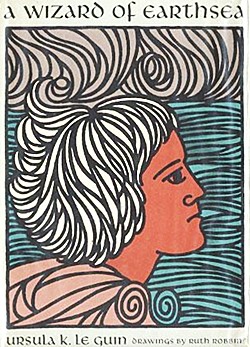 major writer, full stop!) Much to my sorrow, I have not [yet] read the highly celebrated
