
Archive for deep learning
AI in a storm [cover]
Posted in Books, pictures, University life with tags Académie Goncourt, AI, Anthropic, dangers of AI, deep learning, doomsday argument, francophone literature, Francophonie, French literature, LLMs, mathematical conjecture, Nature, open AI, plagiarism, superintelligence, UN, United Nations General Assembly, weather forecasting, weather prediction on October 6, 2026 by xi'an
[Split] Frontiers in Statistical Machine Learning [reposted]
Posted in pictures, Statistics, Travel, University life with tags AISTATS, Croatia, deep learning, generative models, ICLR, ICML, ICSDS 2026, JMLR, NeurIPS, satellite workshop, Split, Statistical frontiers, statistical machine learning, TMLR, UAI on September 19, 2026 by xi'an In connection with the IMS conference ICSDS 2026, an IMS Frontiers in Statistical Machine Learning (FSML) satellite workshop takes place on Monday, December 14, 2026 (also) in Split, Croatia, the day before the main conference.
This year’s themes are generative and foundation models for statistics, and the science of deep learning. The keynote speakers are Yuxin Chen, Alexander Henzi, Andrej Risteski, Pragya Sur, Yan Shuo Tan, and Yuexi Wang.
There are two ways to present a poster, both non-archival:
– Workshop Track: short papers of 3 to 5 pages, work in progress welcome. Ten US$500 travel awards for students and postdocs.
– Fast Track: papers already accepted at NeurIPS, ICLR, AISTATS, ICML, UAI, JMLR, or TMLR since August 2025. No additional review.
The deadline for both tracks is Monday, October 19
FSML 2026 organizers are:
Yuansi Chen, ETH Zurich
Sophie Langer, Ruhr University Bochum
Feng Liu, University of Melbourne
Xinwei Shen, University of Washington
Susan Wei, Monash University
Nature tidbits [18 June]
Posted in Books, Kids, pictures, Travel with tags @ScientistTrump, Agent Orange, AI, AI regulation, cancer, Catholic Church, cover, deep learning, DNA, hunter-gatherer, immigration, Lake Baïkal, Leiden, Leon, marmot, Nature, obesity, philogenetic trees, plague, popes, religions, Russia, science v. religion, Siberia, Ukraine invasion, ultraprocessed food, US politics, Vatican, Yersinia pestis on July 13, 2026 by xi'an
A personal tribune (by a Vatican advisor) on why scientists should learn from the Pope’s AI message, not the first time Nature caters to religious views! Not that his (Leon’s) concerns about unregulated AI and the abdication of States in that matter are misplaced. But it seems unlikely (as the author concedes in his conclusion) that the Catholic Church or his leader will manage to make a dent on the spiraling impact of AIs. As suggested in the next tribune, a coordinated approach at a massive increase of taxes on tech companies (unsurprisingly resisted by the Orange Menace) is more likely to happen. And yet another tribune on AI and math(ematician)s, related to the recent Leiden Declaration on Artificial Intelligence and Mathematics, following several entries in the previous issue.
An introductory (general public) article as to why cancer occurrences in young people is rising so quickly in the US, with no single explanation. Environmental factors are certainly to blame, like the consumption of ultra–processed foods, but the article does not say much, adding to the uncertainty.
 A rather unhelpful representation of human migration in 2023, appart from showing a majority of migrations are local (to the continental scale). Connected to an article of 10 June I missed. Partly based on a deep learning model to achieve a country-level granularity.
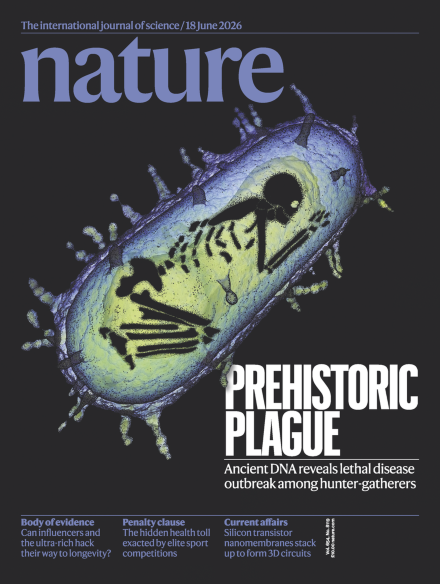
A research article (and the cover) on a plague outbreak near Lake Baikal—over which I could have flown when reading this issue, except that flights to Japan now contour the territories of the invader of Ukraine—that occurred about 5,500 years ago and impacted a community of hunter-gatherers, In a sparsely populated area, marmots being the likely primary vectors, and a close phylogenetic proximity to current strains.
Bin Yu’s seminar on understanding deep learning models via interaction importance at Warwick [B3.03, 2-3pm, Wed 10 Jun]
Posted in Statistics, Travel, University life with tags Bin Yu, biography, colloquium, CRiSM, deep learning, faithfulness, interaction importance, LLMs, National Academy of Sciences, predictivity, reasoning metric, University of California Berkeley, University of Warwick on June 10, 2026 by xi'an
likelihood-free posterior density learning at OWABI [30 April, 1pm GMT+1, 2pm CEST, 8am EST]
Posted in pictures, Running, Statistics, Travel, University life with tags ABC, Approximate Bayesian computation, Columbus, Coventry, dawn, deep learning, generative model, intractable likelihood, KASPE, Kenilworth, likelihood-free inference, Ohio State University, OWABI, posterior distribution, simulation-based inference, University of Warwick, webinar on April 17, 2026 by xi'an The next OWABI webinar will take place on 30 April, at 1pm Coventry time (2pm in Paris, 8am in Columbus, Ohio) and will feature
Oksana A. Chkrebtii (Ohio State University)
Likelihood-free Posterior Density Learning for Uncertainty Quantification in Inference Problems
Generative models and those with computationally intractable likelihoods are widely used to describe complex systems in the natural sciences, social sciences, and engineering. Fitting these models to data requires likelihood-free inference methods that explore the parameter space without explicit likelihood evaluations, relying instead on sequential simulation, which comes at the cost of computational efficiency and extensive tuning. We develop an alternative framework called kernel-adaptive synthetic posterior estimation (KASPE) that uses deep learning to directly reconstruct the mapping between the observed data and a finite-dimensional parametric representation of the posterior distribution, trained on a large number of simulated datasets. We provide theoretical justification for KASPE and a formal connection to the likelihood-based approach of expectation propagation. Simulation experiments demonstrate KASPE’s flexibility and performance relative to existing likelihood-free methods including approximate Bayesian computation in challenging inferential settings involving posteriors with heavy tails, multiple local modes, and over the parameters of a nonlinear dynamical system.


