Archive for Bayes for Good

independent Gaza Mortality Survey reports more than 80,000 fatalities

Posted in Books, Kids, Statistics with tags , , , , , , , , , , , on July 13, 2025 by xi'an

Nature of 27 June reported on an independent survey that interviewed 2000 households in the Gaza strip, except in the most dangerous areas, in December 2024. As noted by Patrick Ball, director of research at Human Rights Data Analysis Group (who took part in Datascience for Good at CIRM), it is amazing a proper survey could be conducted in such dramatic conditions, with consistent findings given an earlier study using capture-recapture published in The Lancet, and exceeds the official figures published by the Ministry of Health in Gaza. In part because they included non-violent deaths since October 2023.  As stressed by the authors, assessing the magnitude of the death numbers (4% of the Gaza population) and of the unique proportion of non-combatant deaths (over 60%) in a modern conflict, but numbers do not replace a

“…project of memorialization [that] has only begun and must continue for many years after the war ends. Estimates of numbers killed, the focus of the present paper, can help guide this casualty recording work. But we cannot provide each human being due recognition in death simply by estimating the number of deaths.”

Nature tea[dbits]

Posted in Books, pictures, University life, Wines with tags , , , , , , , , , , , , , , , , on February 28, 2019 by xi'an

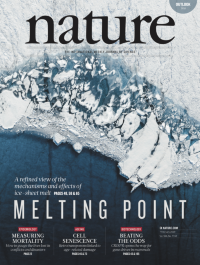
A very special issue of Nature (7 February 2019, vol. 556, no. 7742). With an outlook section on tea, plus a few research papers (and ads) on my principal beverage. News about the REF, Elsevier’s and Huawei’s woes with the University of California, the dangerous weakening of Title IX by the Trump administration, and a long report on the statistical analysis of Hurricane Maria deaths, involving mostly epidemiologists, but also Patrick Ball who took part in our Bayes for Good workshop at CIRM. Plus China’s food crisis and ways to reduce cropland losses and food waste. Concerning the tea part(y), a philogenetic study of different samples led to the theory that tea was domesticated thrice, twice in Yunnan (China) and once in Assam (India), with a divergence estimated at more than twenty thousand years ago. Another article on Pu-Ehr, with the potential impacts of climate change on this very unique tea. With a further remark that higher altitudes increase the anti-oxydant level of tea… And a fascinating description of agro-forestry where tea and vegetables are grown in a forest that regulates sun exposure, moisture evaporation, and soil nutrients.

crowdsourcing, data science & machine learning to measure violence & abuse against women on twitter

Posted in Books, Statistics, University life with tags , , , , , , , , , on January 3, 2019 by xi'an

Amnesty International just released on December 18 a study on abuse and harassment on twitter account of female politicians and journalists in the US and the UK. Realised through the collaboration of thousands of crowdsourced volunteers labeling  tweets from the database and the machine-learning expertise of the London branch of ElementAI, branch driven by my friend Julien Cornebise with the main purpose of producing AI for good (as he explained at the recent Bayes for good workshop). Including the development of an ML tool to detect abusive tweets, called Troll Patrol [which pun side is clear in French!]. The amount of abuse exposed by this study and the possibility to train AIs to spot [some of the] abuse on line are both arguments that support Amnesty International call for the accountability of social media companies like twitter on abuse and violence propagated through their platform. (Methodology is also made available there.)

off to Luminy for a second Bayesian week

Posted in Statistics with tags , , , , , , , , , on November 23, 2018 by xi'an