Archive for Jakob Bernoulli

the polls weren’t wrong [book review]

Posted in Books, R, Statistics, University life with tags , , , , , , , , , , , , , , , , on November 1, 2024 by xi'an

While Nate Silver and his colleagues (as The New York Times Nate Cohn) have brought (part of) the general public to adopt a (more) scientific perspective on political polls, the way to combine them, and the need to keep uncertainty fully quantified (witness this recent “Two Theories for Why the Polls Failed in 2020, and What It Means for 2024” by Nate Cohn for the NYT’s Tilt), the author of this book embarks upon a crusade (and a lengthy rant) against pollsters and analysts and media reporters, with the single, many times repeated, argument that non-responses and undecided voters are crucial for the final election outcome… And that a poll gives a snapshot of the current (time) population opinion, not a prediction of its future state. There is not the slightest trace of statistical depth, there is actually no statistics at all found throughout the book, apart from a section (p.281) entitled “Threats to inferential statistics” (with not no maths either, as a few ratio manipulations and a chapter title invoking Jakob Bernoulli!) do not count as maths!, but a lot of repetitions on the same theme and dismissal of statisticians’ analyses, like Nate Silver’s. Opposing to them the theories of Nick Panagakis, a 1990’s pollster. (Funny enough, the Amazon reviews include one “expert in inferential statistics, the major tool employed by Carl [Alen] in this book” and another one stating that “Carl Allen takes the reader through a journey towards statistical literacy“!) And an R code (p.52) for plotting the outcome of 30 Binomial random draws.

“Unless my efforts achieve far more notoriety than even my most optimistic forecast would predict, [the Proportional Method] is unlikely to go away any time soon.” p.183

“If it seems like I’m picking on FiveThirtyEight a lot, it’s not because there are no other forecasters who are better or worse.” p.235

“Sounding eerily like myself, [Nate Silver] pointed out [in 2008] that `many things can happen’ months before the election.” p.208

Reading through the book (during a trip to & from Warwick) was painful, both for the feeling of being stuck in a plane with a perfect unknown, next seat, trying to force their weird theory upon you and no way to escape their rant, as well as for the terrible style of said book, full of repetitions and one-sentence paragraphs. (Of course, nothing as bad as this time near the 2012 US elections I flew to Des Moines next to an inebriated woman that would not stop blathering about her life!) Or as I imagine a card game addict defending their martingale as a sure way to win against the casino. It is also the first time I see references repeated (in postcripts) as many times as they are cited within a chapter. There is no true insight on how polling companies construct their polling samples, how they post-process outcomes by regression techniques, and no reflection on the unique weirdness of the US electoral system in that a few States determine the outcome (rather than majority votes) and thus how a tiny number of voters (escaping the law of Large Numbers) hold the overall result in their hand.

Thus (as most readers will have forecasted) concluding by not recommending the book!

[Disclaimer about potential self-plagiarism: this post or an edited version of it could possibly appear in my Books Review section in CHANCE. Most unlikely though!]

Casanova’s Lottery [book review]

Posted in Books, Statistics, University life with tags , , , , , , , , , , , , , , , , , , , , , , , , , , , , , on January 12, 2023 by xi'an

This “history of a revolutionary game of chance” is the latest book by Stephen Stigler and is indeed of an historical nature, following the French Lottery from its inception as Loterie royale in 1758 to the Loterie Nationale in 1836 (with the intermediate names of Loterie de France, Loterie Nationale, Loterie impériale, Loterie royale reflecting the agitated history of the turn of that Century!).

The incentive for following this State lottery is that it is exceptional by its mathematical foundations. Contrary to other lotteries of the time, it was indeed grounded on the averaging of losses and gains on the long run (for the State). The French (Royal) State thus accepted the possibility of huge losses at some draws since they would be compensated by even larger gains. The reasoning proved most correct since the Loterie went providing as far as 4% of the overall State budget, despite the running costs of maintaining a network of betting places and employees, who had to be mathematically savy in order to compute the exact gains of the winners.This is rather amazing as the understanding of the Law of Large Numbers was quite fresh (on an historical scale) thanks to the considerable advances made by Pascal, Fermat, (Jakob) Bernoulli and a few others. (The book mentions the Encyclopedist and mathematician Jean d’Alembert as being present at the meeting that decided of the creation of the Loterie in 1757.)

One may wonder why Casanova gets the credit for this lottery. In true agreement with Stigler’s Law, it is directly connected with the Genoan lottery and subsequent avatars in some Italian cities, including Casanova’s Venezia. But jack-of-all-trades Casanova was instrumental in selling the notion to the French State, having landed in Paris after a daring flight from the Serenissima’s jails. After succeeding in convincing the King’s officers to launch the scheme crafted by a certain Ranieri (de’) Calzabig—not to be confused with the much maligned Salieri!—who would later collaborate with Gluck on Orfeo ed Eurydice and Alceste, Casanova received a salary from the Loterie administration and further run several betting offices. Until he left Paris for further adventures! Including an attempt to reproduce the lottery in Berlin, where Frederick II proved less receptive than Louis XIV. (Possibly due to Euler’s cautionary advice.) The final sentence of the book stands by its title: “It was indeed Casanova’s lottery” (p.210).

Unsurprisingly, given Stephen’s fascination for Pierre-Simon Laplace, the great man plays a role in the history, first by writing in 1774 one of his earliest papers on a lottery problem, namely the distribution of the number of draws needed for all 90 numbers to appear. His (correct) solution is an alternating sum whose derivation proved a numerical challenge. Thirty years later, Laplace came up with a good and manageable approximation (see Appendix Two). Laplace also contributed to the end of the Loterie by arguing on moral grounds against this “voluntary” tax, along Talleyrand, a fellow in perpetually adapting to the changing political regimes. It is a bit of a surprise to read that this rather profitable venture ended up in 1836, more under bankers’ than moralists´ pressure. (A new national lottery—based on printed tickets rather than bets on results—was created a century later, in 1933 and survived the second World War, with the French Loto appearing in 1974 as a direct successor to Casanova’s lottery.)

The book covers many fascinating aspects, from the daily run of the Loterie, to the various measures (successfully) taken against fraud, to the survival during the Révolution and its extension through (the Napoleonic) Empire, to tests for fairness thanks to numerous data from almanacs, to the behaviour of bettors and the sale of “helping” books. to (Daniel) Bernoulli, Buffon, Condorcet, and Laplace modelling rewards and supporting decreasing marginal utility. Note that there are hardly any mathematical formula, except for an appendix on the probabilities of wins and the returns, as well as Laplace’s (and Legendre’s) derivations. Which makes the book eminently suited for a large audience, the more thanks to Stephen Stigler’s perfect style.

This (paperback) book is also very pleasantly designed by the University of Chicago Press, with a plesant font (Adobe Calson Pro) and a very nice cover involving Laplace undercover, taken from a painting owned by the author. The many reproductions of epoch documents are well-done and easily readable. And, needless to say given the scholarship of Stephen, the reference list is impressive.

The book is testament to the remarkable skills of Stephen who searched for material over thirty years, from Parisian specialised booksellers to French, English, and American archives. He manages to bring into the story a wealth of connections and characters, as for instance Voltaire’s scheme to take advantage of an earlier French State lottery aimed at reimbursing State debtors. (Voltaire actually made a fortune of several millions francs out of this poorly designed lottery.) For my personal instructions, the book also put life to several Métro stations like Pereire and Duverney. But the book‘s contents will prove fascinating way beyond Parisian locals and francophiles. Enjoy!

[Disclaimer about potential self-plagiarism: this post or an edited version will eventually appear in my Books Review section in CHANCE. As appropriate for a book about capitalising on chance beliefs!]

The [errors in the] error of truth [book review]

Posted in Books, Statistics, University life with tags , , , , , , , , , , , , , , , , , , , , , , , , , , , , on August 10, 2021 by xi'an

OUP sent me this book, The error of truth by Steven Osterling, for review. It is a story about the “astonishing” development of quantitative thinking in the past two centuries. Unfortunately, I found it to be one of the worst books I have read on the history of sciences…

To start with the rather obvious part, I find the scholarship behind the book quite shoddy as the author continuously brings in items of historical tidbits to support his overall narrative and sometimes fills gaps on his own. It often feels like the material comes from Wikipedia, despite expressing a critical view of the on-line encyclopedia. The [long] quote below is presumably the most shocking historical blunder, as the terror era marks the climax of the French Revolution, rather than the last fight of the French monarchy. Robespierre was the head of the Jacobins, the most radical revolutionaries at the time, and one of the Assembly members who voted for the execution of Louis XIV, which took place before the Terror. And later started to eliminate his political opponents, until he found himself on the guillotine!

“The monarchy fought back with almost unimaginable savagery. They ordered French troops to carry out a bloody campaign in which many thousands of protesters were killed. Any peasant even remotely suspected of not supporting the government was brutally killed by the soldiers; many were shot at point-blank range. The crackdown’s most intense period was a horrific ten-month Reign of Terror (“la Terreur”) during which the government guillotined untold masses (some estimates are as high as 5,000) of its own citizens as a means to control them. One of the architects of the Reign of Terror was Maximilien Robespierre, a French nobleman and lifelong politician. He explained the government’s slaughter in unbelievable terms, as “justified terror . . . [and] an emanation of virtue” (quoted in Linton 2006). Slowly, however, over the next few years, the people gained control. In the end, many nobles, including King Louis XVI and his wife Marie-Antoinette, were themselves executed by guillotining”

Obviously, this absolute misinterpretation does not matter (very) much for the (hi)story of quantification (and uncertainty assessment), but it demonstrates a lack of expertise of the author. And sap whatever trust one could have in new details he brings to light (life?). As for instance when stating

“Bayes did a lot of his developmental work while tutoring students in local pubs. He was a respected teacher. Taking advantage of his immediate resources (in his circumstance, a billiard table), he taught his theorem to many.”

which does not sound very plausible. I never heard that Bayes had students  or went to pubs or exposed his result to many before its posthumous publication… Or when Voltaire (who died in 1778) is considered as seventeenth-century precursor of the Enlightenment. Or when John Graunt, true member of the Royal Society, is given as a member of the Académie des Sciences. Or when Quetelet is presented as French and as a student of Laplace.

The maths explanations are also puzzling, from the law of large numbers illustrated by six observations, and wrongly expressed (p.54) as

\bar{X}_n+\mu\qquad\text{when}\qquad n\longrightarrow\infty

to  the Saint-Petersbourg paradox being seen as inverse probability, to a botched description of the central limit theorem  (p.59), including the meaningless equation (p.60)

\gamma_n=\frac{2^{2n}}{\pi}\int_0^\pi~\cos^{2n} t\,\text dt

to de Moivre‘s theorem being given as Taylor’s expansion

f(z)=\sum_{n=0}^\infty \frac{f^{(n)}(a)}{n!}(z-a)^2

and as his derivation of the concept of variance, to another botched depiction of the difference between Bayesian and frequentist statistics, incl. the usual horror

P(68.5<70<71.5)=95%

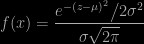
to independence being presented as a non-linear relation (p.111), to the conspicuous absence of Pythagoras in the regression chapter, to attributing to Gauss the concept of a probability density (when Simpson, Bayes, Laplace used it as well), to another highly confusing verbal explanation of densities, including a potential confusion between different representations of a distribution (Fig. 9.6) and the existence of distributions other than the Gaussian distribution, to another error in writing the Gaussian pdf (p.157),

f(x)=\dfrac{e^{-(z-\mu)^2}\big/2\sigma^2}{\sigma\sqrt{2\pi}}

to yet another error in the item response probability (p.301), and.. to completely missing the distinction between the map and the territory, i.e., the probabilistic model and the real world (“Truth”), which may be the most important shortcoming of the book.

The style is somewhat heavy, with many repetitions about the greatness of the characters involved in the story, and some degree of license in bringing them within the narrative of the book. The historical determinism of this narrative is indeed strong, with a tendency to link characters more than they were, and to make them greater than life. Which is a usual drawback of such books, along with the profuse apologies for presenting a few mathematical formulas!

The overall presentation further has a Victorian and conservative flavour in its adoration of great names, an almost exclusive centering on Western Europe, a patriarchal tone (“It was common for them to assist their husbands in some way or another”, p.44; Marie Curie “agreed to the marriage, believing it would help her keep her laboratory position”, p.283), a defense of the empowerment allowed by the Industrial Revolution and of the positive sides of colonialism and of the Western expansion of the USA, including the invention of Coca Cola as a landmark in the march to Progress!, to the fall of the (communist) Eastern Block being attributed to Ronald Reagan, Karol Wojtyła, and Margaret Thatcher, to the Bell Curve being written by respected professors with solid scholarship, if controversial, to missing the Ottoman Enlightenment and being particularly disparaging about the Middle East, to dismissing Galton’s eugenism as a later year misguided enthusiasm (and side-stepping the issue of Pearson’s and Fisher’s eugenic views),

Another recurrent if minor problem is the poor recording of dates and years when introducing an event or a new character. And the quotes referring to the current edition or translation instead of the original year as, e.g., Bernoulli (1954). Or even better!, Bayes and Price (1963).

[Disclaimer about potential self-plagiarism: this post or an edited version will eventually appear in my Book Review section in CHANCE.]

Bernoulli mixtures

Posted in pictures, Statistics, University life with tags , , , , , , , on October 30, 2019 by xi'an

An interesting query on (or from) X validated: given a Bernoulli mixture where the weights are known and the probabilities are jointly drawn from a Dirichlet, what is the most efficient from running a Gibbs sampler including the latent variables to running a basic Metropolis-Hastings algorithm based on the mixture representation to running a collapsed Gibbs sampler that only samples the indicator variables… I provided a closed form expression for the collapsed target, but believe that the most efficient solution is based on the mixture representation!

Bernoulli race particle filters

Posted in Books, pictures, Statistics, University life with tags , , , , , , , , on March 27, 2019 by xi'an

Sebastian Schmon, Arnaud Doucet and George Deligiannidis have recently arXived an AISTATS paper with the above nice title. The motivation for the extension is facing intractable particle weights for state space models, as for instance in discretised diffusions.  In most cases, actually, the weight associated with the optimal forward proposal involves an intractable integral which is the predictive of the current observed variate given the past hidden states. And in some cases, there exist unbiased and non-negative estimators of the targets,  which can thus be substituted, volens nolens,  to the original filter. As in many pseudo-marginal derivations, this new algorithm can be interpreted as targeting an augmented distribution that involves the auxiliary random variates behind the unbiased estimators of the particle weights. A worthwhile remark since it allows for the preservation of the original target as in (8) provided the auxiliary random variates are simulated from the right conditionals. (At least ideally as I have no clue when this is feasible.)

“if Bernoulli resampling is per-formed, the variance for any Monte Carlo estimate will be the same as if the true weights were known and one applies standard multinomial resampling.”

The Bernoulli race in the title stands for a version of the Bernoulli factory problem, where an intractable and bounded component of the weight can be turned into a probability, for which a Bernoulli draw is available, hence providing a Multinomial sampling with the intractable weights since replacing the exact probability with an estimate does not modify the Bernoulli distribution, amazingly so! Even with intractable normalising constants in particle filters. The practicality of the approach may however be restricted by the possibility of some intractable terms being very small and requiring many rejections for one acceptance, as the number of attempts is a compound geometric. The intractability may add to the time request the drawback of keeping this feature hidden as well. Or force some premature interruption in the settings of a parallel implementation.