
Archive for Africa
Somalia hunger appeal
Posted in Kids, Travel with tags Africa, climate change, drought, El Niño, emergency, famine, flood, humanitarian aid, hunger, Somalia, United Nations, United Nations World Food Programme on October 27, 2026 by xi'an
Vive les Nations unies ! Merci
Posted in Books, Kids, pictures, Travel with tags Africa, AI, Azerbaidjan, China, climate change, colonialism, COVID-19, cybersecurity, EU, France, French colonial empire, French government, Gaza, genocide, imperialism, international humanitarian law, Israel, Lebanon, Palestine, Paris Agreement, Russian invasion, Russian sanctions, social networks, Trump 2.0, Ukraine, UN, United Nations, USA, Victor Orban, war crimes, WHO on October 5, 2026 by xi'an
On his last year of the French Presidency, Emmanuel Macron delivered a marathon speech at the UN General Assembly (which he could attend, contrary to the Palestinian delegation). Here it is, verbatim, and en français. The principles stated therein are commendable and aligned with the fundamentals of a progressive, multilateralist, integral democracy. Unfortunately, the EU and even more France on its own are mostly unable to make progress on the directions highlighted in this discourse… (It does not help that the French government caved in on Russian sanctions a few days earlier to free hostages in Azerbaïdjan. Or that a stress test published the previous day shoes France is poorly protected against reactionary, illiberal drifts à la Trump or à la Orban.)
Depuis ce matin, ici se succèdent les discours qui disent l’état du monde. Et j’ai peur de manquer d’originalité en le décrivant. Chacun décrit en effet le retour de l’impérialisme, de l’arrogance, du retour à la force sans règle ni retenue. Un monde au fond de concentration du pouvoir où quelques-uns pensent qu’on peut battre en brèche l’ordre international pour élargir ses frontières, où d’autres pensent qu’on peut fouler au pied la souveraineté des peuples pour en disposer soi-même, et où quelques-uns pensent pouvoir décider de l’avenir de la planète, qu’il s’agisse du climat ou de l’intelligence artificielle. Au fond, la question qui nous est posée de manière très simple consiste à savoir si nous voulons vivre dans cet état de nature, avec une forme de retour de la loi de la jungle ou dans une société internationale civilisée. Notre devoir, plus que jamais, est de nous tenir droit aux côtés des Nations unies pour décider précisément ensemble de l’intérêt commun, c’est-à-dire du côté de ceux qui veulent choisir librement leur destin, leurs alliances, leurs modèles de développement, leur avenir, du côté de ceux qui refusent que leur souveraineté soit confisquée par la force injuste ou par la peur, et du côté de l’espoir. C’est la raison d’être de notre organisation, cette maison commune qui réunit les peuples libres, égaux, qui est fondée sur l’égalité souveraine de chacun de ses membres. C’est notre charte qui empêche que la puissance des uns leur permette de décider pour les autres. C’est elle surtout qui nous oblige à faire ensemble la démonstration de notre engagement et de notre capacité d’agir utilement.
Continue reading
inside Africa [cover]
Posted in Books, pictures, Statistics, Travel with tags Africa, AI, art for science, Asilomar conference centre, bacterial genomes, Burkina Faso, cover, genomics, Ghana, guts, Kenya, microbiome, Nature, pie-chart, rogue universities, South Africa, Zulu baskets on April 25, 2025 by xi'an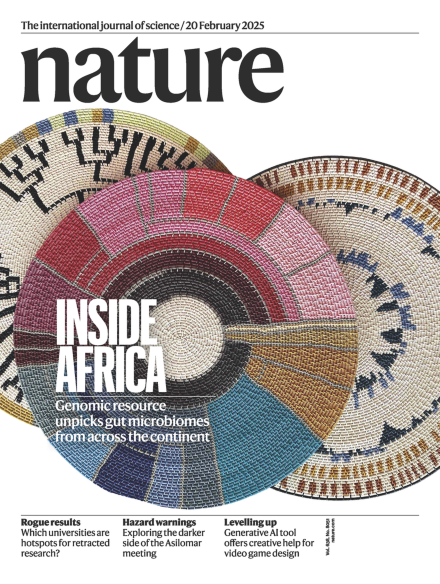
Nature tidbits [Jan 2025]
Posted in Statistics with tags @ScientistTrump, abortion rights, Africa, Anaheim, Belarus, climate denial, climate science, Cucuteni-Trypillia culture, David Spiegelhalter, DNA, E. coli, East Germany, Ethiopia, Germany, hallucinations, Heligoland, Human Rights, impact factor, Instagram, Jimmy Carter, Nature, neuromorphic computing, Protect Abortion, quant, quantum, quantum mechanics, Roe v. Wade, Russian invasion, spreadsheet, The Art of Uncertainty, Ukraine, UNESCO, University of Warwick, Werner Heisenberg on April 13, 2025 by xi'an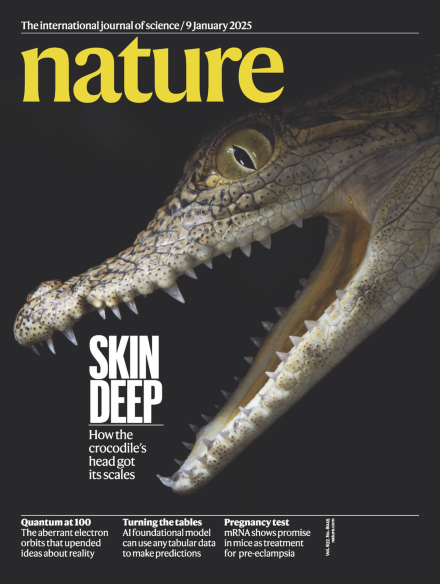
– yet another 100th anniversary!, namely the founding paper of Heisenberg’s quantum mechanics paper in Zeitschrift für Physik, written on the Instagrammable island of Heligoland. With celebrations at the UNESCO in Paris, Anaheim (CA), Kumasi (Ghana), and Salvador de Bahia (Brazil)!;
– some bird species decorating their nest with shed snakeskins, to frighten predators;
– climate predictions for Trump 2.0, albeit the only certainty being it will get worse and worse (and only the beginning of a flow of articles on the Trumpian attacks on science and scientists);
– the curious plight of the open access journal elife loosing its impact factor after getting too open for Clarivate and then seeing submission from China falter;
– the first European cities from 6000 years ago being found in Ukraine (and Romania) within the Cucuteni-Trypillia culture, with apparently an equalitarian structure with no temple or elite, although the lack of written documents (besides beautiful clay figures whose style evolved over the period);
- an AI tool that interprets spreadsheets (which I would find most useful, given my distaste of said spreadsheets!);
and how to help lab workers facing substance disorders. And break
Also
– a quick report on a Physics Review Letters paper about simulating elections results to spot whether or not margins of victory were properly distributed, having a distribution (for the scaled margins) mostly depending on voter turnout, with a universal shape! The concept behind this analysis is one of universality borrowed from statistical physics. (The fit does not work for the Ethiopian election of 2010 and the Belarus elections during 2004–2019, no wonder!);
- an awakening that the huge majority of bacteria that have never been studied, or at least figured in a published paper;
-
yet again another paper about testing AI for human-level intelligence, plus another one on handling AI hallucinations in LLM;
– another book review of David Spiegelhalter’s Art of Uncertainty, by Yongyi Min, a statistician from the UN Statistics Division;
- the obituary of Jimmy Carter, a nuclear physics engineer who fought (for peace, human rights and) for the eradication of the Guinea worm disease, which could possibly happen anytime soon, with 13 human cases reported in 2024 (provisional) and 14 in 2023 (unless the Agent Orange cut enough funding to impact this as well), following a book review of You must stand up, by Amanda Becker, covering fighting for abortion rights across US regions;
creating a DNA base for identifying children kidnapped during a conflict, as for the 20,000 Ukrainian children forcibly deported to Russia over the past three years;
a substantial survey article on neuromorphic computing (submitted in 2023!), about new forms of computing based on hardware/software co-design;
with more technologies to watch in 2025, and another long article (and the cover) on the strong impact of small-scale fisheries on sustainable development.
Nature tidbits [06 Feb 2025]
Posted in Statistics with tags 23andMe, @ScientistTrump, Africa, Australophitecus africanus, bear, bird flu virus, Buachaille Mor, camembert, Canada, Cité des Sciences et de l'Industrie, Data Protection Act, Europe, First Nations, fossils, France, H5N1 virus, infectious diseases, lynx, Nature, Nova Scotia, open source, Paris, plastic waste, raw milk, recycling, red deer, Scotland, silence, Spain, superheated water, unions, University of Warwick, Warwick Manufacturing Group, WHO, WMG, wolverines, wolves, World Health Organization on March 10, 2025 by xi'an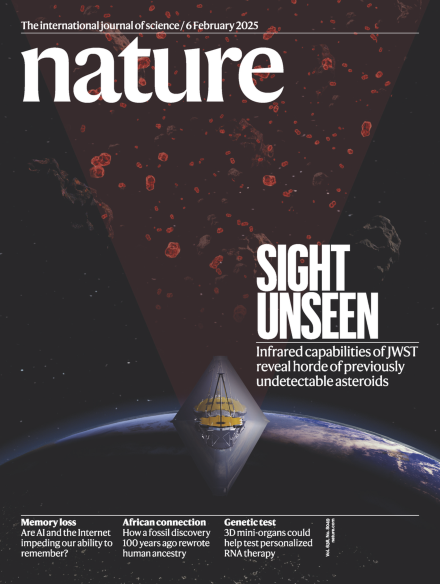
A (naïve, imho) call by the presidente of the Union of Concerned Scientists to boost scientific integrity to protect (US) federal research despite the chainsaw massacre unfolding daily in (US) federal agencies. And the disregard of said massacrers for accountability and legal boundaries. And unions, definitely unions.
Also entries (and two Nature collections) on the one hundredth anniversary of the Taung Child fossil uncovering, as the first Australophitecus africanus that opened the way for the theory that Africa was the birthplace of humanity, along with other extended books reviews. On quantum theory (it’s complicated!, according to Sean Carroll) and Kepler mission (by Jason Steffen). And a show at Cité des Sciences in La Villette about silence that I would love to attend.
A quick assessment of deepseek against its competitors. Mostly praising its open code. And another one on 23andMe losses and trouble, reflecting the one-shot strategy of the company that cannot sell its analysis more than once (despite repeatedly trying, as I can confirm from their frequent emails). And opening concerns about their data or rather our data. Since there is very little protection in the US for this kind of data, considered out of healthcare.
New challenges of large carnivores in Western Europe, with a rise of wolverines, success story for the Iberian lynx, talks of reintroducing wolves to Scotland (to cull red deer like those who roam Buachaille Mor), degrading setting in France with looser rules for shooting wolves.
Microplastics in the brain, unsurprisingly increasing the chances of clots and surprisingly easily moving into blood vessels and the brain. And, speakiMicroplastics in the brainng of plastic, recycling, at last? Warwick Manufacturing Group (WMG) mentioned as evaluating the life-cycle analysis of a new approach with superheated water. Exposing the elephant in the room, namely that there is very little true recycling going on and that part of the recycled plastic ends up as fuel, hence contributing to pollution. Costs and impact of turning used products into new material are mentioned (and staggering albeit not compared with the initial costs and impact.
And I remain perplexed by the Two-Eyed Seeing Indigenous perspective for neuroscience article. As I do not see the scientific component, besides directions to work with local communities.


