Archive for Isaac Asimov

the 25 SF books to read [according to Eldrith]

Posted in Books with tags , , , , , , , , , , , , , , , , , , , , , , , , , , , on November 13, 2026 by xi'an

For a reason I cannot fathom, I received a link to this list from the World of Eldrith, a blog I had never heard of previously. Highly classical (and male dominated), most of whom I have read:

  1. Dune, by Frank Herbert (1965) [read it a long long time ago, along with the sequels, and liked it very much, if not ranking it first]
  2. The Three-Body Problem, by Liu Cixin (2008) [read it as a massive chore, finding the alien parts terribly clumsy]
  3. Red Mars, by Kim Stanley Robinson (1992)
  4. The Player of Games, by Iain M. Banks (1988) [I read other books in the Culture series, impressive in its complex construction]
  5. Foundation, by Isaac Asimov (1951) [read it a long long time ago, along with the sequels, and liked it very much, esp. the psychohistory concept that appeals to the statistician in me!, even though later volumes temper down its performances]
  6. The Warrior’s Apprentice, by Lois McMaster Bujold (1986) [given my recent distasteful brush with this author, unlikely I try another of her books]
  7. The Hitchhiker’s Guide to the Galaxy, by Douglas Adams (1979) [thanks for all the fish]
  8. The Moon Is a Harsh Mistress, by Robert Heinlein (1966)
  9. The Diamond Age, by Neal Stephenson (1995) [one of the monuments of cyberpunk I read when it appeared]
  10. The Martian, by Andy Weir (2011) [I literally fainted watching the movie, did not want to repeat the experience with the book]
  11. Contact, by Carl Sagan (1985)
  12. Leviathan Wakes, by James S. A. Corey (2011) [space opera style, which I enjoyed in another volume]
  13. Nineteen Eighty-Four, by George Orwell (1949) [does not really belong to the list as it is less SF than a great political manifest served as a dystopia. Just like Animals Farm denounces Stalinism within a Children Tale.]
  14. 2001: A Space Odyssey, by Arthur C. Clarke (1968) [definitely the classic, albeit I prefered Rendez-vous with Rama]
  15. Ender’s Game, by Orson Scott Card (1985) [another classic, although the massive jolt from the final revelation cannot be reproduced on subsequent reads]
  16. The Mote in God’s Eye, by Larry Niven & Jerry Pournelle (1974)
  17. The Time Machine, by H. G. Wells (1895) [again more of a dark allegory than a genuine SF work]
  18. A Canticle for Leibowitz, by Walter M. Miller Jr. (1959) [what a pleasant surprise to see this fantastic, original, book included]
  19. The Day of the Triffids, by John Wyndham (1951)
  20. Accelerando, by Charles Stross (2005)
  21. Last and First Men, by Olaf Stapledon (1930)
  22. From the Earth to the Moon and a Trip Around It, by Jules Verne (1865) [given the many SF books written by Jules Verne, this would not have been my volume of choice]
  23. Neuromancer, by William Gibson (1984) [presumably the top of a list imho, which I first read in its French translation in early 1986—as my first volume in La Découverte SF books]
  24. The Rowan, by Anne McCaffrey (1990)
  25. Blindsight, by Peter Watts (2006)

There are also a few short story collections

As an additional experiment, I also asked Claude to propose a top five list based on this blog entries and it came with

due to my taste for “literary fiction using speculative premises to explore fundamental questions.” Well-done, Claude!

a journal of the four horsemen year

Posted in Books, Kids, Mountains, pictures, Running, Travel, University life, Wines with tags , , , , , , , , , , , , , , , , , , , , , , , , , , , , , , , , , , , , , , , , , , , , on January 7, 2026 by xi'an

Read a very light space-opera novel, (The Belt) Entanglement, by G.M. Kilby, with shallow characters, shallow plot with an unlikely McGuffin (a uniquely advanced quantum computer, even 20y later) and implausible rescue episodes (incl. one where a character punctures their spacesuit to recover from a broken propulsion thruster!). This book stands million years away from monuments of the genre, like Arthur C. Clarke‘s, Isaac Asimov‘s, Orson Scott Card‘s, Frank Herbert‘s or, to cite more recent writers, Iain Banks‘s, ‘sJohn Scalzi‘s, Becky Chambers‘s… I will most certainly not become entangled in the sequels! And am contemplating with glee attacking recent purchases and gifts, like Tasmyn Muir’s Nona the Ninth, Philip Pullman’s The Rose Field (Book of dust finale), and Florent Chavouet‘s Tokyo Sanpo (to revive memories of March’s visit to Edo!), discovered while attending an exhibit on Studio Ghibli’s Isao Takahata at Maison du Japon .

Brought back several litres of Andalusian olive oil from Sevilla! And made fresh green pici over the turn of the year, with spinach replacing water in the dough (following a recipe posted on the food weekly of France Inter), as well as three different dishes from the same batch of Norman scallops.

Watched Wake Up Dead Man, by Ryan Johnson, the third instalment of Benoît Blanc’s investigations. Which is rather fun, the more because Daniel Craig is visibly having fun playing a Southerner detective and over-doing his accent, while leaving a large chunk of the stage to other actors, like Josh O’Connor playing the junior, soul-searching priest. The plot itself is light and somewhat irrelevant (if with a wink to old classics of closed room murders, conveniently appearing in a Book Club list, if missing Gaston Leroux’s Mystère de la chambre jaune, as well as to Hitchcok’s Vertigo with a dolly zoom effect at the most dramatic instant), while the suspicion revolving among all characters is worth watching. Also tried a few episodes Just a bit Espers (ちょっとだけエスパー), a Japanese TV series on a group of almost ordinary persons with limited ExtraSensory PERception. The characters are nice but the plot is very weak, the resort to time travel all too common to this type of stories, the resolutions to the episodic challenges embarrassingly cringy, and the part of the story where a new employee (Bunty) has to play along being married to another (Shiki) who genuinely believes they are married is quite uncomfortable, to say the least…

AI Narratives [book review]

Posted in Books with tags , , , , , , , , , , , , , , , , , , , , , , , , , , , , , , , , , , , , , , , on June 13, 2025 by xi'an

AI Narratives: A history of imaginative thinking about intelligent machines is a 2020 collective book edited by Stephen Cave, Kanta Dihal, and Sarah Dillon, with about twenty contributing authors, through a series of 16 chapters on the relation between culture (literature, films) and our societal approach to AI, with varying perspectives, some overlap between chapters, a wide range of extrapolation, especially in relation with the oldest books (like Homer’s) and quotes from both books I enjoyed and books I had not heard of, to add to my to-red pile, like Roderick. Predominant place of Blade Runner, of Ĉapek’s Rossum’s Universal Robots, not only for introducing the term, and of Asimov, but also a detailed analysis of the great, thought-provoking, Ann Leckie’s Ancillary Justice. With a realization that Gibson’s Neuromancer had aged quite a lot… For the modern times, very little outside the US-UK realm, as for instance no mention made of Jules Verne or René Barjavel, although Zola makes an appearance when describing workers as automats, neither of the Germanic literature (from the Grimm Brothers onwards), nor of the non-negligible USSR science fiction production, nor yet of the Chinese input, like The three body problem. Other books that could have made it: the Murderbot diaries, and The Alchemy Wars trilogy, for digging into the blurry border between humans and AIs; A Memory Called Empire, for a clever approach to mind uploading, as well as the masterly Never let me go by Ishiguro, both dealing with a future where copies of humans The Amazing Adventures of Kavalier & Clay for the golem, the short story An Unatural Life, for its highly original take on the legal rights of humanoid robots, A Psalm for the Wild-Built because of… tea and Zen monk, obviously!

Among things I learned from AI Narratives, the story of Alan Turing (figuratively) mansplaining Ada Lovelace on her pronouncement that machines cannot be intelligent since they deliver what they are coded for. The mention of automatos in the Illiad. A mention of 1625 Gabriel Naudé Apologie &tc. that excludes magic as irrational, as well as introducing the term androide. The trivia that the creator of the (fraudulent) automaton chess player, Kempelen, also produced in 1791 an authentic if brainless speaking machine. The realisation that E.M Forster also wrote a futuristic novel, The Machine Stops (as well as the precursor of the symbolists, Villiers de l’Isle Adam, with L’Ève Future). Another trivia that cyberpunk first appeared in a 1983 short story by Bruce Bethke. A discussion of the elaborate Culture constructed by Iain Banks, albeit through volumes in the series I hade not read, along with the concept of OCP for outside context problem, akin to Taleb’s Black Swan. The least interesting (and final) chapter in the book is paradoxically the closest to data analysis, when Recchia runs a rather low-tech assessment of a subtitle dataset in relation with AI, if referring to Tufte’s rule of the baselin in the notes (p405).

Definitely enjoyable book, then, even though I mostly skimmed through the chapters during a day-trip to Lille on a Bank (!) holiday. Reading through it made me muse rather belatedly of a parallel between AI scare or adoration, and the non-AI societies, where individuals are (also) part of a structure large enough to miss the larger picture. From building pyramids to being part of the global economy. (This followed mostly from my surprise in seeing Dickens, Trollope, and Zola included in the discussion.)

[Disclaimer about potential self-plagiarism: this post or an edited version will eventually appear in my Books Review section in CHANCE.]

Greg Bear (1951-2022)

Posted in Books, Kids with tags , , , , , , , , , , on November 24, 2022 by xi'an

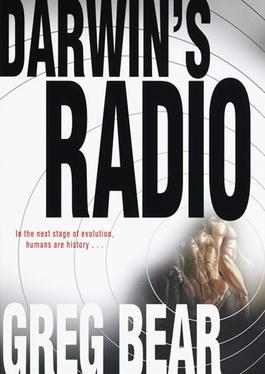
Just heard that the science-fiction writer Greg Bear had passed away. I read [a French translation of] Blood Music in 1985 or 1986, and while I did not like the second half so much, I remember being impressed by the originality of the story when compared with classics like Asimov’s Foundation trilogy. (Little did I know that Bear would later contribute to the Foundation corpus by Foundation and Chaos, which I have not read to this day.) Later, much later, I read Hull Zero Three, again an original (if space-operatic) book, and Darwin’s Radio, which remains one of my favourite books in science fiction, if only because it is deeply grounded into science. Followed by Darwin’s Children this very summer. (I may have read Moving Mars as the story synopsis sounds familiar, but I am unsure…) A great writer, to whom I am grateful for all the gripping time spent on his page-turning books!

Nature tidbits [the Bayesian brain]

Posted in Statistics with tags , , , , , , , , , , , , , , on March 8, 2020 by xi'an

In the latest Nature issue, a long cover of Asimov’s contributions to science and rationality. And a five page article on the dopamine reward in the brain seen as a probability distribution, seen as distributional reinforcement learning by researchers from DeepMind, UCL, and Harvard. Going as far as “testing” for this theory with a p-value of 0.008..! Which could be as well a signal of variability between neurons to dopamine rewards (with a p-value of 10⁻¹⁴, whatever that means). Another article about deep learning about protein (3D) structure prediction. And another one about learning neural networks via specially designed devices called memristors. And yet another one on West Africa population genetics based on four individuals from the Stone to Metal age (8000 and 3000 years ago), SNPs, PCA, and admixtures. With no ABC mentioned (I no longer have access to the journal, having missed renewal time for my subscription!). And the literal plague of a locust invasion in Eastern Africa. Making me wonder anew as to why proteins could not be recovered from the swarms of locust to partly compensate for the damages. (Locusts eat their bodyweight in food every day.) And the latest news from NeurIPS about diversity and inclusion. And ethics, as in checking for responsibility and societal consequences of research papers. Reviewing the maths of a submitted paper or the reproducibility of an experiment is already challenging at times, but evaluating the biases in massive proprietary datasets or the long-term societal impact of a classification algorithm may prove beyond the realistic.