
Archive for Philosophical Transactions of the Royal Society
360th anniversary
Posted in Books, University life with tags An Essay towards solving a Problem in the Doctrine of Chances, Bill Bryson, Colbert, Denis de Sallo, Henry Oldenburg, Journal des Sçavans, Louis XIV, Philosophical Transactions of the Royal Society, Richard Price, Royal Society, scientific journals, Thomas Bayes on July 5, 2025 by xi'an
early peer review
Posted in Books, Statistics, University life with tags Alan Turing, Bayesians, Charles Darwin, eulogy, Francis Galton, geophysics, Harold Jeffreys, history of statistics, John Burdon Sanderson Haldane, Nature, Philosophical Transactions of the Royal Society, population genetics, refereeing, Royal Society on December 15, 2024 by xi'an
“For a 1950 paper that discussed ‘anisotropic elastic continuum’ by mathematician James Oldroyd, geophysicist Harold Jeffreys wrote: `Knowing the author, I have confidence that the analysis is correct.’”
(albeit identified as a geophysicist) and Haldane
“A negative review [of Alan Turing’s 1951 paper] by scientist J.B.S. Haldane states: `I consider that the whole non-mathematical part should be re-written.’ A more positive opinion came from physicist Charles Galton Darwin, who said: `This paper is well worth printing, because it will convey to the biologist the possibilities of mathematical morphology.’ Still, Darwin criticized the proposed use of a “digital computer” to simulate wave theory. “The machinery is far too heavy for such a simple purpose,” Darwin argued.”
and Haldane again
“In a 1943 review by Haldane of a paper on the fecundity of Drosophila flies, the reviewer suggested cutting figures and tables, some of the discussion and, bizarrely, a short eulogy of a fly biologist.”
Bayesian inference: challenges, perspectives, and prospects
Posted in Books, Statistics, University life with tags Adrian Smith, Bayesian Analysis, Bayesian foundations, Bayesian theory, Bruno de Finetti, changepoint detection, classification, clustering, exchangeability, hierarchical Bayesian modelling, marginal likelihood, MCMC, Nicolas Bourbaki, Philosophical Transactions of the Royal Society, probability does not exist, Read paper, Royal Society, Royal Statistical Society on March 29, 2023 by xi'an Over the past year, Judith, Michael and I edited a special issue of Philosophical Transactions of the Royal Society on Bayesian inference: challenges, perspectives, and prospects, in celebration of the current President of the Royal Society, Adrian Smith, and his contributions to Bayesian analysis that have impacted the field up to this day. The issue is now out! The following is the beginning of our introduction of the series.
When contemplating his past achievements, it is striking to align the emergence of massive advances in these fields with some papers or books of his. For instance, Lindley’s & Smith’s ‘Bayes Estimates for the Linear Model’ (1971), a Read Paper at the Royal Statistical Society, is making the case for the Bayesian analysis of this most standard statistical model, as well as emphasizing the notion of exchangeability that is foundational in Bayesian statistics, and paving the way to the emergence of hierarchical Bayesian modelling. It thus makes a link between the early days of Bruno de Finetti, whose work Adrian Smith translated into English, and the current research in non-parametric and robust statistics. Bernardo’s & Smith’s masterpiece, Bayesian Theory (1994), sets statistical inference within decision- and information-theoretic frameworks in a most elegant and universal manner that could be deemed a Bourbaki volume for Bayesian statistics if this classification endeavour had reached further than pure mathematics. It also emphasizes the central role of hierarchical modelling in the construction of priors, as exemplified in Carlin’s et al.‘Hierarchical Bayesian analysis of change point problems’ (1992).
The series of papers published in 1990 by Alan Gelfand & Adrian Smith, esp. ‘Sampling-Based Approaches to Calculating Marginal Densities’ (1990), is overwhelmingly perceived as the birth date of modern Markov chain Monte Carlo (MCMC) methods, as itbrought to the whole statistics community (and the quickly wider communities) the realization that MCMC simulation was the sesame to unlock complex modelling issues. The consequences on the adoption of Bayesian modelling by non-specialists are enormous and long-lasting.Similarly, Gordon’set al.‘Novel approach to nonlinear/non-Gaussian Bayesian state estimation’ (1992) is considered as the birthplace of sequential Monte Carlo, aka particle filtering, with considerable consequences in tracking, robotics, econometrics and many other fields. Titterington’s, Smith’s & Makov’s reference book, ‘Statistical Analysis of Finite Mixtures’ (1984) is a precursor in the formalization of heterogeneous data structures, paving the way for the incoming MCMC resolutions like Tanner & Wong (1987), Gelman & King (1990) and Diebolt & Robert (1990). Denison et al.’s book, ‘Bayesian methods for nonlinear classification and regression’ (2002) is another testimony to the influence of Adrian Smith on the field,stressing the emergence of robust and general classification and nonlinear regression methods to analyse complex data, prefiguring in a way the later emergence of machine-learning methods,with the additional Bayesian assessment of uncertainty. It is also bringing forward the capacity of operating Bayesian non-parametric modelling that is now broadly accepted, following a series of papers by Denison et al. in the late 1990s like CART and MARS.
We are quite grateful to the authors contributing to this volume, namely Joshua J. Bon, Adam Bretherton, Katie Buchhorn, Susanna Cramb, Christopher Drovandi, Conor Hassan, Adrianne L. Jenner, Helen J. Mayfield, James M. McGree, Kerrie Mengersen, Aiden Price, Robert Salomone, Edgar Santos-Fernandez, Julie Vercelloni and Xiaoyu Wang, Afonso S. Bandeira, Antoine Maillard, Richard Nickl and Sven Wang , Fan Li, Peng Ding and Fabrizia Mealli, Matthew Stephens, Peter D. Grünwald, Sumio Watanabe, Peter Müller, Noirrit K. Chandra and Abhra Sarkar, Kori Khan and Alicia Carriquiry, Arnaud Doucet, Eric Moulines and Achille Thin, Beatrice Franzolini, Andrea Cremaschi, Willem van den Boom and Maria De Iorio, Sandra Fortini and Sonia Petrone, Sylvia Frühwirth-Schnatter, Sara Wade, Chris C. Holmes and Stephen G. Walker, Lizhen Nie and Veronika Ročková. Some of the papers are open-access, if not all, hence enjoy them!
Galton’s 1904 paper in Nature
Posted in Books, Statistics, University life with tags American Journal of Sociology, eugenics, Francis Galton, Isaac Newton, Karl Pearson, Nature, Philosophical Transactions of the Royal Society, Proceedings of the Royal Society, racism, Sociological Society on October 11, 2022 by xi'an
Nature [28 September] posted an editorial apologizing for publishing Galton’s 1904 speech on Eugenics as part of “material that contributed to bias, exclusion and discrimination in research and society”. Apology that I do not find particularly pertinent from an historical viewpoint, given the massive time, academic, and societal distances we stand from this “paper”, which sounds more than a pamphlet than a scientific paper, by current standards. Reading these 1904 Nature articles show no more connection with a modern scientific journal than considering Isaac Newton’s alchemy notes in the early proceedings of the Royal Society.
“The aim of eugenics is to represent each class or sect by its best specimens; that done, to leave them to work out their common civilization in their own way.” F. Galton
Galton’s speech was published in extenso by the American Journal of Sociology, along with discussions from participants of the Sociological Society meeting. This set of discussions is rather illuminating as the views of the 1904 audience are quite heterogeneous, from complete adherence to a eugenic “golden’ future (see the zealous interventions of K. Pearson or B. Shaw] to misgivings about the ability to define the supposed ranking of members of society by worth or intelligence (H.G. Wells), to rejection that moral traits are genetically inherited (Mercier), to protests against the negation of individual freedom induced by a eugenic state (B. Kidd) and to common sense remarks that improvements in living conditions of the working classes were the key factor in improving society. But, overall, there was no disagreement therein on the very notion of races and on the supposed superiority of the Victorian civilization (with an almost complete exclusion of women from the picture), reflecting on the prejudices of the era and it is quite unlikely that this 1904 paper of Galton had any impact on these prejudices.
Price’s theorem?
Posted in Statistics with tags An Essay towards solving a Problem in the Doctrine of Chances, Martyn Hooper, Philosophical Transactions of the Royal Society, Richard Price, Royal Society, Significance, Thomas Bayes on March 16, 2013 by xi'an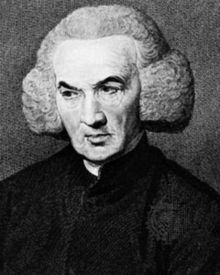 A very interesting article by Martyn Hooper in Significance Feb. 2013 issue I just received. (It is available on-line for free.) It raises the question as to how much exactly Price contributed to the famous Essay… Given the percentage of the Essay that can be attributed to Price with certainty (Bayes’ part stops at page 14 out of 32 pages), given the lack of the original manuscript by Bayes, given the delay between the composition of this original manuscript (1755?), its delivery to Price (1761?) and its publication in 1763, given the absence of any other document published by Bayes on the topic, I tend to concur with Martyn Hooper (and Sharon McGrayne) that Price contributed quite significantly to the 1763 paper. Of course, it would sound quite bizarre to start calling our approach to Statistics Pricean or Pricey (or even Priceless!) Statistics, but this may constitute one of the most striking examples of Stigler’s Law of Eponymy!


