 On the 25 June edition, an editorial calling Europe to lead on free and open science, while boosting industrial consequences. (By the way, Japan just joined Horizon Europe! While the UK will rejoin Erasmus in 2027, under the headline “Brexit tore apart European science — now the research rifts are healing“, mentioning the financial and visa unsolved issues.) A news article continuing the investigation of how AI impacts or will impact mathematical research, with a FirstProof test evaluating AIs solving new, research-level, maths problems. (But missing Claude Mythos and Google’s Aletheia.) A “comment” from a Chinese academic that science needs humanities, at a time when universities in the UK are closing some humanities departments. And a discussion of the exceptional discovery of a whale necropolis, 7km deep, with fossil remains dating back to 5M years mixed with recent ones. Plus another exciting 10 page paper about genetic sleuthing on population changes at the collapse of the Roman empire, in the Danube-Isar and Rhein-Main areas of present-day Germany. (The attached picture representing posterior estimates of life expectancies of some individuals, obtained by MCMC.) In the Carreers section, a story from a geography researcher whose job offer was rescinded at the last moment, a scary thing that is alas not so rare.
Archive for fossils
Nature tidbits
Posted in Books, Statistics, University life with tags AI, Brexit, Britain, Danube, fossils, Genetics, Germany, Horizon Europe, humanities, Isar, Japan, LLMs, Main, MCMC, Nature, Rhein, Roman Empire, whales on August 29, 2026 by xi'anNature tidbits [19 June 2025]
Posted in Books, Kids, pictures, Travel, University life with tags @ScientistTrump, AMOC), Arctic, Atacama, Atlantic Meridional Overturning Circulation, axolotls, ban guns, Chile, China, computer vision, cyborg, defence spending, DOGE, Egypt, Elsevier, Europe, face recognition, First Nations, foreign aid, fossils, France, Greenland, gun control, gun lobby, ice age, infectious diseases, life expectancy, Medicaid, Nature, pangolin, Paris, plastic waste, Pontifical Academy of Science, Science, Svalbard, Thousand Talents Plan, transport accidents, University of Warwick, USA, USAid, Vera Rubin Observatory, WHO, World Health Organization on August 9, 2025 by xi'an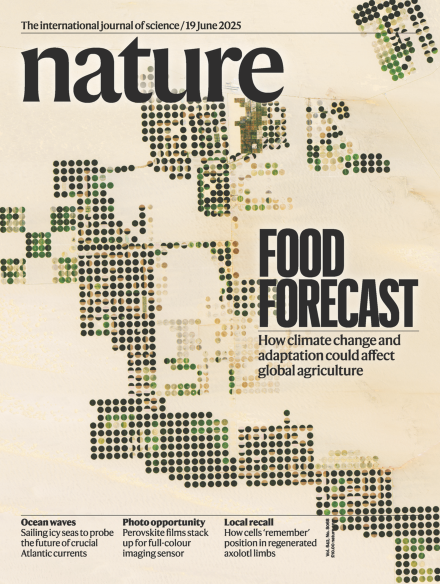
News on the incoming Vera Rubin Observatory telescope in Chile—if not close to the Atacama peaks I climbed during ISBA 2004—and its unique technology (with a camera the size of a car!). As well as a highlight on African space agencies (where I discovered that Egypt is the most active). Plus, a rather vague report on ether0 as a “stepping stone towards a reasoning model“, once again playing with words and double meaning on what’s reason(ing). Further entries (alas!) onH ow Trump 2.0 is reshaping science with the impact of barring entry to 19 countries’ nationals and China multiplying calls to attract researchers from abroad and keep students in the country. Including unusually large salaries and benefits. (Pangolins and axolotls make an appearance in both this issue and the next, how unlikely is this?! With the conflicting items of information that the former are primarily hunted for their scales or for their taste.)
 The most frightening section of the 19 June issue is however on the threat of a collapse of the Atlantic Meridional Overturning Circulation (AMOC), which would bring a new Ice Age to Western Europe and dramatic changes in the weather worldwide. Along with several research articles on climate change and its impacts.
Nature tidbits [26 June 2025]
Posted in Books, Kids, Travel, University life with tags @ScientistTrump, axolotls, ban guns, computer vision, cyborg, defence spending, DOGE, Europe, face recognition, First Nations, foreign aid, fossils, France, gun control, gun lobby, infectious diseases, life expectancy, Medicaid, Nature, Paris, plastic waste, Pontifical Academy of Science, Science, transport accidents, University of Warwick, USA, USAid, WHO, World Health Organization on August 1, 2025 by xi'an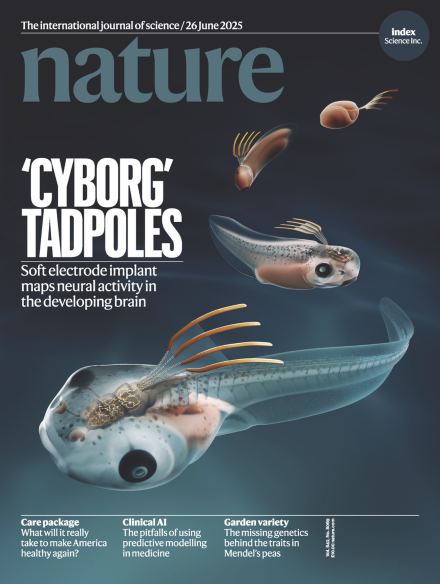
Half-a-dozen entries on How Trump 2.0 is reshaping science, from the federal judicial ruling that NIH grants are illegal since discriminatory (with no immediate impact), to the new vaccine panel members set by RF Kennedy with a dearth of experts and the arrival of vaccine sceptics (or worse), to a Nature supplement entitle Science Inc., looking at private funding to compensate for federal disengagement (with France’s Sanofi and Capgemini deserving a mention, for once), to an original Nature—and KFF, a non-profit health-policy research organization from San Francisco— investigation on how to make the US healthy again. If at all feasible.

As expected, the gap with other wealthy (and more healthy) nations is stupendous for many criteria. Caused by much higher death rates associated with COVID-19, substance misuse, chronic diseases, transport accidents (poor public facilities), and gun deaths (of course, even though this latter cause was recently removed from the HSS website). With a significant difference between States and ethnicities. The fixes requiring more federal intervention and money, as well as opposing the gun lobby, it is very very unlikely this is going to happen, witness the recent cut on Medicaid.
“one 5-year-old out of every 20 will die before the age of 45 The comparable figure is one in 50 in the United Kingdom and one in 100 in Switzerland.”
punk rock [cover]
Posted in Books, pictures with tags @ScientistTrump, AI, AI scare, automated translation, cover, fossils, molluscs, natural language processing, Nature, Trump administration on March 19, 2025 by xi'an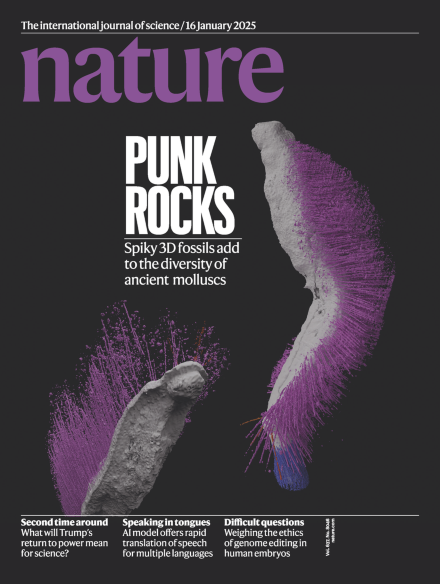
Nature tidbits [06 Feb 2025]
Posted in Statistics with tags 23andMe, @ScientistTrump, Africa, Australophitecus africanus, bear, bird flu virus, Buachaille Mor, camembert, Canada, Cité des Sciences et de l'Industrie, Data Protection Act, Europe, First Nations, fossils, France, H5N1 virus, infectious diseases, lynx, Nature, Nova Scotia, open source, Paris, plastic waste, raw milk, recycling, red deer, Scotland, silence, Spain, superheated water, unions, University of Warwick, Warwick Manufacturing Group, WHO, WMG, wolverines, wolves, World Health Organization on March 10, 2025 by xi'an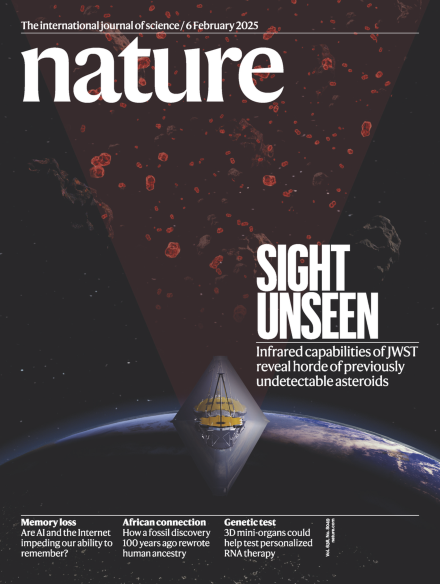
A (naïve, imho) call by the presidente of the Union of Concerned Scientists to boost scientific integrity to protect (US) federal research despite the chainsaw massacre unfolding daily in (US) federal agencies. And the disregard of said massacrers for accountability and legal boundaries. And unions, definitely unions.
Also entries (and two Nature collections) on the one hundredth anniversary of the Taung Child fossil uncovering, as the first Australophitecus africanus that opened the way for the theory that Africa was the birthplace of humanity, along with other extended books reviews. On quantum theory (it’s complicated!, according to Sean Carroll) and Kepler mission (by Jason Steffen). And a show at Cité des Sciences in La Villette about silence that I would love to attend.
A quick assessment of deepseek against its competitors. Mostly praising its open code. And another one on 23andMe losses and trouble, reflecting the one-shot strategy of the company that cannot sell its analysis more than once (despite repeatedly trying, as I can confirm from their frequent emails). And opening concerns about their data or rather our data. Since there is very little protection in the US for this kind of data, considered out of healthcare.
New challenges of large carnivores in Western Europe, with a rise of wolverines, success story for the Iberian lynx, talks of reintroducing wolves to Scotland (to cull red deer like those who roam Buachaille Mor), degrading setting in France with looser rules for shooting wolves.
Microplastics in the brain, unsurprisingly increasing the chances of clots and surprisingly easily moving into blood vessels and the brain. And, speakiMicroplastics in the brainng of plastic, recycling, at last? Warwick Manufacturing Group (WMG) mentioned as evaluating the life-cycle analysis of a new approach with superheated water. Exposing the elephant in the room, namely that there is very little true recycling going on and that part of the recycled plastic ends up as fuel, hence contributing to pollution. Costs and impact of turning used products into new material are mentioned (and staggering albeit not compared with the initial costs and impact.
And I remain perplexed by the Two-Eyed Seeing Indigenous perspective for neuroscience article. As I do not see the scientific component, besides directions to work with local communities.


