
Archive for scientific journals
360th anniversary
Posted in Books, University life with tags An Essay towards solving a Problem in the Doctrine of Chances, Bill Bryson, Colbert, Denis de Sallo, Henry Oldenburg, Journal des Sçavans, Louis XIV, Philosophical Transactions of the Royal Society, Richard Price, Royal Society, scientific journals, Thomas Bayes on July 5, 2025 by xi'an
Nature tidbits
Posted in Books, pictures, Travel, University life with tags African, African languages, AI, AI regulation, artificial general intelligence, bad graph, Bangalore, bar charts, bromalite, ChatGPT, cololite, corpolite, corporate incentives, DeepMind, dinosaur, ecosystem, EU, European Commission, Google, human intelligence, large language models, Nature, neural networks and learning machines, privacy, probabilistic forecasting, regurgitalite, scientific journals, weather forecasting on January 9, 2025 by xi'an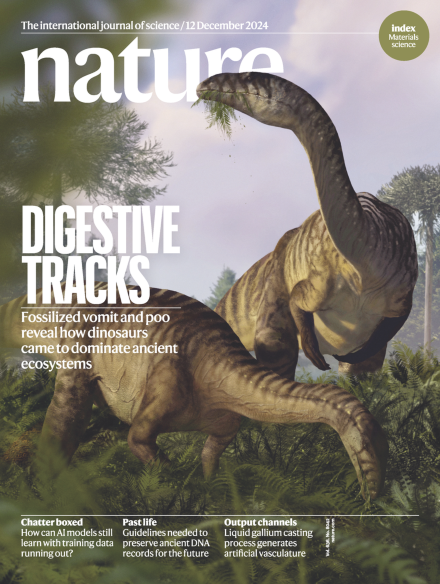
AISTATS 2016 [post-decisions]
Posted in Books, pictures, Statistics, Travel, University life with tags AISTATS 2016, Andalucía, Artificial Intelligence and Statistics, Cadiz, conferences, editor, machine learning, proceedings, refereeing, rejection, scientific journals, Spain on December 27, 2015 by xi'an Now that the (extended) deadline for AISTATS 2016 decisions is gone, I can gladly report that out of 594 submissions, we accepted 165 papers, including 35 oral presentations. As reported in the previous blog post, I remain amazed at the gruesome efficiency of the processing machinery and at the overwhelmingly intense involvement of the various actors who handled those submissions. And at the help brought by the Toronto Paper Matching System, developed by Laurent Charlin and Richard Zemel. I clearly was not as active and responsive as many of those actors and definitely not [and by far] as my co-program-chair, Arthur Gretton, who deserves all the praise for achieving a final decision by the end of the year. We have already received a few complaints from rejected authors, but this is to be expected with a rejection rate of 73%. (More annoying were the emails asking for our decisions in the very final days…) An amazing and humbling experience for me, truly! See you in Cadiz, hopefully.
AISTATS 2016 [post-submissions]
Posted in Books, pictures, Statistics, Travel, University life with tags AISTATS 2014, AISTATS 2016, Andalucía, Artificial Intelligence and Statistics, Cadiz, conferences, editor, machine learning, proceedings, refereeing, scientific journals, Spain on October 22, 2015 by xi'anNow that the deadline for AISTATS 2016 submissions is past, I can gladly report that we got the amazing number of 559 submissions, which is much more than what was submitted to the previous AISTATS conferences. To the point it made us fear for a little while [but not any longer!] that the conference room was not large enough. And hope that we had to install video connections in the hotel bar!
Which also means handling about the same amount of papers as a year of JRSS B submissions within a single month!, the way those submissions are handled for the AISTATS 2016 conference proceedings. The process is indeed [as in other machine learning conferences] to allocate papers to associate editors [or meta-reviewers or area chairs] with a bunch of papers and then have those AEs allocate papers to reviewers, all this within a few days, as the reviews have to be returned to authors within a month, for November 16 to be precise. This sounds like a daunting task but it proceeded rather smoothly due to a high degree of automation (this is machine-learning, after all!) in processing those papers, thanks to (a) the immediate response to the large majority of AEs and reviewers involved, who bid on the papers that were of most interest to them, and (b) a computer program called the Toronto Paper Matching System, developed by Laurent Charlin and Richard Zemel. Which tremendously helps with managing about everything! Even when accounting for the more formatted entries in such proceedings (with an 8 page limit) and the call to the conference participants for reviewing other papers, I remain amazed at the resulting difference in the time scales for handling papers in the fields of statistics and machine-learning. (There was a short lived attempt to replicate this type of processing for the Annals of Statistics, if I remember well.)
“la formule qui décrypte le monde”
Posted in Books, Statistics, University life with tags Bayes theorem, Bayesian statistics, Judea Pearl, Science & Vie, scientific communication, scientific journals, The Monty Hall problem, Thomas Bayes on November 6, 2012 by xi'an“It is only in the 1980s that the American mathematician Judea Pearl has shown that, by aligning hundreds of Bayes formulas, it was possible to take into account the multiple causes of a complex phenomenon.” (my translation)
As a curious coincidence, the latest issue of Science & Vie appeared on the day I was posting about Peter Coles’s warnings on scientific communication. The cover title of the magazine is the title of this post, The formula decrypting the World, and it is of course about… Bayes’ formula, no-one else’s!!! The major section (16 pages) in this French scientific vulgarization magazine is indeed dedicated to Bayesian statistics and even more Bayesian networks, with the usual stylistic excesses of journalism. As it happens, one of the journalists in charge of this issue came to discuss the topic with me a long while ago in Paris-Dauphine and I remember the experience as being not particularly pleasant since I had trouble communicating the ideas of Bayesian statistics in layman terms. In the end, this rather lengthy interview produced two quotes from me, one that could be mine (in connection with some sentences from Henri Poincaré) and another that is definitely apocryphal (yes, indeed, the one above! I am adamant I could not have mentioned Judea Pearl, whose work I am not familiar with, and even less this bizarre image of hundreds of Bayes’ theorems… Presumably, this got mixed up with a quote from another interviewed Bayesian. The same misquoting occurred for my friend Jean-Michel Marin!).
 Among the illustrations selected in the journal as vignettes, the Monty Hall paradox—which is an exercise in conditioning, not in statistical reasoning!—, signal processing for microscope images, Bayesian networks for robots, population genetics (and the return of the musk ox!), stellar cloud formation, tsunami prediction, microarray analysis, climate meta-analysis (with a quote from Noel Cressie), post-Higgs particle physics, ESP studies invalidation by Wagenmakers (missing the fact that the reply by Bern, Utts, and Johnson is equally Bayesian), quantum physics. From a more remote perspective, those are scientific studies using Bayesian statistics to establish important and novel results. However, it would have been easy to come up with equally important and novel results demonstrated via classical non-Bayesian approaches, such as exhibiting the Higgs boson. Now, I understand the difficulty in conveying to the layman the difference resulting from using a Bayesian reasoning to support a scientific argument, however this accumulation of superlatives opens the door to suspicions of bias and truncated perspectives… The second half of the report is less about statistics and more about psychology and learning, expanding on the notion that the brain operates in ways similar to Bayesian learning and networks. Continue reading


