Archive for Arthur C. Clarke

a journal of the four horsemen year

Posted in Books, Kids, Mountains, pictures, Running, Travel, University life, Wines with tags , , , , , , , , , , , , , , , , , , , , , , , , , , , , , , , , , , , , , , , , , , , , on January 7, 2026 by xi'an

Read a very light space-opera novel, (The Belt) Entanglement, by G.M. Kilby, with shallow characters, shallow plot with an unlikely McGuffin (a uniquely advanced quantum computer, even 20y later) and implausible rescue episodes (incl. one where a character punctures their spacesuit to recover from a broken propulsion thruster!). This book stands million years away from monuments of the genre, like Arthur C. Clarke‘s, Isaac Asimov‘s, Orson Scott Card‘s, Frank Herbert‘s or, to cite more recent writers, Iain Banks‘s, ‘sJohn Scalzi‘s, Becky Chambers‘s… I will most certainly not become entangled in the sequels! And am contemplating with glee attacking recent purchases and gifts, like Tasmyn Muir’s Nona the Ninth, Philip Pullman’s The Rose Field (Book of dust finale), and Florent Chavouet‘s Tokyo Sanpo (to revive memories of March’s visit to Edo!), discovered while attending an exhibit on Studio Ghibli’s Isao Takahata at Maison du Japon .

Brought back several litres of Andalusian olive oil from Sevilla! And made fresh green pici over the turn of the year, with spinach replacing water in the dough (following a recipe posted on the food weekly of France Inter), as well as three different dishes from the same batch of Norman scallops.

Watched Wake Up Dead Man, by Ryan Johnson, the third instalment of Benoît Blanc’s investigations. Which is rather fun, the more because Daniel Craig is visibly having fun playing a Southerner detective and over-doing his accent, while leaving a large chunk of the stage to other actors, like Josh O’Connor playing the junior, soul-searching priest. The plot itself is light and somewhat irrelevant (if with a wink to old classics of closed room murders, conveniently appearing in a Book Club list, if missing Gaston Leroux’s Mystère de la chambre jaune, as well as to Hitchcok’s Vertigo with a dolly zoom effect at the most dramatic instant), while the suspicion revolving among all characters is worth watching. Also tried a few episodes Just a bit Espers (ちょっとだけエスパー), a Japanese TV series on a group of almost ordinary persons with limited ExtraSensory PERception. The characters are nice but the plot is very weak, the resort to time travel all too common to this type of stories, the resolutions to the episodic challenges embarrassingly cringy, and the part of the story where a new employee (Bunty) has to play along being married to another (Shiki) who genuinely believes they are married is quite uncomfortable, to say the least…
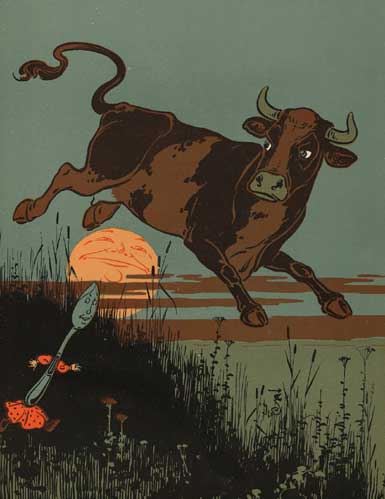
all over the moon [or not]

Posted in pictures, Travel with tags , , , , , , , , , , , on January 26, 2024 by xi'an

High diddle diddle,
The Cat and the Fiddle,
The Cow jump’d over the Moon,
The little dog laugh’d to see such Craft,
And the Dish ran away with the Spoon.

Read about the cumulated non-sense of a commercial company sending human remains (incl. some DNA of Arthur C. Clarke) to the Moon by a commercial mission, along with NASA scientific experiments, and of the Navajo Nation objecting to it for religious reasons. Wasting energy, time, room (albeit less than 70g) for vanity purposes (at $12,000 per gram) is evidently absurd, almost to the scale of launching a Tesla into space. But such is calling upon religious beliefs to control what can fly to the Moon and what cannot is equally absurd, especially when considering that the whole Moon lander is contaminated with all sorts of material, including DNA. But there may be a dog (on the Moon) since the mission failed.

A Closed and Common Orbit

Posted in Statistics with tags , , , , , , , on February 27, 2018 by xi'an

This book by Becky Chambers comes as a sequel of sorts to her first [science-fiction] book, A Long Way to a Small Angry Planet. Book that I liked a lot for its construction of relationships between the highly different team members of a spaceship. In this new book, the author pursues a similar elaboration of unlikely friendships between human and alien species, and AIs. If the first book felt homey, this one is even more so, with essentially two principal characters followed alternatively throughout the book, until the stories predictably cross. It is fairly well-written, with again a beautiful cover, but I cannot say it is as magisterial as the first book. The book-long considerations on the nature of AI and of cloned humans are certainly interesting and deep enough, but the story tension ebbs at time, especially for the story in the past since we know from the beginning that the main character will reappear in the current time. Not reaching the superlatives of a Hugo or Clarke Award in my opinion (albeit nominated for these prizes). Still a most enjoyable read!

Arcad’yaaawn… [book review]

Posted in Books, pictures, Travel with tags , , , , , , , , , , , , , on November 19, 2017 by xi'an

“How does it do this? Pears, not traditionally a science fiction writer, employs some commonly used devices of the genre to create a mind-bending but wholly satisfying tale…” Robin’s Books

“Indeed, Arcadia seems to be aimed at the lucrative crossover point between the grownup and YA markets, even if it lacks the antic density of the Harry Potter series or the focused peril of The Hunger Games.” Steven Poole, The Guardian

The picture above is completely unrelated with the book if not the title. (And be at rest: I am not going to start an otter theme in the spirit of Andrew’s cats… Actually a cat plays a significant role in this book.) But Pears’ Arcadia is a fairly boring tale and an attempt at a rather dry play on the over-exploited theme of time-travel. Yaaawny, indeed!

I am fairly disappointed by this book, the more because Pears’ An Instance at the Fingerpost is a superb book, one of my favourites!, with a complexity of threads and levels, while maintaining a coherence of the plot that makes the final revelation a masterpiece. The Dream of Scipio also covers several historical periods of French Provence with a satisfactory plot and deep enough background (fed by a deep knowledge of the area and the eras…). The background, the broader perspective, the deep humanity of the characters, all these qualities of Pears’ books are lost in Arcadia, which sums up as an accumulation of clichés on dystopias, time-travel, and late 1950’s Oxford academics. [Warning, spoilers ahoy!] The parallel (and broadly medieval) universe to which the 20th century characters time-travel has some justifications for being a new type of Flatland: it is the creation of a single Oxonian academic, a mix of J.R. Tolkien and Eric Ambler. But these 20th century characters are equally charicaturesque. And so are the oppressors and the rebels in the distant future. (Set on the Isle of Mull, of all places!) And the mathematics of the time-travel apparatus are carefully kept hidden (with the vague psychomathematics there reminding me of the carefully constructed Asimov’s psychohistory.)

There is a point after which pastiches get stale and unattractive. And boring, so Yawn again. (That the book came to be shortlisted for the Arthur C. Clarke award this year is a mystery.)

Children of Time [book review]

Posted in Books, pictures, Travel with tags , , , , , , , , , , on October 8, 2017 by xi'an

I came by this book in the common room of the mathematics department of the University of Warwick, which I visit regularly during my stays there, for it enjoys a book sharing box where I leave the books I’ve read (and do not want to carry back to Paris) and where I check for potential catches… One of these books was Tchaikovsky’s children of time, a great space-opera novel à la Arthur C Clarke, which got the 2016 Arthur C Clarke award, deservedly so (even though I very much enjoyed the long way to a small angry planet, Tchaikosky’s book is much more of an epic cliffhanger where the survival of an entire race is at stake). The children of time are indeed the last remnants of the human race, surviving in an artificial sleep aboard an ancient spaceship that irremediably deteriorates. Until there is no solution but landing on a terraformed planet created eons ago. And defended by an AI spanned (or spammed) by the scientist in charge of the terra-formation, who created a virus that speeds up evolution, with unintended consequences. Given that the strength of the book relies on these consequences, I cannot get into much details about the alternative pathway to technology (incl. artificial intelligence) followed by the inhabitants of this new world, and even less about the conclusive chapters that make up for a rather slow progression towards this final confrontation. An admirable and deep book I will most likely bring back to the common room on my next trip to Warwick! (As an aside I wonder if the title was chosen in connection with Goya’s picture of Chronus [Time] devouring his children…)