Archive for AI regulation

Nature tidbits [18 June]

Posted in Books, Kids, pictures, Travel with tags , , , , , , , , , , , , , , , , , , , , , , , , , , , , on July 13, 2026 by xi'an


A personal tribune (by a Vatican advisor) on why scientists should learn from the Pope’s AI message, not the first time Nature caters to religious views! Not that his (Leon’s) concerns about unregulated AI and the abdication of States in that matter are misplaced. But it seems unlikely (as the author concedes in his conclusion) that the Catholic Church or his leader will manage to make a dent on the spiraling impact of AIs. As suggested in the next tribune, a coordinated approach at a massive increase of taxes on tech companies (unsurprisingly resisted by the Orange Menace) is more likely to happen. And yet another tribune on AI and math(ematician)s, related to the recent Leiden Declaration on Artificial Intelligence and Mathematics, following several entries in the previous issue.
An introductory (general public) article as to why cancer occurrences in young people is rising so quickly in the US, with no single explanation. Environmental factors are certainly to blame, like the consumption of ultra–processed foods, but the article does not say much, adding to the uncertainty.

A rather unhelpful representation of human migration in 2023, appart from showing a majority of migrations are local (to the continental scale). Connected to an article of 10 June I missed. Partly based on a deep learning model to achieve a country-level granularity.

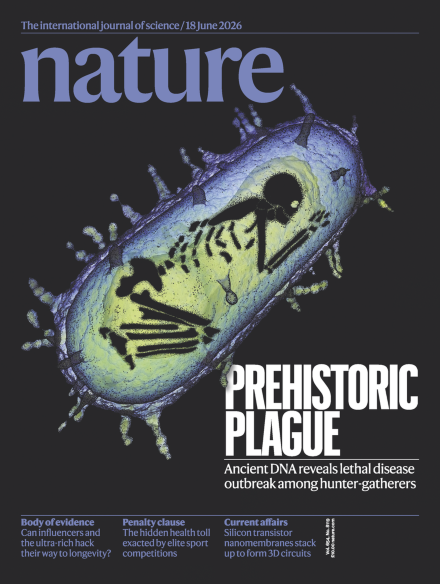
A research article (and the cover) on a plague outbreak near Lake Baikal—over which I could have flown when reading this issue, except that flights to Japan now contour the territories of the invader of Ukraine—that occurred about 5,500 years ago and impacted a community of hunter-gatherers, In a sparsely populated area, marmots being the likely primary vectors, and a close phylogenetic proximity to current strains.

privacy research day in Paris [24 June 2026]

Posted in pictures, Statistics, Travel, University life with tags , , , , , , , , , , , , , on June 11, 2026 by xi'an

watermarking for privacy (with no durian)

Posted in Books, Statistics, Travel, University life with tags , , , , , , , , , , on February 14, 2025 by xi'an

In Scalable watermarking for identifying large language model outputs, published by Dathathri, See, Ghaisas, et (many) al. in Nature of 23 October 2024, the authors propose an algorithm to (voluntarily) watermark synthetic texts to identify them as such, through a statistical test. Here are a few quotes to relate to the authors’ solution.

“LLMs generate text based on preceding context (…) given a sequence of input text x<t = x1, …, xt−1 consisting of t − 1 tokens from a vocabulary V, the LLM computes the probability distribution pLM(⋅∣x<t) of the next token xt given the preceding text x<t. To generate the full response, xt is sampled from pLM(⋅∣x<t), and the process repeats until either a maximum length is reached or an end-token is generated.

In a watermarking scheme, a sampling algorithm is an algorithm that takes as input a probability distribution p ∈ ΔV and a random seed and returns a token.

Tournament sampling selects a token from the LLM distribution that is likely to score higher under the random watermarking functions (…) Given the selection of tokens xt based on higher g-values, we expect watermarked text generally to score higher under this score than unwatermarked text (…) [It] requires g-values to decide which tokens win each match in the tournament. Intuitively, we want a function that takes a token x ∈ V, a random seed and the layer number ℓ ∈ {1, …, m}, and outputs a g-value gℓ(x, r) that is a pseudorandom sample from some probability distribution fg (the g-value distribution).”

At the Ocean privacy workshop, someone came with the question of trusting (or not) synthetic data and I remembered this article. Suggesting watermarking for said synthetic data by having providers or agents (privately) running a disclosed or registered code that delivers a watermark which provides a strong support to the synthetic data being produced likewise. I remain uncertain this is at realistic.

Nature tidbits

Posted in Books, pictures, Travel, University life with tags , , , , , , , , , , , , , , , , , , , , , , , , , , , on January 9, 2025 by xi'an

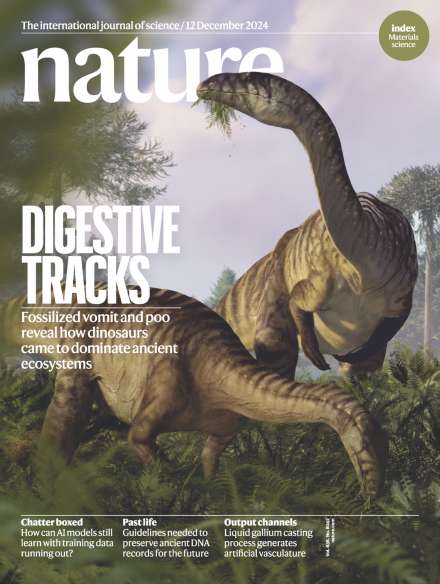
From the 12 December issue, lots of AI entries in Nature (soon moving to NAIture??), from the arrival of AGI, artificial general intelligence, and the usual barren call for companies to take responsibility (!) and equally repeated pious wishes for (better) controlling the incoming “human intelligent” AIs, to the two year anniversary of ChatGPT, which came as a significant support to non-native English speakers, if raising concern about the privacy losses in delivering unprotected data to the model,  to the incoming dearth of data to feed AIs (duh? why would new data be necessary for new AI systems?), with the danger that using AI generated data to train new AIs is not good being repeated anew, to the poor performances of LLMs on African languages, and the correlated dearth of funding in Africa, to DeepMind doing better than weather agency supercomputers to predict weather on a 15 day window, including extreme weather events (not much of a surprise, as climate change does not mean that history of past weather patterns cannot be exploited) albeit the probabilistic nature of the forecast seems to derive from the randomness of the starting conditions, hence depends on the choice of that distribution, to the (unsurprising) 50% productivity boost in design in a material science company afforded by seconding (or supplanting!) researchers with AI tools, to the poor design of bar plots (inc. Nature) that induce misunderstandings. A fair degree of double entries when considering the earlier 5 December issue, also read in the plane, with again fossilized poo, AI soon reaching human intelligence level (??),  and the AI computing gap between academy and industry. Beside this AI frenzy, a news article reporting on the EU trying to create an applied research council equivalent to what the ERC succeeded for academic research. (And I will not mention the digestive track article further than pointing out it added bromalite, cololite, and regurgitalite, to my digestive vocabulary!)

Nature snapshots [10 Aug 2023]

Posted in Statistics with tags , , , , , , , , , , , , , on November 12, 2023 by xi'an

Many gems in the 10 Aug issue I found home back from Western Canada. Starting with the cover theme related to the fascinating paper Solid-body trajectoids shaped to roll along desired pathways by Sobolev et al. which shows that there exist 3D objects corresponding to any infinitely periodic trajectory and furthermore that such objects can be printed to this effect (watch the great videos!). Although they are more likely to be of a period larger than 1, i.e. producing several copies of the trajectory basis before returning to their original contact point. Amazingly, self-intersecting trajectories may also be produced.

Plenty of AI entries, like Artificial-intelligence search engines wrangle academic literature (as an advanced Google Scholar) and Publishing companies (like Elsevier) developing ChatGPT-like search engines. (While trying to stay clear from fake references!). Plus a long enquiry on Rules to keep AI in check: nations carve different paths for tech regulation about the different approaches envisioned by the EU, the USA, and China, with little practical advance so far for the first two. (While the UK plans its own AI safety summit in Bletchley Park this Fall.)

And an article on how Chinese students are starting to feel less inclined to study abroad. And not only in connection with the COVID pandemic. Or the US growing restrictions on student visas. But mainly because of the quickly growing attractivity of mainland China and Hong Kong universities. (The article states that “For every 1,000 PhDs that have been denied [visa] by the US government, US institutions will lose nearly US$1 billion in tuition fees”, but this does not sound highly relevant since most PhD tuitions are paid from supervisors’ grants, while students from other country may substitute for those denied visa.)