Archive for social media

far-right violence: digital radicalisation is threatening democracy [The Guardian]

Posted in Books, Kids, pictures with tags , , , , , , , , , , , , , , , on June 17, 2026 by xi'an

An editorial from The Guardian on 10 June, addressing the far-right, racist, and anything but spontaneous, riots in the UK:

Masked men who drive terrorised families out of their homes cannot be called protesters, since the word implies legitimate grievance. The outbreak of racist violence in Northern Ireland this week is connected to the politics of migration, but not in the way that the mob and those who incited it claim. The ostensible trigger was a brutal assault, partially captured on video. A man of Sudanese origin has been charged with attempted murder. The footage was widely shared online. The attack was depicted as part of a wider threat to white Britons by foreign “invaders”. Far-right agitators summoned vengeful crowds. Stephen Yaxley-Lennon, a.k.a. Tommy Robinson, was instrumental in this process. So was Elon Musk, the billionaire owner of X, whose platform helped mobilise racist fury.

Mr Musk habitually intervenes in UK politics. Last year, he addressed a rally organised by Mr Yaxley‑Lennon via video link. He called for the removal of the current government and warned against the threat from “uncontrolled migration”. He told the crowd “You either fight back or you die”. He reposted that line on Tuesday.

Mr Musk shows no interest in the reality of life in the UK, preferring to amplify dystopian myths. Mr Yaxley-Lennon styles himself as a patriot, but his racially charged ultranationalism is hostile to traditions of British pluralism and tolerance. His true ideological affinity is revealed by the trip he made to Moscow last week with the goal, as he put it, of admiring “the beauty of a civilised society”. That is not how most British people would characterise Vladimir Putin’s repressive authoritarian regime, which murders dissidents and invaded a neighbouring democracy to steal its territory.

Mr Yaxley-Lennon doesn’t represent mainstream opinion, but his divisive politics are expanding from the fringe, facilitated by social media algorithms and, in the case of Mr Musk, one especially powerful and ideologically fixated oligarch. The result is a digital ecosystem where moderate conservative opinion has been crowded out by radical nationalism and, on the topic of immigration, a far-right worldview twisted with paranoia and racist hysteria.

Reform UK’s Nigel Farage and Restore Britain’s Rupert Lowe act as conduits for that style in mainstream debate, channelling the idiom of the fringe into parliament and on BBC bulletins. Kemi Badenoch, the Conservative leader, condemns violent manifestations of anti-immigrant politics but fails to recognise that her own party has abetted the rhetorical vilification that turns minority communities into targets for mob rage. Ms Badenoch also competes for attention in online spaces and in analogue right-leaning media, where politics is a feedback loop of radicalisation. When the economic conditions that incubate extremism are hard to fix, politicians are drawn to collude in the fiction that migration is the root cause and to excuse racism as a normal expression of social discontent.

This process has met far too little resistance from Sir Keir Starmer’s government. The prime minister issues insipid warnings to social media companies to behave responsibly. He condemns racist violence and urges calm on the streets. But he does not properly address the mechanism – the ideological capture of a digital information space – that is undermining social cohesion and sabotaging democracy at a systemic level. A contagious violent strain of far-right politics has been normalised online and is now spreading on to the streets. It needs to be beaten on both fronts.

orange the World

Posted in Kids, Travel with tags , , , , , , , , , , on November 25, 2025 by xi'an

ISBA World meeting(s) 2028

Posted in Books, Travel, University life with tags , , , , , , , , , , , , , , , , on October 28, 2025 by xi'an

An item of news I had missed in the June issue of the ISBA Bulletin is that the 2028 ISBA World meeting will take place in Milwaukee, USA. As pointed out by Michelle Guindani, this is is the first time the main conference of ISBA takes place in the United States since 1993 (which I did not attend). Rotation of locations between strategically located places makes sense, esp. in countries with a large IBSA membership like the US. Unfortunately, and as for BayesComp 2027 at Texas A&M, this will take place during the Trump administration, administration that set an entry prohibition for citizens of only dog knows how many countries by then and arbitrary border checks linked with activism that runs counter to their far right ideology. I thus hope hybrid options will be available for those who cannot or fear to attend in person, with many mirror gatherings like the one we ran for ISBA 2022, towards more inclusivity and social interactions.

opinions as prohibited items on flights

Posted in Statistics, Travel with tags , , , , , , , , , , , , on March 24, 2025 by xi'an

Nature tidbits [and garbage out]

Posted in Books, Kids, Mountains, pictures, Travel, University life with tags , , , , , , , , , , , , , , , , , , , , , , , , , on October 25, 2024 by xi'an

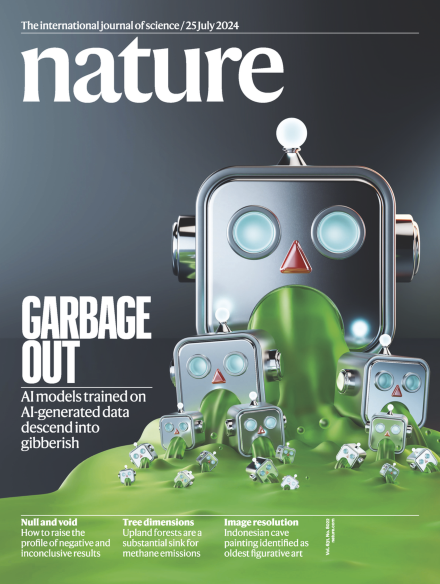
Many bits of interest in the 25 July issue of Nature that stayed under a pile of journals for PNW reasons! Even though the cover is rather off-putting…

  • A call by the editors (and computer scientist Cal Newport) for scientists to “stop, drop, and think” (and the paperback version of Newport’s Slow Productivity has a nice cover that looks very much like Moraine Lake in Banff National Parc!)
  • Another call by a Science Po’ sociologist to the (then highly prospective) French government to increase research budget for French universities, which is not particularly original since this is a constant line on all unions’ desiderata, except for the argument that it would make a tuition fees increase more palatable, and to leave more freedom to researchers, with the oft-used argument that “fundamental research may have unexpected implications”. Except that a massive public deficit is going to impose budget squeezes in all spending lines of the Barnier government.
  • Worries of Indian and non-Indian demographers about the continued postponement of India’s national census, with the latest one dating from 2011. With strong repercussions on public policies, especially since the administrative data systems are rarely reliable. The article suggests that more than an estimated 100 million inhabitants are excluded from food subsidies as a consequence. This seems like an opportunity to develop open source alternatives that run the census from indirect observations, bypassing the reluctance of the Modi Government to launch the much delayed census. (Which could have been coupled with the electoral process earlier this year.)
  • An insight on four female “PhD influencers” from the Universities of Pennsylvania, Exeter, Hertfordshire, and Hong Kong (CUHK). Which has a plus side of exposing the life and interests of a PhD student. And a downside of being a social media product, with the many biases that come along posting to the general public.
  • A call for publishing more papers about negative results! Supporting (pre)registration of experiments.
  • A positive book review of The MANIAC of Benjamin Labatut around John von Neumann’s life, analysed by Karl Sigmund
  • A four-page long comment on the importance of preserving scientific US-China relations, despite the growing suspicion in the US that any scientific collaboration with Chinese institutions will benefit Chinese (State) interests. Without falling for a naive approach to such collaborations, and acknowledging the porous boundaries between fundamental and military research, one should acknowledge the great leap forward accomplished by Chinese universities in the past decade that set their researchers at the forefront of science in many fields.
  • A paper related with the cover on model collapse in AIs learning from AI-generated data. Just like MCMC learning a proposal from earlier simulations. A natural consequence of over-fitting.
  • Another paper on the phase (or quantum) transition of the two-dimensional Ising spin glass (model).
  • and the article on predatory conferences I already discussed in August.