Archive for EU

Vive les Nations unies ! Merci

Posted in Books, Kids, pictures, Travel with tags , , , , , , , , , , , , , , , , , , , , , , , , , , , , , , on October 5, 2026 by xi'an

On his last year of the French Presidency, Emmanuel Macron delivered a marathon speech at the UN General Assembly (which he could attend, contrary to the Palestinian delegation). Here it is, verbatim, and en français. The principles stated therein are commendable and aligned with the fundamentals of a progressive, multilateralist, integral democracy.  Unfortunately, the EU and even more France on its own are mostly unable to make progress on the directions highlighted in this discourse…  (It does not help that the French government caved in on Russian sanctions a few days earlier to free hostages in Azerbaïdjan. Or that a stress test published the previous day shoes France is poorly protected against reactionary, illiberal drifts à la Trump or à la Orban.)

Depuis ce matin, ici se succèdent les discours qui disent l’état du monde. Et j’ai peur de manquer d’originalité en le décrivant. Chacun décrit en effet le retour de l’impérialisme, de l’arrogance, du retour à la force sans règle ni retenue. Un monde au fond de concentration du pouvoir où quelques-uns pensent qu’on peut battre en brèche l’ordre international pour élargir ses frontières, où d’autres pensent qu’on peut fouler au pied la souveraineté des peuples pour en disposer soi-même, et où quelques-uns pensent pouvoir décider de l’avenir de la planète, qu’il s’agisse du climat ou de l’intelligence artificielle. Au fond, la question qui nous est posée de manière très simple consiste à savoir si nous voulons vivre dans cet état de nature, avec une forme de retour de la loi de la jungle ou dans une société internationale civilisée. Notre devoir, plus que jamais, est de nous tenir droit aux côtés des Nations unies pour décider précisément ensemble de l’intérêt commun, c’est-à-dire du côté de ceux qui veulent choisir librement leur destin, leurs alliances, leurs modèles de développement, leur avenir, du côté de ceux qui refusent que leur souveraineté soit confisquée par la force injuste ou par la peur, et du côté de l’espoir. C’est la raison d’être de notre organisation, cette maison commune qui réunit les peuples libres, égaux, qui est fondée sur l’égalité souveraine de chacun de ses membres. C’est notre charte qui empêche que la puissance des uns leur permette de décider pour les autres. C’est elle surtout qui nous oblige à faire ensemble la démonstration de notre engagement et de notre capacité d’agir utilement.
Continue reading →

International Safe Abortion Day

Posted in Kids with tags , , , , , , , , , on September 30, 2026 by xi'an

“it is time to guarantee the sexual and reproductive health and rights of everyone, including the right to make decisions about their own bodies and lives and to ensure access to quality abortion care and comprehensive sexual and reproductive health services, including access to modern contraception, information and education.”

While several EUropean governments (Denmark, Estonia, Finland, France, Iceland, Lithuania, Luxembourg, the Netherlands, Norway, Spain, Sweden and the United Kingdom) published a joint statement supporting the right to safe, timely and affordable abortion care on International Safe Abortion Day, the French Planned Parenthood (Planning Familial) is posting a concerning study on the increasingly difficult access to abortion in France, for structural reasons linked to the overall degradation of the medical infrastructure as well as ideological actions from healthcare professionals. The inclusion of the right to abortion in the French Constitution has thus had little impact on the respect and implementation of this right…

Nature tidbits [20 Aug 2026]

Posted in Books, Mountains, pictures, Statistics, Travel, University life with tags , , , , , , , , , , , , , , , , , , , , , , , , , , , , on September 16, 2026 by xi'an

In this 20 August edition, a wealth of data analysis papers, with many highly informative graphs. A call for China to better balance recognition for its junior scientists, another call for (US?) universities to treat bullying complaints in-depth rather than as a public relation exercise. The “compulsory” current status of the Trump 2.0 wreckage of US science with the Senate blocking the appointment of politicians for grant reviews. And with the absurd, ungrounded, health threatening split of the MMR vaccine.  Another “compulsory” entry on climate change with a scary graph on the ocean surface temperatures rising way way above the confidence band represented by the previous measurements over 50 years. An interview (why?) of a CEO of the startup QED Science that claims an ability to automatically rank preprints and select the top 1% (why?!). Coïnciding with me receiving an email with a review by Claude of our Bayesian Adversarial Privacy paper! A report on the (defunct Starmer) UK Government cutting on fundamental physics projects. An article featuring the predicted rise in the use of exoskeletons, which I read on my way back from the lodge on Mount Fudji that was renting an exoskeleton to help with the climb! With an optimistic view on the consequences on people’s health and muscles. A short book review on Slobodian’s and Tarnoff’s Muskism, concluding that Musk(ism) lacks a coherent philosophy. (A Musk-read according to the Economist!) A long comment on the sleepless summer of the heatwaves, which led me clearly more tired than usual at the end of the summer break. (With a lot of should. And a focus on methodology.) Another one on the Middle East prospects as a sustainable aviation fuel (SAF) hub, which sounds paradoxical in the current geopolitic situation. It made me wonder how sustainable are these SAFs? True, they recycle oils, gases and biomass, rather than extracting “new” oils, but they still pollute the air. And, true, they can fill empty returning tankers, but they divert investment and research from more renewable and less polluting alternatives. Among the actual scientific articles, a long review on the safety and security of LLMs in healthcare (but useless pictures). One on the massive floods that occurred in Europe in 1342-1343, possibly caused by volcanic eruptions plus Arctic sea ice retreat, nothing that could occur today of course! With massive socio-economic consequences. (And a great graph, except I do not see the point for the 2D projections. Or for modern state borders.) An analysis of intergenerational mobility in Europe with the unsurprising conclusion that it impacts innovation. (Go, Erasmus!) With a multivariate regression I did not investigate (using NUTS but not Andrew’s NUTS!). And graphs of intergenerational mobility per European country, with too many colours to be readable (and the regression line to make sense?). Another data analysis of the Pakistan Genome Resource, with distinctive traits of the many ethnicities of Pakistan. And the discovery of many clinically relevant genes (with a massive avalanche of p-values!).

Já við viðræðum. Já við Evrópu ! [sorry & thanks for all the fish]

Posted in pictures, Travel with tags , , , , , , , on September 1, 2026 by xi'an

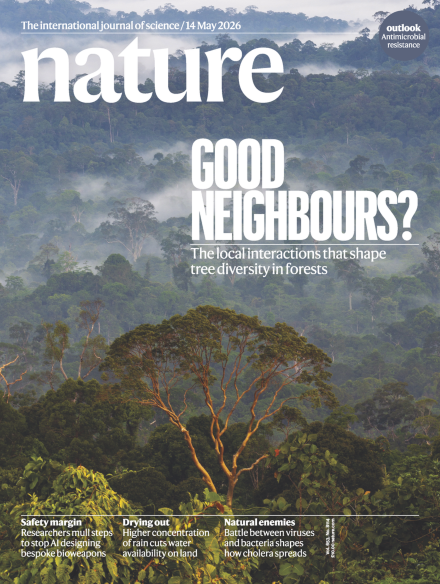
Nature tidbits [14 May 2026]

Posted in Books, pictures, Statistics, Travel, University life with tags , , , , , , , , , , , , , , , , , , , , , , , , , , , , on June 21, 2026 by xi'an

Nature dedicated two pages to the dire situation of Iranian scientists and universities under the cumulated impact of US and Israeli bombings, of increased repression from the theocracy and of internet blackouts. Thirty universities were bombed since the beginning of the attacks (among other civilian buildings). Many scientists are detained at the Evin prison, in Tehran, which is also regularly targeted. This situation is highly concerning about the future of Iranian academia, which stood as an exception in the Middle East against all odds.

The same issue covers the opening of a radiation observation centre in Fukushima, where an area of 300 km² remains off limit. While the remainder of the Fukushima region is declared as safe as the whole of Japan, very few people have returned. One of the goals of the institute (F-REI) is to induce more confidence in the scientific validity of the above declaration, but it remains to be seen how effective it will prove. (I intended to hike nearby this summer but plans have changed!)

Still in the 14 May volume, a longer “feature” article on the dangers of AI-based bioweapons. Which seem real but also difficult to counteract. Especially if rogue states are involved and can create AI-controlled robotic labs for the production. The common recommendation that scientists should create adequate guardrails sounds naïve, at best, since generic LLMs are not designed with such guardrails. (It seems to me each article on the topic reaches the Asilomar trigger at some point!) Followed by a less doom-laden article on the use of AI “vibe coding” by scientists, if not of lesser interest. Which relates to the explosive call to LLMs to design or improve codes. (Also impacting our students and courses in a massive way.) The gains are mostly appreciable for those in the know, since newcomers without coding experience are unlikely to spot subtle errors. (Of course, we a.s. faced pre-AI codes with a subtle error that took ages to detect. Or may even still be there!) The issue also contains an “outlook” leaflet [supported by external sources, who assumedly do not influence the contents!] on antimicrobial (incl. antibiotic) resistance. Among the causes are the default use of antibiotics in farming, which again reflect on the difficulty of controlling such practice (banned in the EU, except in some imports!) and the urge to reduce faster meat consumption. And a book review of Canadian anthropologist Samson’s The Sleepless Ape, which offers an interesting theory of evolution thru sleep deprivation! (“The philosophers John Locke and David Hume thought that sleep hindered rationalism and the pursuit of knowledge.”)