“The Nobel Peace Prize for 2026 goes to a person who with exceptional courage and integrity has led the way towards a more comprehensive global legal order. This year’s laureate has been instrumental in ensuring that war crimes, crimes against humanity and genocide are prosecuted. Navi Pillay’s commitment to universal legal principles and her firm moral compass are constants in a long career. Born into a family of Indian Tamil origin under apartheid in Durban, South Africa, Pillay became a lawyer and legal pioneer, confronting deep structural discrimination, segregation and exclusion. A common thread runs from her early work defending Nelson Mandela and others who stood up against apartheid to her service as a judge in some of the key international court cases of our time.”
“This year’s laureate has significantly enlarged the scope and impact of international law. She has served as a judge on the High Court in South Africa, the International Criminal Tribunal for Rwanda and the International Criminal Court. She was the United Nations High Commissioner for Human Rights and, until recently, she chaired the UN Independent International Commission of Inquiry on the Occupied Palestinian Territory. Today Navi Pillay is a judge on the International Court of Justice in the case where Myanmar stands accused of genocide.”
“At a time of existential challenges – including more wars and conflicts than the world has seen in a long time – international law is no longer just a supplement to peace and security. It is an absolute necessity. And yet, the system of international law is under tremendous pressure, and its institutions are under attack. We see a shift towards power politics at the expense of legal frameworks and global respect for law and justice. Whenever might overtakes right, it undermines stability, trust and peaceful co-existence. In awarding this year’s Nobel Peace Prize, the Norwegian Nobel Committee wants to remind the world that the rule of law – national and international – underpins the system we have set up to ensure peace and resolve conflicts non-violently. Peace requires justice.”
“Navi Pillay is one of the great defenders of international legal principles in our time. Her distinguished career reminds us of the need to support, fortify and expand the global rule of law. Navi Pillay’s commitment to justice and human dignity is a source of hope and inspiration to all who seek to bring about a more peaceful world.”
Archive for South Africa
Navanethem “Navi” Pillay, 2026 Nobel Peace Prize
Posted in Kids, Travel with tags apartheid, Durban, Gaza war, genocide, Human Rights, International Court of Justice, International Criminal Court, Israeli government, Navi Pillay, Nelson Mandela, Nobel Peace Prize, Norwegian Nobel Committee, Occupied Palestinian Territory, South Africa, UN, UN Independent International Commission of Inquiry on the Occupied Palestinian Territory, United Nations High Commissioner for Human Rights, war crimes on October 11, 2026 by xi'aninside Africa [cover]
Posted in Books, pictures, Statistics, Travel with tags Africa, AI, art for science, Asilomar conference centre, bacterial genomes, Burkina Faso, cover, genomics, Ghana, guts, Kenya, microbiome, Nature, pie-chart, rogue universities, South Africa, Zulu baskets on April 25, 2025 by xi'an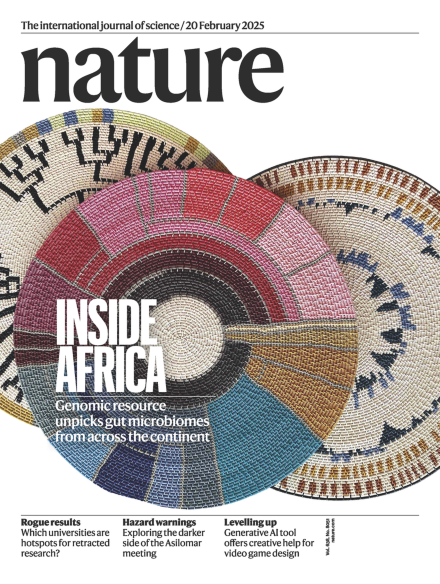
at the boor, as advertised
Posted in pictures, Statistics with tags Belgium, Boer Wars, boor, Brussel, Brussels, Bruxelles, Dutch language, Flemish language, jatp, North Sea, oysters, restaurant, restaurant review, skewness, South Africa, variance, waiter on March 8, 2024 by xi'an
the long way off a small, angry planet
Posted in Books, pictures, Travel, University life with tags Australopithecus sediba, fossils, Homo naledi, Johannesburg, paleonthology, publicity stunt, South Africa, space, The Guardian, Virgin Galactic on November 13, 2023 by xi'an
(im)possible lottery outcome
Posted in Kids, Statistics with tags coincidences, lottery, Powerball, South Africa on December 27, 2020 by xi'an
Another outcry after an “impossible” lottery result that “must” be fraudulous! Obtaining the sequence 5,6,7,8,9,10 on the Tuesday December 1, 2020, draw of the Souht-African Powerball is indeed a low probability event. Just like obtaining any fixed sequence on a specific day for a specific lottery system. As I am unsure the last number has to differ from the others or not, consider the approximation where the 6 numbers are drawn uniformly without replacement from the first fifty integers. The number of outcomes is then approximately 16 millions, making any fixed outcome having a chance of 6 10⁻⁸ of happening for one draw. However, the psychological impact of an “impossible” lottery result would have been the same for any sequence of 6 consecutive numbers, which makes the event happening with a probability of approximately one chance in 400,000. Not so staggering then! And considering the repetition of lotteries, space- and time-wise, it takes roughly 40,000 draws for a consecutive sequence to be drawn with probability 10%. Which means 16 years if considering each US State having a draw every week…


