Archive for DNA

Nature tidbits [18 June]

Posted in Books, Kids, pictures, Travel with tags , , , , , , , , , , , , , , , , , , , , , , , , , , , , on July 13, 2026 by xi'an


A personal tribune (by a Vatican advisor) on why scientists should learn from the Pope’s AI message, not the first time Nature caters to religious views! Not that his (Leon’s) concerns about unregulated AI and the abdication of States in that matter are misplaced. But it seems unlikely (as the author concedes in his conclusion) that the Catholic Church or his leader will manage to make a dent on the spiraling impact of AIs. As suggested in the next tribune, a coordinated approach at a massive increase of taxes on tech companies (unsurprisingly resisted by the Orange Menace) is more likely to happen. And yet another tribune on AI and math(ematician)s, related to the recent Leiden Declaration on Artificial Intelligence and Mathematics, following several entries in the previous issue.
An introductory (general public) article as to why cancer occurrences in young people is rising so quickly in the US, with no single explanation. Environmental factors are certainly to blame, like the consumption of ultra–processed foods, but the article does not say much, adding to the uncertainty.

A rather unhelpful representation of human migration in 2023, appart from showing a majority of migrations are local (to the continental scale). Connected to an article of 10 June I missed. Partly based on a deep learning model to achieve a country-level granularity.

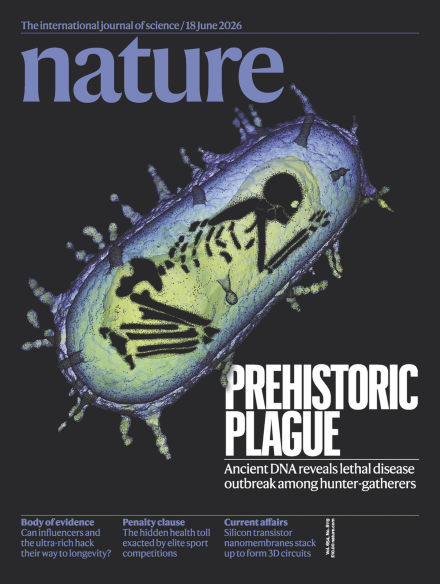
A research article (and the cover) on a plague outbreak near Lake Baikal—over which I could have flown when reading this issue, except that flights to Japan now contour the territories of the invader of Ukraine—that occurred about 5,500 years ago and impacted a community of hunter-gatherers, In a sparsely populated area, marmots being the likely primary vectors, and a close phylogenetic proximity to current strains.
Nature tidbits [Jan 2025]

Posted in Statistics with tags , , , , , , , , , , , , , , , , , , , , , , , , , , , , , , , , , on April 13, 2025 by xi'an

Entries of these two January issues on

– yet another 100th anniversary!, namely the founding paper of Heisenberg’s quantum mechanics paper in Zeitschrift für Physik, written on the Instagrammable island of Heligoland. With celebrations at the UNESCO in Paris, Anaheim (CA), Kumasi (Ghana), and Salvador de Bahia (Brazil)!;

– some bird species decorating their nest with shed snakeskins, to frighten predators;

– climate predictions for Trump 2.0, albeit the only certainty being it will get worse and worse (and only the beginning of a flow of articles on the Trumpian attacks on science and scientists);

– the curious plight of the open access journal elife loosing its impact factor after getting too open for Clarivate and then seeing submission from China falter;

– the first European cities from 6000 years ago being found in Ukraine (and Romania) within the Cucuteni-Trypillia culture, with apparently an equalitarian structure with no temple or elite, although the lack of written documents (besides beautiful clay figures whose style evolved over the period);

  • an AI tool that interprets spreadsheets (which I would find most useful, given my distaste of said spreadsheets!);

and how to help lab workers facing substance disorders. And break the attached taboos. Which reminded me of a colleague in that situation when I was head of a lab, years and years ago. And of the difficulty of handling the case all by myself…

Also

– a quick report on a Physics Review Letters paper about simulating elections results to spot whether or not margins of victory were properly distributed, having a distribution (for the scaled margins) mostly depending on voter turnout, with a universal shape! The concept behind this analysis is one of universality borrowed from statistical physics. (The fit does not work for the Ethiopian election of 2010 and the Belarus elections during 2004–2019, no wonder!);

– another book review of David Spiegelhalter’s Art of Uncertainty, by Yongyi Min, a statistician from the UN Statistics Division;

  • creating a DNA base for identifying children kidnapped during a conflict, as for the 20,000 Ukrainian children forcibly deported to Russia over the past three years;

  • a substantial survey article on neuromorphic computing (submitted in 2023!), about new forms of computing based on hardware/software co-design;

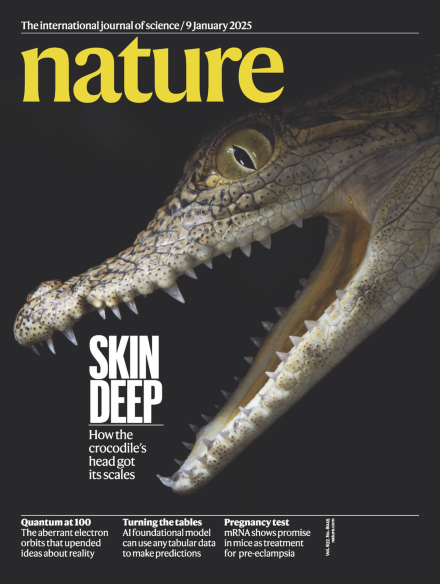
  • with more technologies to watch in 2025, and another long article (and the cover) on the strong impact of small-scale fisheries on sustainable development.


    for a symmetric Asilomar?

    Posted in Books, Kids, University life with tags , , , , , , , , , , , , , , , , , , , , on March 29, 2025 by xi'an

    the dark side of Asilomar

    Posted in Books, Kids, pictures, Travel with tags , , , , , , , , , , , , , on March 28, 2025 by xi'an

    all over the moon [or not]

    Posted in pictures, Travel with tags , , , , , , , , , , , on January 26, 2024 by xi'an

    High diddle diddle,
    The Cat and the Fiddle,
    The Cow jump’d over the Moon,
    The little dog laugh’d to see such Craft,
    And the Dish ran away with the Spoon.

    Read about the cumulated non-sense of a commercial company sending human remains (incl. some DNA of Arthur C. Clarke) to the Moon by a commercial mission, along with NASA scientific experiments, and of the Navajo Nation objecting to it for religious reasons. Wasting energy, time, room (albeit less than 70g) for vanity purposes (at $12,000 per gram) is evidently absurd, almost to the scale of launching a Tesla into space. But such is calling upon religious beliefs to control what can fly to the Moon and what cannot is equally absurd, especially when considering that the whole Moon lander is contaminated with all sorts of material, including DNA. But there may be a dog (on the Moon) since the mission failed.