
 Watched two Korean films, Train to Busan and then Psychokinesis, both by Yeon Sang-Ho. The first one is a mostly traditional zombie action movie, loosing one character after another to the disease with a few funny moments. The second one is also involving supernatural features, rather poorly done, but it offers some political satire on a corrupted real estate project that make it somewhat tolerable. If barely.
Read (an old, cellar-relegated, somewhat mouldy) Henning Mankell’s Sidetracked (book #5 in the Kurt Wallander series), which was good enough to be enjoyable, albeit with a serial killer plot (always a lazy plot idea!), but it definitely made me regret the Martin Beck books of Sjowall and Wahloo which had a stronger social and political perspective (to the point of this book sounding like a pale replica). The more because Maj Sjowall passed away in early May. (Having survived Per Wahloo by 45 years and never revisiting the series.)
Baked more breads, including rye bread, and experimented with new dishes, like a jollof rice attempt with wild garlic, which tasted a wee too mild and took more time at the cleaning stage of the cocotte (French oven) than the cooking one. As it is one of these rice dishes like tahdig that call for a slightly burned bottom! Cooked several clafoutis with garden cherries and strawberries. Started making weekly rhubarb compote since available at the farmers’ market.
And now growing tomatoes and beans and peppers and onions and potatoes and butternut… We also found a woodcock most unusually and inexplicably stranded in the garden, feeling the worse for a cat attack as shown by a few feathers in the grass, but it was impossible to catch an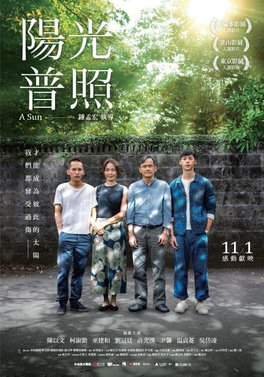 d hence protect from all the stray cats in the neighbourhood. After a day or two, we did not find any remain of the bird, so it presumably escaped.
Also watched A Sun (陽光普照), a psychological Taiwanese film about an “ordinary” family unraveling when the youngest son goes to jail. With an astounding Muter Courage as the central character. And a surprising sequence of characterial twists in the story that makes the movie less bleak that the first 30mn could induce, revealing layers in most characters that were carefully left hidden in the beginning of the film. (Except for the unfortunate girlfriend of A-Ho, who hardly utters a word and never seems to join the family.) With a beautiful final shot relating to the early years of A-Ho. (As one character is named A-Ho and another one A-Hao, it took me a while to spot the difference and stop thinking there were two parallel time-lines in the story!) A really strong film!
Succumbed (!) to ordering and reading the True Bastards, by Johnathan [pardon my] French. Which is the second volume in the Lot Lands trilogy and about as fun as the first volume, although the role of cursed magics is somehow over-done. But the change in this book from a male to a female viewpoint is definitely a worthwhile rarity in fantasy novels, showing how much harder the main character, Fetch, has to work to lead her troop of ½ orcs. And a constant threat of being belittled as such by other characters. (Any resemblance to real life problems being obviously coincidental!) Don’t expect real depth though, from the plot which keeps running in hogs’ circles to the point where everyone seems to be the hidden relative of everyone else (still alive!) to the underlying message, if any!
Got tricked by a Guardian article into watching The Vast of Nights. Frankly, I do not understand the praise heaped upon this academic-oh–so-academic exercise in film making! Yes, it does sound like the Twilight Zone, as the story is the usual trope on aliens being here with only the military being aware of it, trying to bank on their advanced technology, &tc. The hapless characters confuse agitation and action, while speaking, speaking, speaking all the time… It should have been a radio show. In the 1950’s. Not in the current times, already awash in conspiracy theories (although, far from it!, the film is clearly seen as an exercice de style recreating the mood of a 1960’s rural town in the South of the USA, with an endless sequence in a vintage car park).
 Read Fjellet, geværet, vannet (A mountain, a gun, a lake) by Lars Ramslie (in French, published by the Chamonix based Paulsen editions). A perturbing recollection of a broken childhood between the Norwegian outdoors and violent parenting, in the shadow of an out-of-control father. To the point I found it rather hard to finish the book, the author (and son) being often borderline apologetic for his father’s violent outbursts. That he survived such a trauma is astounding. That local social services could not keep his father away is a shame… I also read E.M. Forster’s A Passage to India classic, while travelling to Chennai, which already reviewed in a separate post.
 Watched nothing on the flights to and from India. Not even my neighbours’ screens! But watched the Japanese TV series The Hot Spot that is rather funny if not hilarious, and on the lengthy side (esp. all the lunch meetings in Mont Blanc (!) restaurant). Still, the mundane lives of all characters, including the alien—who suffers from all too human shortcomings!—, and the ever-present backdrop of Mount Fuji make the show worth watching for a while. (A second season feels superfluous, mind.)


