
Archive for Singapore
horsy new year!
Posted in pictures, Travel with tags ⾺, Cambodia, China, Chinese zodiac, Fire Horse, horse, Japan, Lunar New Year, lunisolar calendar, North Korea, Singapore, South Korea, Year of the Horse on February 17, 2026 by xi'an
Nature tidbits [06 Nov 2025]
Posted in Books, Kids, pictures, Travel with tags 5 year plan, @ScientistTrump, AI, Amazon, brain model, Brazil, CDC, China, Chinese politics, civet coffee, climate change, coal mining, coffee, coral reefs, cover, DNA helix, EPA, evidence, Florida, Francis Crick, India, James Watson, koti luwak, LLM, Margaret Thatcher, minerals, mining, MRC, NASA, Nature, NIH, Nobel Prize, non-fossil energy, non-fossil fuels, NOOA, pangolin, PhD scholarship, proteins, rare earths, renewable energy, Singapore, Trump administration, US politics on January 3, 2026 by xi'an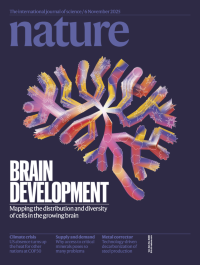
A reflection on China’s 5y plan for science and its reaching a $500 billion annual investment in R&D, predicting (with a large confidence margin) that it will become the #1 power in sciences and technology in the coming decade. I am actually surprised that China has not yet achieved this goal for semi-conductors. And a tribune on the mixed signal of Takaichi Sanae becoming Japan’s first female prime minister, for science as a whole and for gender equity. (My take being that her having UK’s first female prime minister, Margaret Thatcher, as a role-model is not particularly promising. Just like the projection of Marine Le Pen on the verge of becoming France’s first female president does not carry any optimistic message!)
A light entry on a chemical analysis of the specifics of koti luwak (or civet coffee) that does not tell much, beside civet digestion adding caprylic and capric acids making beans lower in proteïns and higher in fat. Not yet reaching the goal of “leaving the animals out” from producing this luxury coffee ($75 a cup!).
An article on the shrinking number of US PhD admissions (in some colleges) conflicting with another article in a later issue of a stable influx. And a rather shallow article on the creativity or lack thereof of AI, along with the high sycophancy of LLMs, to be opposed to a thoughtful reflection on how AI is radically changing the PhD experience and focus, if almost shelving statistics as a thing from the past! But insisting on graduates keeping their ability to check for the validity of their (AI’s) statistical conclusions!! And another entry on the systematic dismantling of US federal scientific agencies like EPA, CDC, NASA, NOOA, NIH, &tc., by Trump -2.0, which beyond terminating staff contracts in huge proportions is culling the independence of these agencies. With generational impacts on science, training, and evidence-based policies.
A Where I work column featuring a pangolin treated by a Singapore vet, Charlene Yeong. (Unfortunately said pangolin was euthanised after the surgical intervention.) And a book review on the background and motivations of Francis Crick, just prior to his collaborator James Watson passing away. As noted by the author, Cobb, as MRC staff and later non-resident fellow of the Salk Institute for Biological Studies in San Diego, “Crick never had to teach or grapple with university administration: he applied for a grant only once in his life.” And concludes that he was not a saint or a hero but “an extraordinarily clever man with limits to his interests and perception”.
a journal of the wars year
Posted in Books, Kids, Mountains, pictures, Travel, Wines with tags 1665, A bomb, abalone, Air France, Amsterdam, aquafaba, Black Plague, book reviews, Bright, Brighton Rock, buckwheat, Calgary, chocolate mousse, COVID-19, cuisine, Daniel Defoe, Edward Teller, fantasy, gardening, Graham Greene, haenyeo, Haruki Murakami, Hiroshima, homegrown, Jeju Island, Journal of the Plague Year, killer robot, Los Alamos Research Laboratory, Lysefjord, magical realism, Nagasaki, Paris, Robert Oppenheimer, Russian invasion, Shoreham, Singapore, smuggling, solo sailing, South Korea, Ukraine, whey, WW II on July 18, 2025 by xi'an  Read Patrick Dewdney’s La Maison des Veilleurs, the fourth volume in this fantastic fantasy series. Only to realise by the end that this was not the end! The setting is the same as in the previous volumes, which makes this one less exciting and prone to extended lazy episodes. The main character, Syffe, keeps puzzling about his destiny and culpability in past events, and it took me a while to get re-hooked, but this remains a remarkable creation. Hopefully soon to be completed! During my Singaporean trip, I also read Sayaka Murata’s Earthlings which is a short fantasy in the Murakami sense, a disrupting mixture of realism (and nostalgia of childhood days) and of unreal behaviours of the characters. The story revolves around mental and sexual aggressions of the main character as a pre-teen, from a paedophile teacher as well as an abusive mother and a transparent father. The story gradually turns away from any pretence to realism and the end is a wee bit of a disappointment. Still worth reading imho. As well as Graham Greene’s The Man Within, which I had not read before (during an episode of intense exploration of his work, following the discovery of The End of the Affair and Brighton Rock). This is one of the earliest Greene’s, and it does contain many hints and premises of the great books to come, with the themes of pursuit, guilt, salvation already there, but as such, the story is rather awkward and contrived, with unnatural dialogues, inner thoughts revolving in circles, and a complete lack of realism in the scenario. The style itself is definitely Greene’s, with beautiful descriptions of the landscape. (I wonder why the cover features the famous Preikestolen cliff on the Lysefjord rather than the more sedate Shoreham downs, where smuggling French alcohols makes sense!)
Made no cooking for an entire week but enjoyed the almost infinite variety of Singaporean cuisines, with some nice discoveries. If missing the chili crab session on two consecutive nights! (And, coïncidence!, sat next to the same passenger on both flights between Paris and Singapore. If not the same crew as it happened once between Amsterdam and Calgary.) Had a weekend to recover and make most of my “classics”, incl. the weekly whey buckwheat galettes. And missing once again to keep an aquafaba mousse mouss-y enough!
Watched one episode of When Life Gives You Tangerines, which features Jeju women (haenyeo) diving for abalone harvesting (which I tasted in Singapore, if not likely from Jeju). And (at last) Oppenheimer on my flight back, as a way to fight sleep towards resetting my internal clock. Which I mostly enjoyed, despite some awkwardness in the scenario and an old-fashioned way of flipping between different eras, with black and white episodes in case one does not notice. And a very poor treatment of female characters. The ghastly moments when the team celebrates the destruction of Nagasaki and Hiroshima or when officials refuse to drop from the nuclear arm race are quite strong, especially these days. Among the MCMC originators, only Edward Teller is involved in the story, from his obsession with the H bomb to his testimony against Oppenheimer at the high of the McCarthy Red Scare… I also sped through Companion, a lame movie about support robots turning into killers that offers little in either thriller or comic perspectives. Possibly written by ChatGPT?!
BayesComp 2025.4
Posted in pictures, Running, Statistics, Travel, University life with tags ABC, ABC model selection, Adam, approximate Bayesian inference, BayesComp 2025, Bayesian GANs, Bayesian lasso, Bayesian neural networks, Bayesian optimisation, Bayesian paradigm, Bayesian predictive, Bayesian robustness, Bayesian semi-parametrics, Baysian learning, BIC, chili crab, differential privacy, harmonic mean estimator, homomorphic encryption, hot pot, Laplace approximation, Les Houches, maximum mean discrepancy, mee siam, mixture estimation, National University Singapore, NUS, Peranakan cuisine, plenary speaker, power posterior, privacy laws, random kernel MCMC, RATP, RER, Roberta, safe Bayes, sequential importance sampling, shrinkage, shrinkage estimation, simulation-based inference, Singapore, SNCF, splines, Stein divergence, stochastic gradient MCMC, stochastic optimisation, summary statistics, Swendsen-Wang algorithm, Sylvia Frühwirth-Schnatter, Szechuan cuisine, treadmill, University of Warwick, unknown number of components, variational Bayes methods, Wasserstein distance, William Strawderman, WU Wirtschaftsuniversität Wien, zigzag algorithm on June 21, 2025 by xi'an The third and final day of the (main) conference started tih Emtiyaz Khan’s plenary talk on adaptive Bayesian intelligence. Or, imho, [adaptive [Bayesian]] intelligence, with the brackets indicating redundancy since intelligence need include adaptivity and [intelligent] adaptivity need proceed in a Bayesian way! Focussing first on the Bayesian learning rule via variational Bayes (with a stress on Kingma’s 1994 Adam optimisation algorithm, the “most cited paper” [in machine learning]) where learning boils down to gradient steps (due to the exponential family structure), themselves versions of Taylor (or Laplace) approximations). With an interesting vision of Bayesian updating as accounting for prediction mismatch. (I missed the connection Roberta in IMDb appearing in one slide!)
 The following session offered no dilemma [sorry, Alex, Axel, Chris, Robert, Sumeet, Victor!] since it included the federated learning session I organised, with Louis Asslet, Conor Hassan, and Jean-Michel Marin as speakers. Louis’ talk was on confidential [homomorphic] accept-reject algorithms to learn from other sources, while preserving (differential?) privacy, part of which came during Les Houches workshops I organised this Spring and the one before. Exploiting the additive features of log-likelihoods and exponential variates and adopting a testing perspective on privacy. Conor motivated his model with the Australian cancer atlas project Kerrie Mengersen and others have been developing over the years. The federated approach relies on variational approximations that return the same answer as an exact resolution, but more efficiently. (From a privacy perspective, I wonder at the impact of variational approximations on protecting the data, which boils down to a choice of (sufficient) statistics for the exponential families behind those approximations.) For more complicated models incorporating spatial dependence prohibits full Bayesian inference, unfortunately. Jean-Michel commented on the richness of methods for simulation-based inference, incl. model choice. His focus was on using sequential neural likelihood estimation and sequential importance sampling to approximate evidence. As in the Read Paper of Del Moral et al. (2006). Mentioning a neural version of the harmonic mean estimator by Spurio Mancini et al. (2023)! I wondered at the degree of (Rao-Blackwell) recycling involved in the computation, Jean-Michel’s answer being that AMIS is soon coming [in a theatre near you!].

The afternoon sessions did offer any reprieve in the choice of topic! I first went to Approximate Methods for Accelerated Sampling, with Rong Tang evaluating the informativeness of summary statistics through a divergence evaluation. Using autoencoders to replace the intractable posterior, with sliced minimal model discrepancy (MMD) and (pseudo?) score matching loss for divergences (reminding me of indirect inference and synthetic likelihood). Yun Yang discussed a variational proposal to estimate the number of components in a mixture model. Surprising given the multimodal structure of mixture posteriors. And the overall irregularity of (evil!) mixture models. But I could not figure out from the talk the form of the approximation.


On the food scene, tasted a nice and spicy Peranakan rice vermicelli dish called Mee Siam yesterday in a campus restaurant, which sustained me fore the rest of the day, including the ABC s/webinar. And another spicy hot pot today at NUS, to catch up on veggies, while missing the chili crab local specialty on that trip.
BayesComp 2025.3
Posted in pictures, Running, Statistics, Travel, University life with tags abalone, ABC, ABC model selection, BayesComp 2025, Bayesian GANs, Bayesian lasso, Bayesian neural networks, Bayesian predictive, Bayesian robustness, Bayesian semi-parametrics, changepoint detection, equator, Gibbs posterior, Henri Poincaré, horseshoe prior, humidity, Kingman's coalescent, Langevin MCMC algorithm, local regression, National University Singapore, NUS, Ocean, OWABI, particle filters, PDMP, plenary speaker, power posterior, random kernel MCMC, RATP, RER, safe Bayes, shrinkage, shrinkage estimation, Singapore, SNCF, splines, Stein divergence, stochastic gradient MCMC, Swendsen-Wang algorithm, Sylvia Frühwirth-Schnatter, Szechuan cuisine, treadmill, University of Warwick, Wasserstein distance, William Strawderman, WU Wirtschaftsuniversität Wien, zigzag algorithm on June 20, 2025 by xi'an The second day of the conference started with a cooler and less humid weather (although this did not last!), although my brain felt a wee bit foggy from a lack of sleep (and I almost crashed while running on the hotel treadmill, at 14.5km/h!), and the plenary talk of my friend of many years Sylvia Früwirth-Schnatter on horseshoe priors and time-varying time series (à la West). With a nice closed-form representation involving hypergeometric functions of the second kind (my favourite!), with the addition of a triple-Gamma prior. Sylvia stressed on the enormous impact of the prior choice on change-point detection, which was already the point in the original horseshoe paper (as opposed to George’s Lasso prior). Without incorporating any specific modelling on potential change-point, fair enough given that the parameter is moving with time, unhindered. Her MCMC choices involved discrete parameters with Negative Binomial and Poisson parameters, allowing for partially integrated or collapsed solutions. Possibly further improved by Swendsen-Wang steps.

I then attended the (advanced) Langevin session after agonising upon my choice for a wealth of options! Sam Power presented a talk linking simulation with optimisation targets, over measure spaces. With Wasserstein gradient flow algorithms that resemble Langevin algorithms once discretised by a particle system. (A natural resolution producing a somewhat unnatural form of measure estimator since made of Dirac masses, from which very little can be learned.) Then [my Warwick colleague & coauthor] Any Wang on underdamped Langevin diffusions. when Poincaré‘s inequality fails, but convergence (in total variation) still occurs. Followed by Peter Whalley on splitting methods (where random hypergeometric subsampling dominates Robbins-Monro) and stochastic gradient algorithms, in a connected (to the previous talks) way since involving underdamped aspects. (With a personal discovery of Polyak’s heavy ball method.)

The afternoon session saw me facing a terrible dilemma with three close friends talking at the same time! Eventually opting for PDMPs, over simulation-based inference and recalibration for approximate Bayesian methods. Kengo Kamatani gave a general introduction to PDMPs, before explaining the automated implementation he considered with Charly Andral (during Charly’s visit to ISM, Tokyo, two summers ago). Towards accelerating the generation of the jump time. Then Luke Hardcastle applied PDMPs for survival prediction, using spike & slab priors and sticky PDMPs. And Jere Koskela (formerly Warwick) extended zig-zag sampling to discrete settings (incl. Kingman’s coalescent.)
The (rather long) day was not over yet since we had planned an extra on-site OWABI seminar & webinar with two participants in the conference, Filippo Pagani (Warwick and OCEAN postdoc) using fusion for federated learning, with a trapezoidal approximation, and Maurizio Filippone on GANs as hidden perfect ABC model selection, a GAN providing an automatic density estimator… With astounding Gemini-generated cartoons! Videos are soon to be available. A big congrats to the speakers who managed to convey their ideas and results despite the late hour! (On the extra-academic side, I was invited last night to a genuine Szechuan dinner in Chinatown, with a large array of spicy dishes if not that spicy!, and a rare opportunity to taste abalone. And bullfrogs. Quite a treat! And a good reason to skip dinner altogether!)


