Archive for renewable energy

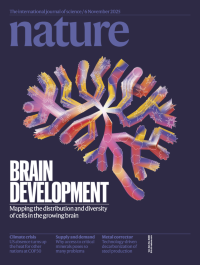
Nature tidbits [06 Nov 2025]

Posted in Books, Kids, pictures, Travel with tags , , , , , , , , , , , , , , , , , , , , , , , , , , , , , , , , , , , , , , , , , , on January 3, 2026 by xi'an

In this issue of Nature (I read on my way to Warwick), a pre-COP30 tribune, to be opposed to later issues!, with a positive take on the impact of the Trump Administration ignoring the conference, with the advances made by China and India (with a surprising 50% of “installed electricity generation capacity coming from non-fossil sources”, if more critical on Brazil’s efforts than the subsequent tribune by the Brazilian undersecretary for ecological transformation for environment, plus a tribune on the ambiguous terms used by countries to secure access to “critical” minerals, in tune with the on-going muscle-flexing attitudes of China and the US. Although the comment is more focussing on the universal access to minerals than to the protection of the workers extracting it and to the environmental impact of it. Followed though by another comment on the climate impact(s) on mining as (no longer) extreme weather events hinder mining all over the (mining) world.

A reflection on China’s 5y plan for science and its reaching a $500 billion annual investment in R&D, predicting (with a large confidence margin) that it will become the #1 power in sciences and technology in the coming decade. I am actually surprised that China has not yet achieved this goal for semi-conductors. And a tribune on the mixed signal of Takaichi Sanae becoming Japan’s first female prime minister, for science as a whole and for gender equity. (My take being that her having UK’s first female prime minister, Margaret Thatcher, as a role-model is not particularly promising. Just like the projection of Marine Le Pen on the verge of becoming France’s first female president does not carry any optimistic message!)

A light entry on a chemical analysis of the specifics of koti luwak (or civet coffee) that does not tell much, beside civet  digestion  adding caprylic and capric acids making beans lower in proteïns and higher in fat. Not yet reaching the goal of “leaving the animals out” from producing this luxury coffee ($75 a cup!).

An article on the shrinking number of US PhD admissions (in some colleges) conflicting with another article in a later issue of a stable influx. And a rather shallow article on the creativity or lack thereof of AI, along with the high sycophancy of LLMs,  to be opposed to a thoughtful reflection on how AI is radically changing the PhD experience and focus, if almost shelving statistics as a thing from the past! But insisting on graduates keeping their ability to check for the validity of their (AI’s)  statistical conclusions!! And another entry on the systematic dismantling of US federal scientific agencies like EPA, CDC, NASA, NOOA, NIH, &tc., by Trump -2.0, which beyond terminating staff contracts in huge proportions is culling the independence of these agencies. With generational impacts on science, training, and evidence-based policies.

A Where I work column featuring a pangolin treated by a Singapore vet, Charlene Yeong. (Unfortunately said pangolin was euthanised after the surgical intervention.) And a book review on the background and motivations of Francis Crick,  just prior to his collaborator James Watson passing away. As noted by the author, Cobb, as MRC staff and later non-resident fellow of the Salk Institute for Biological Studies in San Diego,  “Crick never had to teach or grapple with university administration: he applied for a grant only once in his life.” And concludes that he was not a saint or a hero but “an extraordinarily clever man with limits to his interests and perception”.

renewable energy [book review]

Posted in Books, Kids, Travel with tags , , , , , , , , , , , , , , , , , , , , , , , , , , , , , on December 28, 2025 by xi'an

Renewable Energy (2nd edition, 2025), by Nick Jelley is part of the terrific “Very Short Introduction” series, which provides an expert introduction to a topic within 150 pages. (The OUP equivalent of the French series “Que sais-je?” that started in 1941.) The reason for the second edition, as provided by the author, is the “dramatic expansion, and fall in cost” of clean energy products. Unfortunately, it comes out just short of realising the magnitude of the backlash again renewable energy and fighting climate change launched by the second Trump administration and the ensuing added pressure on other countries to reduce further their fuel consumption.

The main sources of renewables are identified as wind, sun, and water, in a first chapter that operates as an historical recap on the evolution of energy sources and consumption. The second chapter stresses the need for renewable to fight global warming and to reverse climate change, with a rather vague discussion of the costs of producing energy from renewable. Chapter 3 focusses on (debatable) biomass, solar heat, and hydropower. Chapter 4 on wind power, with a few paragraphs on the production costs and the reluctance of local populations (that seems to be fuelled by right-wing parties). Chapter 5 is specifically about solar photovoltaïcs, deemed to be now cheaper than fossil fuels inmost countries. And substituting for deficient or inexistent large scale energy grids in some countries. And Chapter 6 deals (briefly) with other low-carbon technologies, like tidal dams (mentioning the 1966 La Rance dam near Mont Saint-Michel, Normandy, we would visit now and then when I was a kid!), wave turbines, nuclear energy, and geothermal power (both heating and providing electricity). Chapter 7 discusses renewable electricity issues with energy storage (batteries and pumped hydro storage), since most solutions cannot be fired at will. The book  addresses neither the loss in carrying electricity over long distances (as suggested p103 between Morocco and Europe, or Australia and Singapore), nor the hacking risks impacting large electricity grids. Chapter 8 switches to decarbonasing heat and transport, where heat pumps and electric vehicles are the most promising venues. Chapter 9 concludes by a more political discussion of the transition to renewable, pointing out the Chinese leadership in switching to solar and wind capacities. And the brake put on the transition by international crisis such as the Russian invasion of Ukraine that keep subsidies on fuel consumption. And make European countries divesting from this transition to invest in military budgets.

While the book manages a proper introduction to renewable energy and stays up-to-date with the current developments, I find it a bit overly optimistic on the prospect of achieving COP goals and carbon neutrality. Beyond the geostrategic issues briefly mentioned in the concluding chapter, there is no mention made of the exploding energy consumption of AIs and of the limited investments of AI companies into renewable energies… Reducing energy demand does not even occupy one page of the book (p127). Similarly, I find too little discussion of the political and human aspects of using renewables, eg photovoltaïcs and batteries, which resurfaced in the recent Chinese blockade on rare earths or coverages (as in Nature, 04 Nov 2025) on the extreme hardship of extracting minerals. Contrary to those (aspects) for massive dams affecting the local populations and in the dispute between countries or States. And also little on the environmental costs of producing and recycling both solar and wind farms, in contrast with hydroelectricity. Surprisingly, nuclear energy is evacuated in one paragraph in Chapter 2, on safety arguments. If reappearing in Chapter 6 with further concerns about the overall cost of nuclear energy.

[The usual disclaimer applies, namely that this bicephalic review is likely to appear later in CHANCE, in my book reviews column.]

project 2025 in [brute] force

Posted in Books, Travel, University life with tags , , , , , , , , , , , , , , , , , on April 29, 2025 by xi'an