Archive for cancer

Nature tidbits [18 June]

Posted in Books, Kids, pictures, Travel with tags , , , , , , , , , , , , , , , , , , , , , , , , , , , , on July 13, 2026 by xi'an


A personal tribune (by a Vatican advisor) on why scientists should learn from the Pope’s AI message, not the first time Nature caters to religious views! Not that his (Leon’s) concerns about unregulated AI and the abdication of States in that matter are misplaced. But it seems unlikely (as the author concedes in his conclusion) that the Catholic Church or his leader will manage to make a dent on the spiraling impact of AIs. As suggested in the next tribune, a coordinated approach at a massive increase of taxes on tech companies (unsurprisingly resisted by the Orange Menace) is more likely to happen. And yet another tribune on AI and math(ematician)s, related to the recent Leiden Declaration on Artificial Intelligence and Mathematics, following several entries in the previous issue.
An introductory (general public) article as to why cancer occurrences in young people is rising so quickly in the US, with no single explanation. Environmental factors are certainly to blame, like the consumption of ultra–processed foods, but the article does not say much, adding to the uncertainty.

A rather unhelpful representation of human migration in 2023, appart from showing a majority of migrations are local (to the continental scale). Connected to an article of 10 June I missed. Partly based on a deep learning model to achieve a country-level granularity.

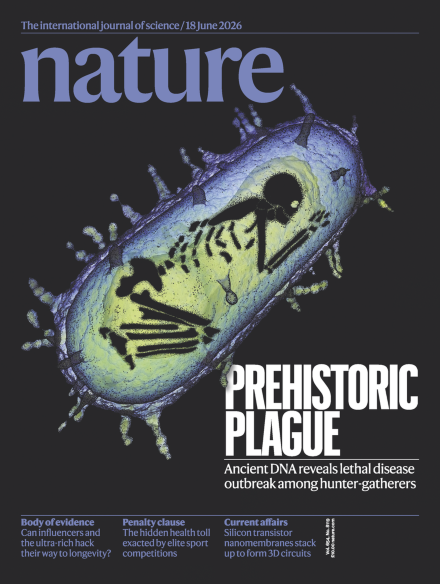
A research article (and the cover) on a plague outbreak near Lake Baikal—over which I could have flown when reading this issue, except that flights to Japan now contour the territories of the invader of Ukraine—that occurred about 5,500 years ago and impacted a community of hunter-gatherers, In a sparsely populated area, marmots being the likely primary vectors, and a close phylogenetic proximity to current strains.

poor statistics

Posted in Books, pictures, R, Statistics, Travel, Wines with tags , , , , , , , , , , , , on September 24, 2019 by xi'an

I came over the weekend across this graph and the associated news that the county of Saint-Nazaire, on the southern border of Brittany, had a significantly higher rate of cancers than the Loire countries. The complete study written by Solenne Delacour, Anne Cowppli-Bony, amd Florence Molinié, is quite cautious about the reasons for this higher rate, even using a Bayesian Poisson-Gamma smoothing (and the R package empbaysmooth), and citing the 1991 paper by Besag, York and Mollié, but the local and national medias are quick to blame the local industries for the difference. The graph above is particularly bad in that it accumulates mortality causes that are not mutually exclusive or independent. For instance, the much higher mortality rate due to alcohol is obviously responsible for higher rates of most other entries. And indicates a sociological pattern that may or may not be due to the type of job in the area, but differs from the more rural other parts of the Loire countries. (Which, like Brittany, are already significantly above (50%) the national reference for alcohol related health issues.), and may not be strongly connected to exposition to chemicals. For instance, the rates of pulmonary cancers are mostly comparable to the national average, if higher than the rest of the Loire countries and connect with a high smoking propensity. Lymphomas are not significantly different from the regional reference. The only type of cancer that can be directly attributed to working conditions are the mesothelioma, mostly caused by asbestos exposure, which was used in ship building, a specialty of the area. Among the many possible reasons for the higher mortality of the county, the study mentions a lower exposure to medical testings (connected with the sociological composition of the area). Which would indicate the most effective policies for lowering these higher cancer and mortality rates.

Bayes for good

Posted in Books, Mountains, pictures, Running, Statistics, Travel, University life with tags , , , , , , , , , , , , , , , , , , , , , , , , , , , , , , , on November 27, 2018 by xi'an

A very special weekend workshop on Bayesian techniques used for social good in many different sense (and talks) that we organised with Kerrie Mengersen and Pierre Pudlo at CiRM, Luminy, Marseilles. It started with Rebecca (Beka) Steorts (Duke) explaining [by video from Duke] how the Syrian war deaths were processed to eliminate duplicates, to be continued on Monday at the “Big” conference, Alex Volfonsky (Duke) on a Twitter experiment on the impact of being exposed to adverse opinions as depolarising (not!) or further polarising (yes), turning into network causal analysis. And then Kerrie Mengersen (QUT) on the use of Bayesian networks in ecology, through observational studies she conducted. And the role of neutral statisticians in case of adversarial experts!

Next day, the first talk of David Corlis (Peace-Work), who writes the Stats for Good column in CHANCE and here gave a recruiting spiel for volunteering in good initiatives. Quoting Florence Nightingale as the “first” volunteer. And presenting a broad collection of projects as supports to his recommendations for “doing good”. We then heard [by video] Julien Cornebise from Element AI in London telling of his move out of DeepMind towards investing in social impacting projects through this new startup. Including working with Amnesty International on Darfour village destructions, building evidence from satellite imaging. And crowdsourcing. With an incoming report on the year activities (still under embargo). A most exciting and enthusiastic talk!

Continue reading →

an increase of 18% a day?!

Posted in Books, Statistics with tags , , , , on June 3, 2017 by xi'an

A striking figure I saw earlier this week in a newspaper and confirmed by checking on the World Health Organisation (WHO) today:

…if the association of red meat and colorectal cancer were proven to be causal, data from the same studies suggest that the risk of colorectal cancer could increase by 17% for every 100 gram portion of red meat eaten daily…

The way I interpret this sentence and the every in it when I read it is that each time I eat a portion of 100g of red meat, my probability of getting a cancer increases by 17%. Actually the previous sentence in the report sounds even more dire:

An analysis of data from 10 studies estimated that every 50 gram portion of processed meat eaten daily increases the risk of colorectal cancer by about 18%.

Which means that eating a sausage a day would multiply the probability by about… 10²³! This cannot be: turning statistics into “plain” language  can be so confusing! Or else pardon my French!!!

Iain (M) Banks

Posted in Books with tags , , , , on June 10, 2013 by xi'an

The Scottish writer Iain Banks—who signed Ian M Banks for his science-fiction works—has passed away this week after a few months fighting cancer. He was considered as one of the greatest Scottish writers alive, although I must confess I only read Iain M Banks’ books, even buying The Algebraist twice, so far (but I will give a try at The Wasp Factory asap!). Here is some quotes from the public announcement he made when he discovered the extend of the problem:

The bottom line, now, I’m afraid, is that as a late stage gall bladder cancer patient, I’m expected to live for “several months” and it’s extremely unlikely I’ll live beyond a year. So it looks like my latest novel, The Quarry, will be my last.

As a result, I’ve withdrawn from all planned public engagements and I’ve asked my partner Adele if she will do me the honour of becoming my widow (sorry – but we find ghoulish humour helps). By the time this goes out we’ll be married and on a short honeymoon. We intend to spend however much quality time I have left seeing friends and relations and visiting places that have meant a lot to us.

In a strange premonitory way, his latest novel The Quarry is about terminal cancer… I think he created enough universes and lives through his dozens of books that he now has just enough eternity to go and explore them.