Data assimilation is a fundamental task in updating forecasting models upon observing new data, with applications ranging from weather prediction to online reinforcement learning. Deep generative forecasting models (DGFMs) have shown excellent performance in these areas, but assimilating data into such models is challenging due to their intractable likelihood functions. This limitation restricts the use of standard Bayesian data assimilation methodologies for DGFMs. To overcome this, we introduce prequential posteriors, based upon a predictive-sequential (prequential) loss function; an approach naturally suited for temporally dependent data which is the focus of forecasting tasks. Since the true data-generating process often lies outside the assumed model class, we adopt an alternative notion of consistency and prove that, under mild conditions, both the prequential loss minimizer and the prequential posterior concentrate around parameters with optimal predictive performance. For scalable inference, we employ easily parallelizable wastefree sequential Monte Carlo (SMC) samplers with preconditioned gradient-based kernels, enabling efficient exploration of high-dimensional parameter spaces such as those in DGFMs. We validate our method on both a synthetic multi-dimensional time series and a real-world meteorological dataset; highlighting its practical utility for data assimilation for complex dynamical systems.
Archive for probabilistic forecasting
prequential posteriors
Posted in Books, Statistics, University life with tags arXiv, Bayesian deep learning, data generating process, generalised Bayesian inference, ICSDS 2025, IMS, intractable likelihood, PhD students, prequential loss, probabilistic forecasting, Sevilla, SMC, Student Award, University of Warwick on December 15, 2025 by xi'anNature tidbits
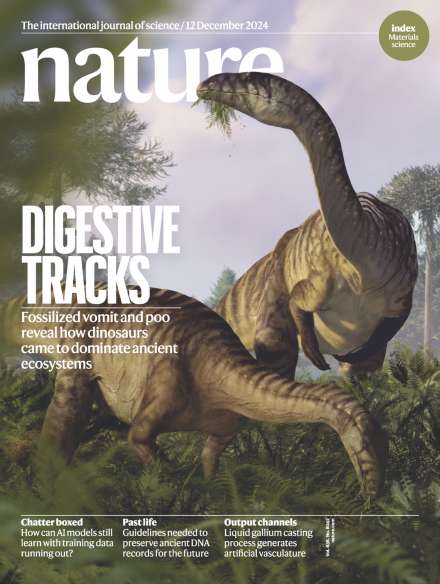
Posted in Books, pictures, Travel, University life with tags African, African languages, AI, AI regulation, artificial general intelligence, bad graph, Bangalore, bar charts, bromalite, ChatGPT, cololite, corpolite, corporate incentives, DeepMind, dinosaur, ecosystem, EU, European Commission, Google, human intelligence, large language models, Nature, neural networks and learning machines, privacy, probabilistic forecasting, regurgitalite, scientific journals, weather forecasting on January 9, 2025 by xi'anFrom the 12 December issue, lots of AI entries in Nature (soon moving to NAIture??), from the arrival of AGI, artificial general intelligence, and the usual barren call for companies to take responsibility (!) and equally repeated pious wishes for (better) controlling the incoming “human intelligent” AIs, to the two year anniversary of ChatGPT, which came as a significant support to non-native English speakers, if raising concern about the privacy losses in delivering unprotected data to the model, to the incoming dearth of data to feed AIs (duh? why would new data be necessary for new AI systems?), with the danger that using AI generated data to train new AIs is not good being repeated anew, to the poor performances of LLMs on African languages, and the correlated dearth of funding in Africa, to DeepMind doing better than weather agency supercomputers to predict weather on a 15 day window, including extreme weather events (not much of a surprise, as climate change does not mean that history of past weather patterns cannot be exploited) albeit the probabilistic nature of the forecast seems to derive from the randomness of the starting conditions, hence depends on the choice of that distribution, to the (unsurprising) 50% productivity boost in design in a material science company afforded by seconding (or supplanting!) researchers with AI tools, to the poor design of bar plots (inc. Nature) that induce misunderstandings. A fair degree of double entries when considering the earlier 5 December issue, also read in the plane, with again fossilized poo, AI soon reaching human intelligence level (??), and the AI computing gap between academy and industry. Beside this AI frenzy, a news article reporting on the EU trying to create an applied research council equivalent to what the ERC succeeded for academic research. (And I will not mention the digestive track article further than pointing out it added bromalite, cololite, and regurgitalite, to my digestive vocabulary!)
