Archive for computer vision

the Harvard and Brown school of computer science

Posted in Books, Statistics, Travel, University life with tags , , , , , , , , , , , , , , , , , , , , , , , , , , , , , , on October 2, 2025 by xi'an

 “In the late 1980s, LeCun, then a researcher at AT&T Bell Labs, developed a powerful neural network that learned to recognise handwritten zip codes by training on thousands of examples. A parallel development soon unfolded at Harvard and Brown. In 1995, Zhu and a team of researchers there started developing probability-based methods that could learn to recognise patterns and textures (…) and even generate new examples of that pattern. These were not neural networks: members of the “Harvard-Brown school”, as Zhu called his team, cast vision as a problem of statistics and relied on methods such as “Bayesian inference” and “Markov random fields”. The two schools spoke different mathematical languages and had philosophical disagreements. But they shared an underlying logic – that data, rather than hand-coded instructions, could supply the infrastructure for machines to grasp the world and reproduce its patterns – that exists in today’s AI systems such as ChatGPT.” 

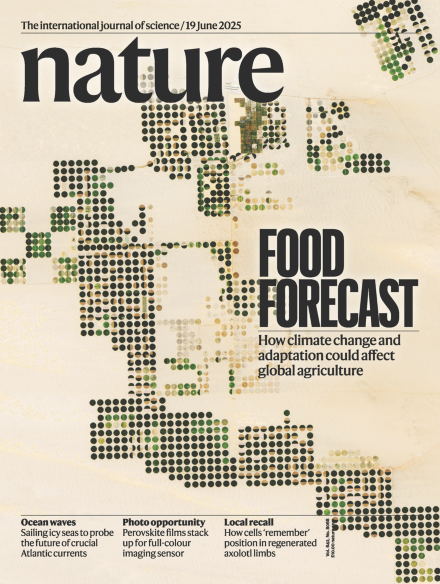
Nature tidbits [19 June 2025]

Posted in Books, Kids, pictures, Travel, University life with tags , , , , , , , , , , , , , , , , , , , , , , , , , , , , , , , , , , , , , , , , , , on August 9, 2025 by xi'an

Editorials on China becoming the World scientific superpower, along with a call for continued collaboration under security risk assessment, the news that all incoming Nature publications will come accompanied by the full editorial process (reviews and authors’ responses), which sounds most sensible to me, another call for novel research indicators to be used eg in the REF but… being co-funded by Elsevier is not especially promising!—along with a Nature investigation on paper mills—, and another personal take calling for new FAA models on air controller loads, which are too light according to the author!, who thinks controllers can handle several flights concurrently.

News on the incoming Vera Rubin Observatory telescope in Chile—if not close to the Atacama peaks I climbed during ISBA 2004—and its unique technology (with a camera the size of a car!). As well as a highlight on African space agencies (where I discovered that Egypt is the most active). Plus, a rather vague report on ether0 as a “stepping stone towards a reasoning model“,  once again playing with words and double meaning on what’s reason(ing). Further entries (alas!) onH ow Trump 2.0 is reshaping science with the impact of barring entry to 19 countries’ nationals and China multiplying calls to attract researchers from abroad and keep students in the country. Including unusually large salaries and benefits. (Pangolins and axolotls make an appearance in both this issue and the next, how unlikely is this?! With the conflicting items of information that the former are primarily hunted for their scales or for their taste.)

The most frightening section of the 19 June issue is however on the threat of a collapse of the Atlantic Meridional Overturning Circulation (AMOC), which would bring a new Ice Age to Western Europe and dramatic changes in the weather worldwide. Along with several research articles on climate change and its impacts.

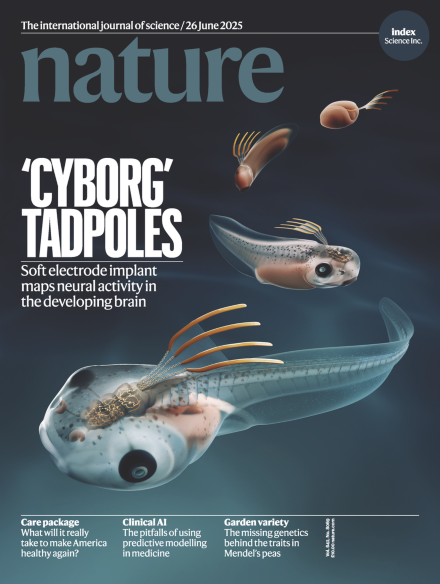
Nature tidbits [26 June 2025]

Posted in Books, Kids, Travel, University life with tags , , , , , , , , , , , , , , , , , , , , , , , , , , , , on August 1, 2025 by xi'an

Editorials on how fast advances in computer vision and face recognition are lacking in ethical standards (with plenty of shoulds and musts, but no proposal to enforce those),  a call for stronger condemnations of Trumpian attacks on science and academics by international scientific institutions, taking as a leading example a statement of concern by the Pontifical Academy of Science (or Pontificia Academia Scientiarum in plain latin) in Vatican, which, considering the history of the relations between Church and Science, is not an obvious choice!, another (mostly) Trumpian-induced plea for the return of foreign aid to low and middle income countries from the high income donors, rather than focussing on defence budgets (again with no practical strategy to achieve this goal)—with different headings in printed and online versions.

Half-a-dozen entries on How Trump 2.0 is reshaping science, from the federal judicial ruling that NIH grants are illegal since discriminatory (with no immediate impact), to the new vaccine panel members set by RF Kennedy with a dearth of experts and the arrival of vaccine sceptics (or worse), to a Nature supplement entitle Science Inc., looking at private funding to compensate for federal disengagement (with France’s Sanofi and Capgemini deserving a mention, for once), to an original Nature—and KFF, a non-profit health-policy research organization from San Francisco— investigation on how to make the US healthy again. If at all feasible.

As expected, the gap with other wealthy (and more healthy) nations is stupendous for many criteria. Caused by much higher death rates associated with COVID-19, substance misuse, chronic diseases, transport accidents (poor public facilities), and gun deaths (of course, even though this latter cause was recently removed from the HSS website). With a significant difference between States and ethnicities. The fixes requiring more federal intervention and money, as well as opposing the gun lobby, it is very very unlikely this is going to happen, witness the recent cut on Medicaid.

“one 5-year-old out of every 20 will die before the age of 45 The comparable figure is one in 50 in the United Kingdom and one in 100 in Switzerland.”

digital humanities meet artificial intelligence [course]

Posted in Statistics with tags , , , , , , , , , , on December 6, 2019 by xi'an

Paris Sciences & Lettres University (PSL) is organising next semester a special one-week training on the topic “Digital Humanities Meet Artificial Intelligence”. This course is open to Master and PhD students, as well and researchers, subject to availability (and free). This intensive training will cover theoretical, numerical and applicative topics at the intersection between both fields. The dates are March 30-April 3, 2020, the course is located in downtown Paris, and the pre-registration form is already on-line. The courses are given by