Archive for UK universities
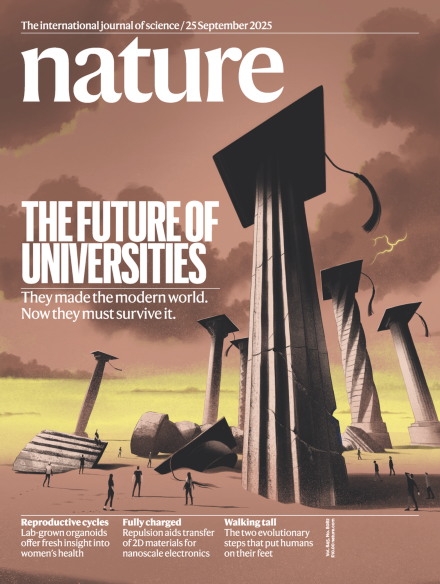
Nature tidbits [25 Sept 2025]
Posted in Books, Kids, University life with tags Agent Orange, China, cover, foreign students, Hereford, heresy, medieval Europe, Nature, NMITE, NYT, student fees, Trump administration, UK universities, US universities on October 29, 2025 by xi'anbanKrUpt, franc’route
Posted in Kids, pictures, Travel, University life with tags bankruptcy, Brexit, college ranking, Coventry, COVID-19, foreign students, French government, French politics, inflation, Labour, Le Monde, Nature, PhD course, Russian invasion, Scotland, Shanghai ranking, student fees, tuition fees, UK Government, UK politics, UK universities, Université Paris Dauphine, University of Coventry, University of Warwick on November 14, 2024 by xi'anRead in both Le Monde (Sept) and Nature (26 Sept) concerning articles about the poor financial state of many higher education institutions in the UK, if not the most prestigious ones… (Warwick being so far preserved from that issue, if not the neighbouring University of Coventry.) Up to 80% of French universities—prestigious and less prestigious alike—are also facing repeated deficits, for several years in a row, if mostly for different reasons besides the after-effects of COVID and the economical crisis amplified by the Russian invasion.
 The main difference (between France and Britain—minus bonnie Scotland!) is in the UK government not providing direct support to higher education institutions, treating them as businesses that must make a profit on average to survive. To add insult to injury, the short-sighted Sunak Government has strongly reduced the number of foreign students (that they considered immigrants) when those are a key component of the universities business models since they pay much higher fees compared with the capped fees for UK nationals. Surprisingly (to me), the new Labour government does not intend to change either policy. The more surprising (to me) when the first institutions to fail will be (are?) those concentrating students from less privileged backgrounds. Quite paradoxical for a party with social ideals and socialist roots. Besides, repeated reductions of the attractivity of Britain for higher education may reach a no-return point in terms of its (World first-tier) scientific productivity.
 France is financing its universities for 60% of their budget, while tuition fees in national universities (that do no include Paris Dauphine) are nominal for EU students (and special cases like PhD programs). Progressive cuts have led to tighter budgets, more deficit, with limited alternative sources of financing, since raising students fees is completely taboo. Added to academic positions being little attractive (for offering comparatively low salaries), this abides poorly for France keeping being part of top higher education countries. (It already figures very rarely in the country comparisons produced by Nature on an almost weekly basis.) The new higher education minister is known for pushing towards more “autonomy” (read less financing) of universities and the current State deficit may prove the tipping point for cutting further State support for public higher education institutions at large and fundamental research.

Nature snapshots
Posted in Books with tags Arctic, brain cells, Canadian politics, China, COVID-19, de-exctinction, Ecuador, Erasmus, frogs, Hubei, Labour, Nature, postdoctoral position, seafood, Siberia, Taiwan, Tasmania, thyalacine, UK elections 2024, UK politics, UK universities, University of Melbourne, woolly mammoth, Wuhan on September 5, 2024 by xi'an Some quick breakfast reads from the 11 July issue of Nature (the one with the frog cover!),
- A tribune on the Canadian example of advocating for graduate and postdoc pay raises, with a success last April. It would prove difficult to achieve in a French academic landscape when postdocs here earn about as much as starting lecturers, whose salary is notoriously low.
- A news article on the UK elections Labour landslide impact on national scientific landscape, with the former Conservatives’ government Chief Adviser and former Head of Research at GlaxoSmithKline and governmental speaker during the COVID crisis appointed as science minister (how many countries enjoy a science ministry?!) But Labour has shown no inclination to back up (from the former stance) on EU collaborations (no Erasmus!), restrictions on students visa that induced a 40% drop in overseas enrolments, or funding of UK universities (whose finances are in a terrible state). Followed by a call from five UK researchers to “give UK science the overhaul it urgently needs¨.
- A paper about identifying brain cells attached to a word’s meaning (with an example opposing son and Sun that reminded me of the confusion I had with the Taïwanese movie A Sun!)
- An another paper on an analysis of January 2020 data collected in the Huanan seafood market in Wuhan, with three virus identified. But inconclusive about the origin of the virus.
- A work column on the challenges of conservation ecology, with trade-offs between intervention and inaction for endangered species (with the nugget of information that Ecuador gives nature constitutional rights).
- And a back page on the TIGRR lab [great acronym!] in Melbourne attempt at resurrecting the extinct thyalacine (or Tasmanian tiger) from historical specimens, not mentioning the involvement of a biotech company, Colossal Biosciences, also involved in recreating mammoths. Which sounds counterproductive beyond the bioengineering feat, esp. with regard to the mammoths, which would be woolly (!) unsuited to the current World (except in some remote corner of Siberia?!) and its climate. When considering how challenging protecting the few remaining African elephants is, imaging free roaming mammoths that would not come to clash with human activities beggars belief.

