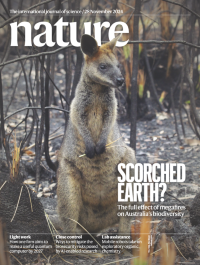
- a call for a general digital preservation of research documents, since many articles have gone awol,
- another tribune on the importance of experimental design (!), with basic recommendations such as running longitudinal studies, using the right statistical models, ensuring that findings are statistically significant and reproducible…
- yet another column on the importance of open-ended, exploratory, research, rather than sticking to confirmatory studies and “thinking of hypothesis testing as the main job of a (social science) researcher¨,
- a reanalysis of the Ryugu microbes brought back to Earth by Hayabusa2, found to be the result of a contamination,
- several entries on the scary prospect of the incoming Trump administration on the NHS, health, reproductive care, &tc.
- a prospective article on the incoming demise of Google scholar when faced with more advanced (AI) alternatives, as well as the scary possibility that AIs may lead to the creation of uncontrollable pathogens, although the call for companies taking responsibility sounds both naïve and insecure, as does the AI Action Summit in Paris next February, as well as a perspective paper on how open AI is far from open,
- and several entries on quantum computing, like AlphaQubit,
 This year, I received a summer project dissertation at Warwick (among several I supervised) that was a direct aggregation of three main papers on the project topic, including advanced simulations that were clearly beyond the reach of a summer project. Especially when the perpetrator only attended a very few supervision sessions among those I proposed.
 With the help of a colleague we found rather easily the three papers, which had been rewritten to some extent into the project, while keeping the plan of the originals. And then I later a fourth paper corresponding to the numerical illustrative component of the project, which was the original reason for suspecting foul play. With graphs redrawn! Meaning that a plagiarism detector was only achieving an 18% agreement with the available literature, but still flagging plagiarism as “highly likely.”
 I thus referred the case to the colleague in charge of academic integrity in the department.
  And this initiated a very involved process summarised by the attached flowchart… Starting with the academic conduct panel, which also concluded at plagiarism.
