 Just received the good news that our paper Faster Hamiltonian Monte Carlo by Learning Leapfrog Scale by Wu Changye (吴昌烨), Pierre Pudlo, Julien Stoehr and myself, got accepted in Statistics & Computing! This is great in its own, but further concludes a story that started with Changye’s PhD thesis at Paris Dauphine in 2018, with a revision request from Statistics & Computing that stalled with Changye’s departing for industry in Shanghai and eventually resumed thanks to Julien’s massive investment in coding and improving the learning mechanism. It may also conclude my story with Statistics & Computing, where I am supposed to be the historically most prolific author (?), given the move by Springer to a cash-flow model on 01 January, 2027…
Archive for PhD thesis
faster HMC by learning
Posted in Books, Kids, Statistics, University life with tags algorithm, conformal Hamiltonian dynamics, eHMC, Hamiltonian Monte Carlo, HMC, leapfrog integrator, mirror descent, No-U-Turn sampler, NUTS, PhD thesis, population Monte Carlo, publication fees, revision, Scholarly Open Access, Shanghai, Springer Nature, Statistics & Computing, tempering, Università Ca' Foscari Venezia on September 23, 2026 by xi'ancongrats, Doctor Luciano!
Posted in Books, Kids, Statistics, University life with tags ABC, Bayesian computation, Gibbs sampling, insufficient statistic, mad, Paris, permABC, PhD thesis, postdoctoral position, Université Paris Dauphine, University of California Berkeley on January 23, 2026 by xi'an
Nature tidbits [23 October 2025]
Posted in Books, Kids, pictures, Running, Travel, University life with tags @ScientistTrump, academic freedom, Adolph Northen, Agents4Science 2025, Austin, Australia, Berezina, book review, Brazil, Brown University, cognitive biases, cover, dark energy, dark matter, Edwin Hubble, emigration, ERC Synergy Grant, Federal Government, France, Garching, Google, Hubble constant, imitation game, immigration, Italy, Max Planck Institute, mental health, Milky Way, MIT, Napoléon Bonaparte, Nature, PhD position, PhD students, PhD thesis, protect, quantum computing, Reionization, Royal Society, Russian campaign, Stanford University, Sveriges Riksbank Prize in Economic Sciences in Memory of Alfred Nobel, The University of Texas at Austin, Trump administration, Turing's test, UCLA, ultra-marathon, University of Pennsylvania on November 27, 2025 by xi'an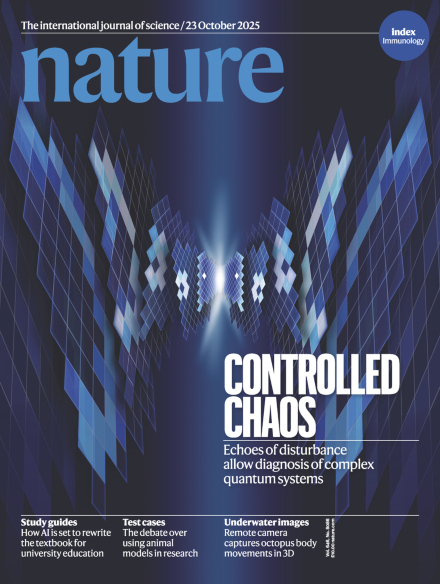
a discussion on the nature of the “little red dots” that have been recently observed and whose nature remains open, the most popular explanation (I was given during lunch) being black holes surrounded by gas (even though I cannot understand why the gas is not attracted by the black hole!) [and would have produced a more exciting cover!]
a review of the recent book Discordance: The Troubled History of the Hubble Constant by Jim Baggott, entitled Why we still don’t understand the Universe — even after a century of dispute! A review that regrets that more time is spent on the Hubble “constant” (which varies with time!) rather than more controversial issues like dark matter and dark energy (And strangely bemoans that the book is focussed on scientific developments, missing sociological ones. Duh?! (Bonus for a picture of suit-and-tie Edwin Hubble sitting at the centre of a telescope),
two entries on the well-being [or lack thereof] of PhD students, with nothing particularly surprising (eg, inclusivity and respect help!), and Brazil, Australia and Italy ranking top locations but in a comparative study that does not mention France (as often in international comparisons found in Nature) despite the place being in the top 10 countries delivering PhD degrees, not that I believe PhD students are particularly well-treated in French academia!, the (unexplained) surprise being Italy ranking so high given the close resemblance between the two countries (low stipends, shortage of postdoc and permanent positions, high teaching loads for the advisor, limited travel budgets),
a conference (purposedly) made of AI-written papers reviewed by AI referees, Agents4Science 2025, how universities are rushed into adapting to AI-fluent students, whose skills are changing, and the rise in fake authors produced by paper mills, with a limited range of acceptable solutions,
why Trump 2.0‘s blackmail on pharmaceutical companies is counter-productive and likely to slow down progress, and why his massive increase of highly qualified scientists is shooting (or nuking) USelf in the foot, given the huge proportion) of im/emigrated Nobel prize winners (for physics, chemistry, and medicine), along the (post-) Nobel prize in economics is a direct or indirect reply to this regression by awarding the Prize to economists who worked on the importance of creativity and science on growth (not very surprising at first look!)

Congrats, Dr. Marival!
Posted in Books, Statistics, University life with tags coauthors, importance Markov chains, importance MCMC, Institut Polytechnique de Paris, jury, Palaiseau, parallelisation, Paris-Saclay campus, PhD thesis, projection, sequential Monte Carlo, SMC, speed of convergence, Telecom ParisTech, thesis defence, variational approximations on March 26, 2025 by xi'an
Congrats, Dr. Andral!
Posted in Books, pictures, Statistics, University life with tags adaptive Monte Carlo algorithm, ENSAE, history of Monte Carlo, importance MCMC, importance sampling, jury, normalizing flow, Paris, PDMP, PhD thesis, PSL Research University, quasi-Monte Carlo methods, thesis defence, Université Paris Dauphine on November 27, 2024 by xi'an


