
Archive for weather forecasting
AI in a storm [cover]
Posted in Books, pictures, University life with tags Académie Goncourt, AI, Anthropic, dangers of AI, deep learning, doomsday argument, francophone literature, Francophonie, French literature, LLMs, mathematical conjecture, Nature, open AI, plagiarism, superintelligence, UN, United Nations General Assembly, weather forecasting, weather prediction on October 6, 2026 by xi'an
Nature tidbits
Posted in Books, pictures, Travel, University life with tags African, African languages, AI, AI regulation, artificial general intelligence, bad graph, Bangalore, bar charts, bromalite, ChatGPT, cololite, corpolite, corporate incentives, DeepMind, dinosaur, ecosystem, EU, European Commission, Google, human intelligence, large language models, Nature, neural networks and learning machines, privacy, probabilistic forecasting, regurgitalite, scientific journals, weather forecasting on January 9, 2025 by xi'an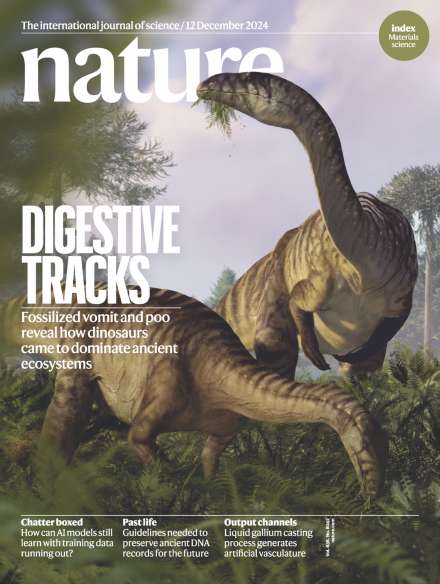
it did get worse!
Posted in Statistics with tags Congress, conspiracy theories, debunking myths, FEMA, hurricanes, irrationals, North Carolina, Republicans, US politics, weather forecasting, weather modelling on October 19, 2024 by xi'an
off to Edinburgh [and SMC 2024]
Posted in Books, Mountains, pictures, Statistics, Travel, University life with tags Arthur's Seat, Bayes Centre, Edinburgh, ICMS, Scotland, SMC 2024, University of Edinburgh, weather forecasting on May 12, 2024 by xi'an Today I am off to Edinburgh for the SMC 2024 workshop run by the ICMS. Looking forward meeting with long time friends and new ones, and learning about novel directions in the field. And returning to Edinburgh I last visited in 2019 for the opening of the Bayes Centre. Hoping to enjoy the nearby Arthur’s Seat volcano and maybe farther away Munroes, depending on the program, train schedules, and…weather forecasts!
simulating the pandemic
Posted in Books, Statistics with tags Bayesian model averaging, Bayesian modelling, climate modelling, COVID-19, Imperial College London, London, Nature, simulation model, stress test, UCL, University of Oxford, weather forecasting on November 28, 2020 by xi'an Nature of 13 November has a general public article on simulating the COVID pandemic as benefiting from the experience gained by climate-modelling methodology.
“…researchers didn’t appreciate how sensitive CovidSim was to small changes in its inputs, their results overestimated the extent to which a lockdown was likely to reduce deaths…”
The argument is essentially Bayesian, namely rather than using a best guess of the parameters of the model, esp. given the state of the available data (and the worse for March). When I read
“…epidemiologists should stress-test their simulations by running ‘ensemble’ models, in which thousands of versions of the model are run with a range of assumptions and inputs, to provide a spread of scenarios with different probabilities…”
it sounds completely Bayesian. Even though there is no discussion of the prior modelling or of the degree of wrongness of the epidemic model itself. The researchers at UCL who conducted the multiple simulations and the assessment of sensitivity to the 940 various parameters found that 19 of them had a strong impact, mostly
“…the length of the latent period during which an infected person has no symptoms and can’t pass the virus on; the effectiveness of social distancing; and how long after getting infected a person goes into isolation…”
but this outcome is predictable (and interesting). Mentions of Bayesian methods appear at the end of the paper:
“…the uncertainty in CovidSim inputs [uses] Bayesian statistical tools — already common in some epidemiological models of illnesses such as the livestock disease foot-and-mouth.”
and
“Bayesian tools are an improvement, says Tim Palmer, a climate physicist at the University of Oxford, who pioneered the use of ensemble modelling in weather forecasting.”
along with ensemble modelling, which sounds a synonym for Bayesian model averaging… (The April issue on the topic had also Bayesian aspects that were explicitely mentionned.)


