Archive for Chernobyl disaster

renewable energy [book review]

Posted in Books, Kids, Travel with tags , , , , , , , , , , , , , , , , , , , , , , , , , , , , , on December 28, 2025 by xi'an

Renewable Energy (2nd edition, 2025), by Nick Jelley is part of the terrific “Very Short Introduction” series, which provides an expert introduction to a topic within 150 pages. (The OUP equivalent of the French series “Que sais-je?” that started in 1941.) The reason for the second edition, as provided by the author, is the “dramatic expansion, and fall in cost” of clean energy products. Unfortunately, it comes out just short of realising the magnitude of the backlash again renewable energy and fighting climate change launched by the second Trump administration and the ensuing added pressure on other countries to reduce further their fuel consumption.

The main sources of renewables are identified as wind, sun, and water, in a first chapter that operates as an historical recap on the evolution of energy sources and consumption. The second chapter stresses the need for renewable to fight global warming and to reverse climate change, with a rather vague discussion of the costs of producing energy from renewable. Chapter 3 focusses on (debatable) biomass, solar heat, and hydropower. Chapter 4 on wind power, with a few paragraphs on the production costs and the reluctance of local populations (that seems to be fuelled by right-wing parties). Chapter 5 is specifically about solar photovoltaïcs, deemed to be now cheaper than fossil fuels inmost countries. And substituting for deficient or inexistent large scale energy grids in some countries. And Chapter 6 deals (briefly) with other low-carbon technologies, like tidal dams (mentioning the 1966 La Rance dam near Mont Saint-Michel, Normandy, we would visit now and then when I was a kid!), wave turbines, nuclear energy, and geothermal power (both heating and providing electricity). Chapter 7 discusses renewable electricity issues with energy storage (batteries and pumped hydro storage), since most solutions cannot be fired at will. The book  addresses neither the loss in carrying electricity over long distances (as suggested p103 between Morocco and Europe, or Australia and Singapore), nor the hacking risks impacting large electricity grids. Chapter 8 switches to decarbonasing heat and transport, where heat pumps and electric vehicles are the most promising venues. Chapter 9 concludes by a more political discussion of the transition to renewable, pointing out the Chinese leadership in switching to solar and wind capacities. And the brake put on the transition by international crisis such as the Russian invasion of Ukraine that keep subsidies on fuel consumption. And make European countries divesting from this transition to invest in military budgets.

While the book manages a proper introduction to renewable energy and stays up-to-date with the current developments, I find it a bit overly optimistic on the prospect of achieving COP goals and carbon neutrality. Beyond the geostrategic issues briefly mentioned in the concluding chapter, there is no mention made of the exploding energy consumption of AIs and of the limited investments of AI companies into renewable energies… Reducing energy demand does not even occupy one page of the book (p127). Similarly, I find too little discussion of the political and human aspects of using renewables, eg photovoltaïcs and batteries, which resurfaced in the recent Chinese blockade on rare earths or coverages (as in Nature, 04 Nov 2025) on the extreme hardship of extracting minerals. Contrary to those (aspects) for massive dams affecting the local populations and in the dispute between countries or States. And also little on the environmental costs of producing and recycling both solar and wind farms, in contrast with hydroelectricity. Surprisingly, nuclear energy is evacuated in one paragraph in Chapter 2, on safety arguments. If reappearing in Chapter 6 with further concerns about the overall cost of nuclear energy.

[The usual disclaimer applies, namely that this bicephalic review is likely to appear later in CHANCE, in my book reviews column.]

nuclear scare, for real!

Posted in Travel with tags , , , , , , , , on September 14, 2022 by xi'an

a journal of the plague year [deconfited reviews]

Posted in Books, Kids, pictures, Running, Wines with tags , , , , , , , , , , , , , , , , , , , , , , , , on July 4, 2020 by xi'an

Found a copy of Humans by Donald Westlake on the book sharing shelves at Dauphine. And read it within a few hours, as it is very light reading but quite funny nonetheless. If hardly ranking as a mystery novel. Or crime novel, unless the crime is Gaiacide and the criminal God. Reminded me of the equally light Bobby Dollar series by Tad Williams. As the main character is an angel, falling for humans as he tries to steer them towards the Armageddon. The setting is the early 1990s, with the main scares being atomic disaster (Chernobyl) and the AIDS pandemic. Plus the rise of environmental worries and of Chinese autocracy. I put it back on the shelves on my next visit to Dauphine, hopefully for someone else to enjoy!

Baked radish stems with basil for making pesto, with a bit more bitterness than usual. Cooked plenty of fennel since this is fennel season. Continued making my weekly rhubarb preserve. Keeping the garden active, now watching squash vines invading new territory, hopefully with an eatable reward in the Fall. Tomatoes are growing incredibly fast as well..! Saw another fox in the Parc before official opening times, quite close if speeding away from me and barely avoiding bumping in a pair of greyhounds which fortunately sounded completely unconcerned.

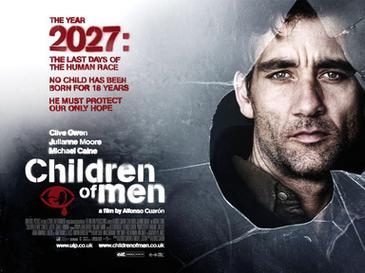
Watched Children of Men after an exhausting week online for a grant panel. While a parabola for the coming collapse of civilisation under political, biological and environmental apocalypses [is there any meaning to use apocalyse in the plural tense!?] and a premonitory tale on Brexit and the buttressing of Britain [or Trump and his Big Wall mania] induced by anti-immigrant rethorics, the film is over the top in terms of plot and action, with symbolism taking over realism, even on the slightest degree, every shot being filled with references to religions and arts (like the Pink Floyd flying pig), to previous environmental disasters (with long shots of burning cows reminiscent of the mad cow crisis) and geo-political upheavals (including a Hamas type protest in the refugee camp, with a short appearance of a jeep with a French flag more reminiscent of the liberation of Paris in August 1944). Characters are charicaturesque, with a very Manichean division between very few good ones and mostly bad ones. The most ridiculous part of the scenario may well be the battle scene in the refugee camp [tanks versus pistols!]… Once again stunned by all the awards and praise piled upon that film.

Read two more volumes of the Witcher [bought during BayesComp for my son!]. One being Sword of Destiny and a series of short stories, like the first volume. The second Blood of Elves and the beginning of the novels. The first season on TV borrows mostly from the first two collections of short stories. Which are somewhat better than the novel, as the latter is very slow paced and overly sentimental. Not terrible, mind.

Completed with uttermost reluctance the Horde du Contrevent [translating as the windwalkers] by Alain Damasio (no English translation available, but an Italian version, l’Orda del Vento,  is). Book that I again picked for figuring in Le Monde 100 bes&tc list! And felt like constantly fronting a strong, icy wind when going through the pages of that unusual book. The style is unpleasant and rather pretentious, with numerous puns in French.. The story is one of a (religious? mystical?) group walking against the wind(s) for decades to reach the source of these winds and to find the last types of wind no one has ever met. Their dreary pilgrimage is described by the 23 membres of the group, called the Horde, with a heavy-handed typographical symbol at the start of each paragraph identifying who’s speaking (and a convenient page marker with all these symbols). A bit heavy handed as a polyphonic novel (appropriately composed in a Corsican retreat!) and even more in the crypt-Nietschean philosophy it carries… The background universe there is somehow eco-steam-punk, with the wind producing most of the energy. The most exciting part involves rather realistic ice climbing. However, I clearly stand in the small minority of those less than impressed by the book as it is highly popular among French readers, one of the highest printings in the Folio collection, with side products a BD (above) and a movie (in the making?). (And enough votes from fans to almost reach the 10 most favourite novels in Le Monde list. )

Nature snapshots

Posted in Books, pictures with tags , , , , , , , , , on July 16, 2019 by xi'an

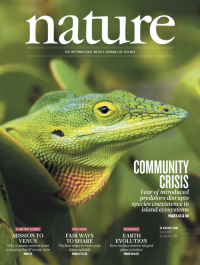
In this 6 June issue of Nature, which I read on my way to O’Bayes, an editorial on the scary move by the WHO to incorporate traditional Chinese medicine remedies in its classification as this includes drugs made from protected and endangered species and as such remedies have not been evidence tested. A news brief on India abandoning the requirement for PhD students to get a paper published prior to been awarded the degree, presumably much to the sorrow of predatory publishers. A delay to Plan S (a European project to make all funded research freely available) reported to 21 January 2021. A review of the latest and yet unpublished book by Neal Stephenson, Fall. Which I obviously ordered immediately! A paper in the British Journal of Anasthesia published along with an independent assessment of the same study (methods and results). Some letters protesting the “public’s phobia” induced by the series Chernobyl. Which recoups an email from one of my colleagues on the same complaining theme, since “only 20 deaths” can be attributed to the disaster with certainty! A revisit of the “cold fusion” with no evidence of the claimed phenomenon that led to a scientific outcry in 1989.

end of the game

Posted in Books, Kids, pictures with tags , , , , , , , , , , , , , , on May 28, 2019 by xi'an

While I have not watched a large part of the Game of Thrones episodes (apart from the first season I had time to follow while in the hospital), I decided to subscribe for one [free] month to OCS to get the last and final season [unlike a NYT critic who watches the entire eight seasons in five weeks!]. And witness how far it has diverged from the books, at least those already published. The first two episodes were unbearably slow and anti-climactic, the [mentionable] worst part being the endless discussion by a chimney fire of half a dozen of the main characters who would all be better sleeping. And the antagonism between Sansa and Daenerys sounding almost childish…The last battle in Winterfel was both fantastic and disappointing, fantastic in its scale and furia and impetus, a cinematographic feat!, possibly the best in the whole series, disappointing for the terrible military choices made by the best fighters in the seven kingdoms and beyond, for the disproportionate imbalance between the living and the dead, for the whole thing depending on the two seconds it took for the Ice King to shatter  [no longer a spoiler!], and for the absurd and lengthy scene of the zombies in the castle library. I just don’t like zombie movies as I find them a easy lazy plot element, especially when they can be resuscitated over and over… They have not yet appeared (on that scale) in the books and I hope they remain dead still! Some scenes are furthermore too reminiscent of video games, which cuts even deeper into the realism (!) of the battle. The scenario of the fourth episode is definitely botched and hurried, for the sudden and radical reversal of fortune being once again so much against basic military concepts (and basic physics as well!). Contrary to most reviews I read, maybe because I had little expectation about the characters in the show, I found the fifth episode quite impressive, in its vivid description of the sack of a city, the instantaneous switch from victorious to rapist and murderer, and the helplessness of those very few who wanted to stop the slaughter of the inhabitants. (By contrast, I found most of the individual scenes appalling, except for Arya’s which remains consistent with her parabola in the plot. So far. But we could have been spared the white horse in the end!) And then the last and final episode…! Which I definitely enjoyed, primarily for the bittersweet feeling this was the last hour spent with the (surviving) characters, even for the unrealistic developments and predictable conclusions, and the feeling that some scenes were made up in someone’s grand-father’s backyard, by the same someone’s teenage nephews… Although I was hoping for a glorious ending in line with the one of Monty Python and the Holy Grail… Alas, no police van, no delegation of bankers or lawyers showed up at the eleventh hour!

[Uninteresting coincidence: in this NYT pre-finale analysis, I read the very same sentence “Power resides where people believe it resides” pronounced by Mikhail Gorbachov in the daunting Chernobyl series which I watched a few hours earlier.]