
Archive for visa
the new PhD timeline
Posted in Books, Kids, University life with tags Department of Homeland Security, deportation, due process, Gaza war, ice, Massachusetts, PhD students, Randall Munroe, Rümeysa Öztürk, Somerville, student visa, Trump administration, U.S. Immigration and Customs Enforcement, USA, visa, visa revocation, xkcd on May 4, 2025 by xi'an
Nature tidbits
Posted in Books, Kids, Statistics, Travel, University life with tags AI, AI Act, British Columbia, cognitive biases, common mycorrhizal networks, conferences, Data science for social good, developping countries, Ecology, error correcting codes, EU, European Union, forestry, fungal science, gender inequalities, Himalayas, image generator, India, ISBA 2024, mother tree, murmuration, Nature, Pakistan, quantum comuting, qubit, racism, TED talk, The Guardian, training data, trees, University of Warwick, Venezia, visa, Wood Wide Web on June 10, 2024 by xi'an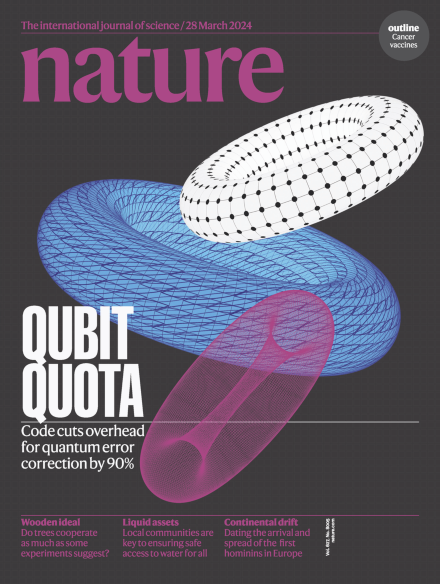
In News in focus, the development of a revolutionary (CAR-T) cancer therapy by a Munbai company at 1/10 the cost of similar products in the US, with several impressive innovations (and a clinical trial over 33 people). The coverage of Michel Talagrand’s 2024 Abel prize, the deteriorating state of scientific research in Russia, a review on how the Big Bang got its name (hint: it was on BBC 3), and remembering India’s Chipko tree-hugging women of Western Himalayas of 50 years ago. The development of signs for scientific terms to add to the Indian and American sign languages.
 There is also an almost sleuthing story on the debates in the ecology community about the theory of “Mother Tree”, introduced by Suzanne Simard, about trees communicating among themselves by underground fungal networks, and thus creating a “wood wide web“. With mature trees favouring their own kin, a theory that critics in the field deem incompatible with evolutionary theory and more crucially missing supporting evidence. (Arguments from Simard that “the European male society hates the mother tree” concept do not help towards a rational denate. The Guardian now has a podcast about this debate.)
 And another story on the (racial and gender) bias of AI image generators. With the conclusion that removing such biases goes through open sourcing. And regulation like the EU’s AI Act. that requires technical documentation on the training datasets. Plus a retrospective on the theory of bird-flight origins, with John Ostrom proposing in 1974 that the evolution to flight was ground-up rather than tree-down.
A cover-paper on IBM error correcting code for quantum computing that only requires each qubit to connect with six others (just like birds in murmuration only keep track of seven neighbours) for an error threshold less than 1%. (With the property that 12 logical qubits can be preserved for 10⁶ cyclces using 288 qubits in total.)
Nature snapshots [10 Aug 2023]
Posted in Statistics with tags AI regulation, AI scare, Alan Turing, Bletchley Park, chatbots, ChatGPT, China, Elsevier, Hong Kong, mechanics, Nature, tuition fees, UK Government, visa on November 12, 2023 by xi'an
Plenty of AI entries, like Artificial-intelligence search engines wrangle academic literature (as an advanced Google Scholar) and Publishing companies (like Elsevier) developing ChatGPT-like search engines. (While trying to stay clear from fake references!). Plus a long enquiry on Rules to keep AI in check: nations carve different paths for tech regulation about the different approaches envisioned by the EU, the USA, and China, with little practical advance so far for the first two. (While the UK plans its own AI safety summit in Bletchley Park this Fall.)
And an article on how Chinese students are starting to feel less inclined to study abroad. And not only in connection with the COVID pandemic. Or the US growing restrictions on student visas. But mainly because of the quickly growing attractivity of mainland China and Hong Kong universities. (The article states that “For every 1,000 PhDs that have been denied [visa] by the US government, US institutions will lose nearly US$1 billion in tuition fees”, but this does not sound highly relevant since most PhD tuitions are paid from supervisors’ grants, while students from other country may substitute for those denied visa.)
short trip to a theocracy
Posted in pictures, Travel with tags blogging, conference, KAUST, Mohammed bin Salman, political prisoner, probabilistic numerics, Raif Badawi, Saudi Arabia, Statistical learning, theocracy, visa on June 30, 2023 by xi'an Besides attending a workshop on my research themes and meeting researchers from that field, a supplementary incentive for attending Stochastic Numerics and Statistical Learning was to catch a glimpse of Saudi Arabia and its idiosyncrasies. While this is far from my first time visiting a Muslim theocracy, remembering a most enlightening (if penniless) backpacking trip to Morocco in the summer of 1982, Saudi Arabia is in a class of its own, as I experienced from filling a visa application where I had to enter my religion (non-Muslim was enough, though, while atheist would not have worked!), to flying on Saudia Airlines, with the broadcasted travelling Du’a before take-off, plus an extra religious announcement when flying over Mecca, to (early) Hadj pilgrims disembarking from planes wearing only the ihram, to the absolute prohibition of alcohol, even on the KAUST campus. Even though there are signs of recent liberalisation, in the sense of less restrictions imposed to women, probably helped by the timid opening to (non-religious) tourism, if not at all of democratisation, as show by the repression of dissenters, cf. Amnesty annual report, or the current plight of Raif Badawi.
 Obviously, these are just quick impressions based on being no more than a few hours in the (real) country, between the airport visits and the taxi trip back from KAUST, since the city campus has had its own regulations from its creation ex nihilo (or de deserto) in 2009. Accommodating more foreign students and faculty than local ones and running quite efficiently, thanks to the enormous budget provided by the Saudi monarchy, which also proves a Damocles sword, were the kingdom choose to allocate this money differently, to one of the many Hercules projects pushed by Mohammed bin Salman, also chairman of the university.

day four at ISBA 22
Posted in Mountains, pictures, Running, Statistics, Travel, University life with tags BayesComp 2023, Chamonix-Mont-Blanc, conference practicals, Finland, fire, generalised Bayesian inference, Gibbs posterior, hidden Markov models, ISBA 2022, Japanese cuisine, Jim Berger, Leci, machine learning, MCMSki IV, mirror workshop, misspecification, Mont Royal, Montréal, Plateau-Mont Royal, Pu Erh tea, Saint-Laurent, Savage award, SAVI, Sherbrooke, stick breaking process, University of Warwick, variational Bayes methods, visa on July 3, 2022 by xi'an
Woke up an hour later today! Which left me time to work on [shortening] my slides for tomorrow, run to Mon(t) Royal, and bike to St-Viateur Bagels for freshly baked bagels. (Which seemed to be missing salt, despite my low tolerance for salt in general.)
Terrific plenary lecture by Pierre Jacob in his Susie Bayarri’s Lecture about cut models! Offering a very complete picture of the reasons for seeking modularisation, the theoretical and practical difficulties with the approach, and some asymptotics as well. Followed a great discussion by Judith on cut posteriors separating interest parameters from nuisance parameters, especially in semi-parametric models. Even introducing two priors on the same parameters! And by Jim Berger, who coauthored with Susie the major cut paper inspiring this work, and illustrated the concept on computer experiments (not falling into the fallacy pointed out by Martin Plummer at MCMski(v) in Chamonix!).
 Speaking of which, the Scientific Committee for the incoming BayesComp²³ in Levi, Finland, had a working meeting to which I participated towards building the programme as it is getting near. For those interested in building a session, they should make preparations and take advantage of being together in Mon(t)réal, as the call is coming out pretty soon!
Attended a session on divide-and-conquer methods for dependent data, with Sanvesh Srivastava considering the case of hidden Markov models and block processing the observed sequence. Which is sort of justified by the forgettability of long-past observations. I wonder if better performances could be achieved otherwise as the data on a given time interval gives essentially information on the hidden chain at other time periods.
I was informed this morn that Jackie Wong, one speaker in our session tomorrow could not make it to Mon(t)réal for visa reasons. Which is unfortunate for him, the audience and everyone involved in the organisation. This reinforces my call for all-time hybrid conferences that avoid penalising (or even discriminating) against participants who cannot physically attend for ethical, political (visa), travel, health, financial, parental, or any other, reasons… I am often opposed the drawbacks of lower attendance, risk of a deficit, dilution of the community, but there are answers to those, existing or to be invented, and the huge audience at ISBA demonstrates a need for “real” meetings that could be made more inclusive by mirror (low-key low-cost) meetings.
Finished the day at Isle de Garde with a Pu Ehr flavoured beer, in a particularly lively (if not jazzy) part of the city…

