Archive for group picture
ISBA Satellite Meeting 2026 [overview]
Posted in pictures, Statistics, Travel, University life with tags conference, group picture, Institute of Statistical Mathematics, ISM, Japan, MCMC, Monte Carlo methods, poster session, privacy, Tachikawa, Tokyo, workshop on July 30, 2026 by xi'an
many folks for manifolds [computational methods for probability distributions on manifolds workshop]
Posted in pictures, Travel, University life with tags bootstrap, experimental design, France, generative model, Gromov-Wasserstein, group picture, IHP, Institut Henri Poincaré, inverse problems, kernel Stein discrepancy descent, manifold, manifold exploration, MCMC, mixture models, Paris, workshop on May 27, 2026 by xi'an
Houcheanographers!
Posted in pictures, Travel, University life with tags Aiguille du Midi, Bayesian privacy, Chamonix-Mont-Blanc, differential privacy, ERC Synergy Grant, French Alps, group picture, Les Houches, Mont Blanc, Mont Blanc du Tacul, Ocean, Pays du Mont-Blanc, winter light, workshop on February 22, 2025 by xi'an
more than mostly MC
Posted in Kids, pictures, Statistics, Travel, University life with tags casino, cross-entropy method, diffusion sampler, EDF, Gaussian mixture, group picture, importance sampling, modes of a mixture, Monaco, Monte Carlo, Monte-Carlo casino, multimodality, nuclear energy, nuclear plant, ODE, Paris, PariSanté campus, PDEs, PDMP, piecewise deterministic, rare events, SDEs, simulated annealing on December 27, 2024 by xi'an The session of last Friday (and last one of 2024!) proved most interesting, with two (fully) Monte Carlo talks. The first one by Louis Grenioux was about an improvement on diffusion sampler, following a recent arXival by Maxime Noble and co-authors. Which brought me back to the long-standing multimodal challenge in Monte Carlo methods. When all modes of a target distribution are known, even roughly, this is not much of an issue since samplers can be arm-bent into visiting all these modes. But the problem becomes much harder when the location and a fortiori the number of modes are not known. The paper aims at adapting diffusion samplers towards a better exploration of the modes, albeit their location is known. Otherwise, using MCMC as a starting (reference) distribution would risk missing some of them. Which also explains why the authors can rely on the classical Gaussian mixtures proposal as a cheap substitute to neural networks (EBM). Since, within diffusion models, both intermediary distributions and their scores are intractable, they also introduce a variational parametric approximation that can be optimised.
The second talk was given by Guillaume Chennetier, in connection with his recent PhD thesis, developing a form of X-entropy sampling for rare events. As in nuclear plant major accidents. It took me a while to realise that PDMPs were not used as a simulation tool, as in the zigzag sampler and its avatars, The proposal involved creating a graph structure on the space of PDMP trajectories and designing the optimal importance process (yes, the one with zero variance!) using so-called committor functions that modify jump intensity and kernel, in a sequential way reminiscent of X-entropy. The approach recycles past trajectories as Monte Carlo elements if missing an adaptive mixture importance sampling (AMIS!) version that would bring more stability. The talk also included an interesting pointer to the availability of the distribution of the PDMP path, thus treated as a likelihood. (!). The signage at the entrance of the Monte-Carlo (mind the hyphen!) casino also made an appearance, reminding me of our memorable group picture on the same spot, eons ago! (But not of whom took the picture!)
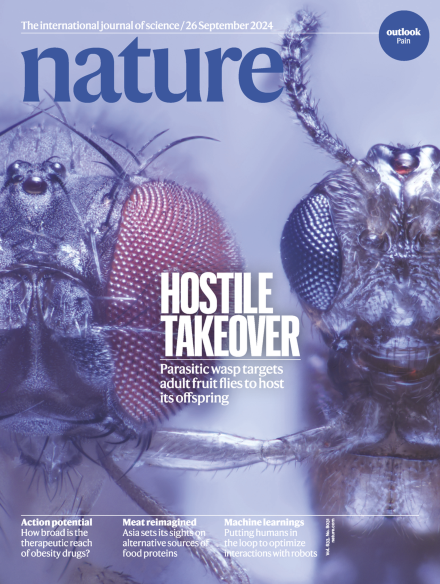
[not so] hostile takeover on my Nature issue
Posted in Books, pictures, Travel, University life with tags AF beer, AI scare, AlphaFold, alternative meat, black holes, book review, bread, buckwheat, Caspian sea, CHANCE, chili pepper, cultivated meat, curry, English beer, flight mode, foie gras, fruit fly, group picture, Internet, internet security, Montréal, Nature, Nobel Prize, origin of bread, Parasite, rye bread, Singapore, solar system, wasps on November 29, 2024 by xi'an