Archive for gender inequalities

attending a predatory conference

Posted in Books, Mountains, pictures, Travel, University life with tags , , , , , , , , , , , , , on August 13, 2024 by xi'an


Nature of 18 July 2024 ran a story about predatory conferences, with an actual reporter on the ground! More precisely in the vicinity of Heathrow where they interviewed victims of this scam. Which reminded me of earlier instances, like when I had to explain the concept of a predatory conference to a Master student who was so excited to be invited to a conference. Or when I almost went to a Montparnasse hotel in Paris to check on the actual audience of a superposition of OMICS conferences on every imaginable topic, all happening together in the same room of that hotel. Which is exactly the situation reported in that article… A scary figure inside is that these predatory conferences are becoming “now more plentiful than legitimate ones”. Although this does not mean more people attend fake conferences than legit ones (Nature advances the figure of 10% researchers attending these pseudo-conferences.). The journal also address the elephant in the room, namely as to why people attend such conferences. Very junior researchers may get confused if this is their first invitation, but then why don’t they get a proper warning from their funding bodies or their senior colleagues?! And there is the acknowledgement that some researchers do attend fake conferences in full knowledge of the scam.

“They might be flattered to be invited or attracted by a glamorous location; questionable conferences often take place in tourist hotspots. Or they might attend simply to add a line to their CV.”

The examples chosen by Nature are obviously predatory in that they are run by an only-for-profit company, without a scientific board or society at the helm, and cramming talks about unrelated topics in a single hotel conference room (or online). One could think of extending the definition, though, to conferences without a clear scientific purpose, witness a yearly series I can think of (!) merging statistics and econometrics sub-conferences without an active scientific board, each session being the responsibility of its organiser. The one occasion I attended, both the sessions I talked in and I organised were only attended by the speakers…
Nature tidbits

Posted in Books, Kids, Statistics, Travel, University life with tags , , , , , , , , , , , , , , , , , , , , , , , , , , , , , , , , , on June 10, 2024 by xi'an

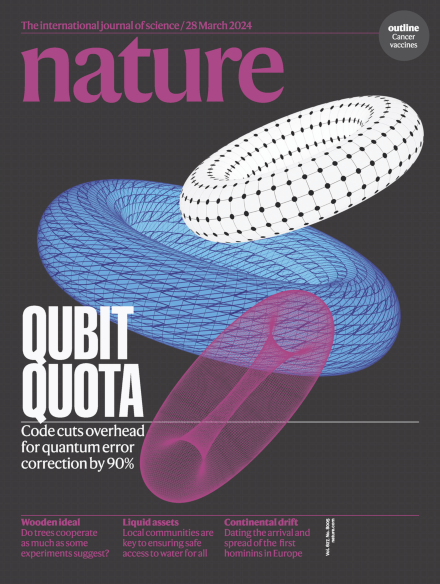
I was quite glad to have taken this 28 March issue of Nature for the train ride to Marseille earlier this month, as it proved full of great entries. Starting with a tribune from a PhD candidate from Ghana unable to speak at a tropical ecology conference in Lisbon for being denied a Schengen visa by the Dutch embassy in Accra, despite providing a serious amount of supporting material. This is a general issue related to international conferences that I plan to include in my presentation in a round table about the future of conference at the ISBA 2024 conference next month. Researchers and students from low-income countries are regularly victims of arbitrary rejections by consular and embassy officers, with little leeway from inviting universities and academic societies for counteracting such arbitrariness. An example came last year when, as part of our Data Science for Social Good program at Warwick, one computer student from Pakistan got denied a visa, while another one with an almost identical profile did receive her visa.

In News in focus, the development of a revolutionary (CAR-T) cancer therapy by  a Munbai company at 1/10 the cost of similar products in the US, with several impressive innovations (and a clinical trial over 33 people). The coverage of Michel Talagrand’s 2024 Abel prize, the deteriorating state of scientific research in Russia, a review on how the Big Bang got its name (hint: it was on BBC 3), and remembering India’s Chipko tree-hugging women of Western Himalayas of 50 years ago. The development of signs for scientific terms to add to the Indian and American sign languages.

There is also an almost sleuthing story on the debates in the ecology community about the theory of “Mother Tree”, introduced by Suzanne Simard, about trees communicating among themselves by underground fungal networks, and thus creating a “wood wide web“.  With mature trees favouring their own kin, a theory that critics in the field deem incompatible with evolutionary theory and more crucially missing supporting evidence. (Arguments from Simard that “the European male society hates the mother tree” concept do not help towards a rational denate. The Guardian now has a podcast about this debate.)

And another story on the (racial and gender) bias of AI image generators. With the conclusion that removing such biases goes through open sourcing. And regulation like the EU’s AI Act. that requires technical documentation on the training datasets. Plus a retrospective on the theory of bird-flight origins, with John Ostrom proposing in 1974 that the evolution to flight was ground-up rather than tree-down.

A cover-paper on IBM error correcting code for quantum computing that only requires each qubit to connect with six others (just like birds in murmuration only keep track of seven neighbours) for an error threshold less than 1%. (With the property that 12 logical qubits can be preserved for 10⁶ cyclces using 288 qubits in total.)

America after Roe

Posted in Statistics with tags , , , , , , , on May 5, 2022 by xi'an

my body is my own [UNFPA report]

Posted in Books, Kids, Statistics with tags , , , , , , , on April 20, 2021 by xi'an

Today, the United Nation Population Fund published its 2021 State of World Population report, entitled My Body is My Own.

“The report examines data on women’s decision-making power and on laws supportive of sexual and reproductive health and rights. Tragically, only 55 per cent of women have bodily autonomy, according to measurements of their ability to make their own decisions on issues relating to health care, contraception and whether to have sex.”

Countradicting seven myths about bodily autonomy:

  1. it is a Western concept
  2. there is no universal right to bodily autonomy
  3. it represents radical individualism; it undermines group decision-making
  4. one person’s bodily autonomy could end up undermining the autonomy of others
  5. some groups of people are not entitled to bodily autonomy
  6. it undermines traditions and religions
  7. it is “just another” women’s issue

and presenting (incomplete) data on the overwhelming proportion of countries with bodily lack of autonomy.

“These data are only available in about one in four countries, but they paint an alarming picture: only 55 per cent of girls and women are able to make their own decisions in all three dimensions of bodily autonomy.”