
Archive for nanoparticles
European particles matter
Posted in Books, Statistics, Travel with tags air pollution, disease mapping, Europe, nanoparticles, PM2.5, Po, pollution, public health system, The Guardian, WHO, WHO safe air recommendation, World Health Organisation on October 11, 2023 by xi'an
transport, diffusions, and sampling
Posted in pictures, Statistics, Travel, University life with tags Barker's algorithm, Biometrika, diffusions, ELBO, Empire State building, Flatiron Institute, Gelman-Rubin statistic, Hyvärinen score, mural, nanoparticles, New York city, normalising flow, optimal transport, Pareto smoothed importance sampling, R² criterion, RJMCMC, sampling, Simmons Foundation, stacking, Statistical Science, street art, what you get is what you see, workshop on November 19, 2022 by xi'an
At the Sampling, Transport, and Diffusions workshop at the Flatiron Institute, on Day #2, Marilou Gabrié (École Polytechnique) gave the second introductory lecture on merging sampling and normalising flows targeting the target distribution, when driven by a divergence criterion like KL, that only requires the shape of the target density. I first wondered about ergodicity guarantees in simultaneous MCMC and map training due to the adaptation of the flow but the update of the map only depends on the current particle cloud in (8). From an MCMC perspective, it sounds somewhat paradoxical to see the independent sampler making such an unexpected come-back when considering that no insider information is available about the (complex) posterior to drive the [what-you-get-is-what-you-see] construction of the transport map. However, the proposed approach superposed local (random-walk like) and global (transport) proposals in Algorithm 1.
Qiang Liu followed on learning transport maps, with the Interesting notion of causalizing a graph by removing intersections (which are impossible for an ODE, as discussed by Eric Vanden-Eijden’s talk yesterday) through coupling. Which underlies his notion of rectified flows. Possibly connecting with the next lightning talk by Jonathan Weare on spurious modes created by a variational Monte Carlo sampler and the use of stochastic gradient, corrected by (case-dependent?) regularisation.
Then came a whole series of MCMC talks!
Sam Livingstone spoke on Barker’s proposal (an incoming Biometrika paper!) as part of a general class of transforms g of the MH ratio, using jump processes based on a nasty normalising constant related with g (tractable for the original Barker algorithm). I then realised I had missed his StatSci paper on how to speak to statistical physics researchers!
Charles Margossian spoke about using a massive number of short parallel runs (many-short-chain regime) from a recent paper written with Aki, Andrew, and Lionel Riou-Durand (Warwick) among others. Which brings us back to the challenge of producing convergence diagnostics and precisely the Gelman-Rubin R statistic or its recent nR avatar (with its linear limitations and dependence on parameterisation, as opposed to fuller distributional criteria). The core of the approach is in using blocks of GPUs to improve and speed-up the estimation of the between-chain variance. (D for R².) I still wonder at a waste of simulations / computing power resulting from stopping the runs almost immediately after warm-up is over, since reaching the stationary regime or an approximation thereof should be exploited more efficiently. (Starting from a minimal discrepancy sample would also improve efficiency.)
Lu Zhang also talked on the issue of cutting down warmup, presenting a paper co-authored with Bob, Andrew, and Aki, recommending Laplace / variational approximations for reaching faster high-posterior-density regions, using an algorithm called Pathfinder that relies on ELBO checks to counter poor performances of Laplace approximations. In the spirit of the workshop, it could be profitable to further transform / push-forward the outcome by a transport map.
Yuling Yao (of stacking and Pareto smoothing fame!) gave an original and challenging (in a positive sense) talk on the many ways of bridging densities [linked with the remark he shared with me the day before] and their statistical significance. Questioning our usual reliance on arithmetic or geometric mixtures. Ignoring computational issues, selecting a bridging pattern sounds not different from choosing a parameterised family of embedding distributions. This new typology of models can then be endowed with properties that are more or less appealing. (Occurences of the Hyvärinen score and our mixtestin perspective in the talk!)
Significance and artificial intelligence
Posted in Books, Kids, pictures, Statistics, University life with tags artificial intelligence, bad graph, Bayesian network, Blade Runner, computer virus, cover, exams, Fukushima Daïshi, genetically modified crops, Knowledge is Beautiful, machine learning, nanoparticles, Stephen Hawking, Turing's test on March 19, 2015 by xi'an As my sorry excuse of an Internet provider has been unable to fix my broken connection for several days, I had more time to read and enjoy the latest Significance I received last week. Plenty of interesting entries, once again! Even though, faithful to my idiosyncrasies, I must definitely criticise the cover (but you may also skip till the end of the paragraph!): It shows a pile of exams higher than the page frame on a student table in a classroom and a vague silhouette sitting behind the exams. I do not know whether or not this is intentional but the silhouette has definitely been added to the original picture (and presumably the exams as well!), because the seat and blackboard behind this silhouette show through it. If this is intentional, does that mean that the poor soul grading this endless pile of exams has long turned into a wraith?! If not intentional, that’s poor workmanship for a magazine usually apt at making the most from the graphical side. (And then I could go on and on about the clearly independent choice of illustrations by the managing editor rather than the author(s) of the article…) End of the digression! Or maybe not because there also was an ugly graph from Knowledge is Beautiful about the causes of plane crashes that made pie-charts look great… Not that all the graphs in the book are bad, far from it!
“The development of full artificial intelligence could spell the end of the human race.’ S. Hawkins
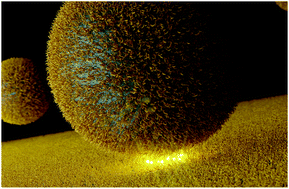
The central theme of the magazine is artificial intelligence (and machine learning). A point I wanted to mention in a post following the recent doom-like messages of Gates and Hawking about AIs taking over humanity à la Blade Runner… or in Turing’s test. As if they had not already impacted our life so much and in so many ways. And no all positive or for the common good. Witness the ultra-fast codes on the stock market. Witness the self-replicating and modifying computer viruses. Witness the increasingly autonomous military drones. Or witness my silly Internet issue, where I cannot get hold of a person who can tell me what the problem is and what the company is doing to solve it (if anything!), but instead have to listen to endless phone automata that tell me to press “1 if…” and “3 else”, and that my incident ticket has last been updated three days ago… But at the same time the tone of The Independent tribune by Hawking, Russell, Tegmark, and Wilczek is somewhat misguided, if I may object to such luminaries!, and playing on science fiction themes that have been repeated so many times that they are now ingrained, rather than strong scientific arguments. Military robots that could improve themselves to the point of evading their conceptors are surely frightening but much less realistic than a nuclear reaction that could not be stopped in a Fukushima plant. Or than the long-term impacts of genetically modified crops and animals. Or than the current proposals of climate engineering. Or than the emerging nano-particles.
“If we build systems that are game-theoretic or utility maximisers, we won’t get what we’re hoping for.” P. Norvig
The discussion of this scare in Significance does not contribute much in my opinion. It starts with the concept of a perfect Bayesian agent, supposedly the state of an AI creating paperclips, which (who?) ends up using the entire Earth’s resources to make more paperclips. The other articles in this cover story are more relevant, as for instance how AI moved from pure logic to statistical or probabilist intelligence. With Yee Whye Teh discussing Bayesian networks and the example of Google translation (including a perfect translation into French of an English sentence).


