Read in both Le Monde (Sept) and Nature (26 Sept) concerning articles about the poor financial state of many higher education institutions in the UK, if not the most prestigious ones… (Warwick being so far preserved from that issue, if not the neighbouring University of Coventry.) Up to 80% of French universities—prestigious and less prestigious alike—are also facing repeated deficits, for several years in a row, if mostly for different reasons besides the after-effects of COVID and the economical crisis amplified by the Russian invasion.
 The main difference (between France and Britain—minus bonnie Scotland!) is in the UK government not providing direct support to higher education institutions, treating them as businesses that must make a profit on average to survive. To add insult to injury, the short-sighted Sunak Government has strongly reduced the number of foreign students (that they considered immigrants) when those are a key component of the universities business models since they pay much higher fees compared with the capped fees for UK nationals. Surprisingly (to me), the new Labour government does not intend to change either policy. The more surprising (to me) when the first institutions to fail will be (are?) those concentrating students from less privileged backgrounds. Quite paradoxical for a party with social ideals and socialist roots. Besides, repeated reductions of the attractivity of Britain for higher education may reach a no-return point in terms of its (World first-tier) scientific productivity.
 France is financing its universities for 60% of their budget, while tuition fees in national universities (that do no include Paris Dauphine) are nominal for EU students (and special cases like PhD programs). Progressive cuts have led to tighter budgets, more deficit, with limited alternative sources of financing, since raising students fees is completely taboo. Added to academic positions being little attractive (for offering comparatively low salaries), this abides poorly for France keeping being part of top higher education countries. (It already figures very rarely in the country comparisons produced by Nature on an almost weekly basis.) The new higher education minister is known for pushing towards more “autonomy” (read less financing) of universities and the current State deficit may prove the tipping point for cutting further State support for public higher education institutions at large and fundamental research.

Archive for college ranking
banKrUpt, franc’route
Posted in Kids, pictures, Travel, University life with tags bankruptcy, Brexit, college ranking, Coventry, COVID-19, foreign students, French government, French politics, inflation, Labour, Le Monde, Nature, PhD course, Russian invasion, Scotland, Shanghai ranking, student fees, tuition fees, UK Government, UK politics, UK universities, Université Paris Dauphine, University of Coventry, University of Warwick on November 14, 2024 by xi'antop off…
Posted in Statistics with tags college ranking, International Statistical Review, John Wiley, PSL, Rao-Blackwellisation, survey, Université Paris Dauphine, University of Warwick on April 25, 2023 by xi'an
Paris-Saclay campus debated in Nature
Posted in Books, University life with tags bibliometrics, college ranking, ENSAE, France, French politics, Institut Polytechnique de Paris, Nature, Paris Sciences et Lettres, plus ça change, Saclay, Université Paris Dauphine, Université Paris-Saclay on November 18, 2020 by xi'an The newly created entity of the Paris-Saclay University is featuring in two editorials of Nature of 03 November for reaching a high ranking in one of the many league tables purportedly summarising the academic achievements of universities by a single number. This entity is made of the much older Université d’Orsay and of aggregated research institutes like Ecole Normale (formerly) de Cachan, Institut d’Optique, or Centrale Supélec, incidentally and uninterestingly located nearby my home. As an aggregate of high quality institutions, it is thus little surprise that it achieves a sufficient critical mass to reach a high ranking. Were the nearby Institut Polytechnique de Paris integrated as well, the ranking would have been even higher. (Why the two adjacent campuses did not merge defies rationality, but can be explained by politics and the long-standing opposition between Universités and Grandes Écoles in the French academic landscape.) I thus think the Nature editorial about the dangers to “the well-being of those on the academic front line” brought by the quest for high rankings is missing the point. By a fair margin. Indeed, it mixes the financial and institutional efforts made by [former president] Nicolas Sarkozy in creating a single campus with the funding of this mostly pre-existing campus [and in dire need of renovations, as exemplified by the new math department]. And seems to see the more competitive grant system in France connected with this creation when the [somewhat controversial] Agence Nationale de la Recherche in charge of the public-funded grants has been around since 2005. And I find that the unceasingly growing mille-feuille of aggregates, conglomerates, unions, initiatives, &tc. happening in the French academic landscape [like Paris Dauphine joining PSL a few years ago, whose status was confirmed today] are both blurring the picture and reducing the efficiency of the maneuvers by multiplying the administrative structures without creating a sense of belonging to a common institution. Plus ça change…
Nature tidbits
Posted in Books, University life with tags AI for good, college ranking, ethics, EU, India, Nature, obesity, open access, open and free access, systemic bias, text mining, United Kingdom on September 7, 2019 by xi'an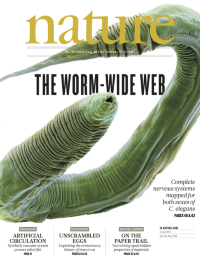
- France showing the biggest decline in overal output among the top 10 countries in the Nature Index Annual Tables.
- A tribune again the EU’s Plan S, towards funding (private) publishers directly from public (research) money. Why continuing to support commercial journals one way or another?!
- A short debate on geo-engineering towards climate control, with the dire warning that “little is known about the consequences” [which could be further damaging the chances of human survival on this planet].
- Another call for the accountability of companies designing AI towards fairness and unbiasedness [provided all agree on the meaning of these terms]
- A study that argues that the obesity epidemics is more prevalent in rural than urban areas due to a higher recourse to junk food in the former.
- A data mining venture in India to mine [not read] 73 million computerised journal articles, which is not yet clearly legal as the publishers object to it. Although the EU (and the UK) have laws authorising mining for non-commercial goals. (And India has looser regulations wrt copyright.)
Uneducated guesses
Posted in Books, Kids, Statistics, University life with tags ACT, aptitude vs. achievement, Baccalauréat, CHANCE, college ranking, counterfactuals, educational tests, French, GRE, SAT, Uneducated Guesses on January 12, 2012 by xi'anI received this book, Uneducated Guesses: Using Evidence to Uncover Misguided Education Policies by Howard Wainer, from Princeton University Press for review in CHANCE. Alas, I am presumably one of the least
likely adequate reviewers for the book in that
- having done all of my academic training in France (except for my most useful post-doctoral training in Purdue and in Cornell), I never took any of those ACT/SAT/&tc tests (except for the GRE at the very end of my Ph.D. towards a post-doctoral grant I did not get!);
- teaching in a French university, I never used any of those tests to compare undergraduate or graduates applicants;
- I am very marginally aware of the hiring process in US universities at the undergraduate, even though I knew about the early admission policy;
- there is no equivalent in the French high school system, given that high school students have to undergo a national week-long exam, le baccalauréat, to enter higher education and that most curricula actually decide on the basis of the high school record, prior to [but conditional on] the baccalauréat.
Thus, this review of Wainer’s Uneducated Guesses is to be taken with pinches (or even tablespoons) of salt. And to be opposed to other reviews. Esp. in Statistics journals (I could not find any).
“My role in this parallels Spock’s when he explained `Nowhere am I so desperately needed as among a shipload of illogical humans.‘” (page 157)
First, the book is very pleasant to read, with a witty and whimsical way of pushing strong (and well-argued) opinions. Even as a complete bystander, I found the arguments advanced for keeping SAT as the preferential tool for student selection quite engaging, as were the later ones against teacher and college rankings equally making sense. So the book should appeal to a large chunk of the public, as prospective students, parents, high school teachers or college selection committees. (Scholars on entrance tests may already have seen the arguments since most of the chapter are based on earlier papers of Howard Wainer.) Second, and this is yet another reason why I feel remote from the topic, the statistical part of the analysis is simply not covered in the book. There are tables and there are graphs, there are regressions and there are interpolation curves, there is a box-plot and there are normal densities, but I am missing a statistical model that would push us further than the common sense that permeates the whole book. After reading the book, my thirst about the modelling of education tests and ranking is thus far from being quenched! (Note I am not saying the author is ignorant of such matters, since he published in psychometrics, educational statistics and other statistics journals, and taught Statistics at Wharton. The technical side of the argument does exist, but it is not included in the book. The author refers to Gelman et al., 1995, and to the fruitful Bayesian approach on page 69.)


