
Archive for NHS
a decline in healthy life expectation [and a terrible graph]
Posted in Books, Kids, pictures, Statistics with tags COVID-19, healthy life expectancy, life expectancy, NHS, ONS, The Guardian, The Health Foundation, UK politics, United Kingdom on May 26, 2026 by xi'an
Nature (statistical) tidbits
Posted in Statistics with tags academic misconduct, AI, archiving, Australia, big data, bioscurity risks, ChatGPT, concentration of power, contamination, cover, design of experiments, digital preservation, exploratory data analysis, Google Scholar, hypothesis testing, megafires, Nature, NHS, Nice, open AI, OpenAI, quantum computing, Ryugu, statistical hypotheses, Trump administration, wallaby, widlfire on January 3, 2025 by xi'an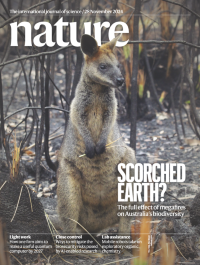
- a call for a general digital preservation of research documents, since many articles have gone awol,
- another tribune on the importance of experimental design (!), with basic recommendations such as running longitudinal studies, using the right statistical models, ensuring that findings are statistically significant and reproducible…
- yet another column on the importance of open-ended, exploratory, research, rather than sticking to confirmatory studies and “thinking of hypothesis testing as the main job of a (social science) researcher¨,
- a reanalysis of the Ryugu microbes brought back to Earth by Hayabusa2, found to be the result of a contamination,
- several entries on the scary prospect of the incoming Trump administration on the NHS, health, reproductive care, &tc.
- a prospective article on the incoming demise of Google scholar when faced with more advanced (AI) alternatives, as well as the scary possibility that AIs may lead to the creation of uncontrollable pathogens, although the call for companies taking responsibility sounds both naïve and insecure, as does the AI Action Summit in Paris next February, as well as a perspective paper on how open AI is far from open,
- and several entries on quantum computing, like AlphaQubit,
the incredible shrinking pools
Posted in Kids, Running, Travel with tags England, Milano, NHS, Oaxaca, Oxford, Paris, Public Health England, swimming pool, The Guardian on February 10, 2023 by xi'an I was reading an opinion piece in The Guardian about the sorry state of public pools in England. With more and more closing for lack of proper funding, this being aggravated by the explosion in heating costs, as pools are excluded from governmental help. And the resulting impact on public health (and the NHS), since providing one less opportunity for exercising. And on general safety, since nowadays less children can swim… Which reminded me of the difficulty to find a pool in Oxford and Oaxaca. And of the cost of entering one in Roma and Milano. And of the relative accessibility of French pools, at least in cities, as shown by the estimation that 95% of the French high school students can swim to some extent.
health [s]care
Posted in Kids, pictures with tags ARS, Ben Jennings, burnout, cartoon, COVID-19, hospital, National Institutes of Health, NHS, pandemic, public health system, public medical coverage, The Guardian on January 14, 2022 by xi'an
COVID by numbers [not a book review]
Posted in Books, Kids, Statistics with tags alcoholism, China, COVID-19, David Spiegelhalter, fact-checking, NHS, not a book review, pandemic, The Observer, United Kingdom on October 13, 2021 by xi'an David Spiegelhalter and Anthony Masters have made a book out of their COVID related columns in The Observer. Here are ten key figures extracted from that book:
- The UK was hit by more than 1,000 separate outbreaks (…) [with] far more imports of Sars-CoV-2 from France, Italy and Spain than from China
- Reported Covid deaths depend on the day of the week (due to delayed reporting, and a weekend effect, but smoothing is very rarely applied)
- In the first year of Covid, over-90s had 35,000 times the risk of dying of Covid-19 as young children (with no relevance of the figure per se since an extra death of a young child would have moved it from 35,000 to 32,000, since there were thankfully so few deaths of young children)
- 2020 saw the highest number of deaths since 1918 in England and Wales (even when correcting for population increase or population ageing)
- The UK has led the World in testing Covid treatments (like dexamethasone and hydroxychloroquine, thanks to the centralised NHS, making me wonder why France with another centralised and public health structure was not able to do the same)
- People who have died with Covid have on average lost about 10 years of life (contrary to the authors’ intial hunch, and mine as well, to oppose to the less relevant loss of life expectancy across the entire population)
- Most people died “of” Covid rather than “with” it, but most have also had other medical conditions (with 91% of pre-COVID conditions)
- Alcohol consumption stayed the same during lockdown (which came as a surprise, given the general feeling for the opposite, and still as a worrying indicator of alcoholism)
- Most people with Sars-CoV-2 don’t infect anyone (which would need more details, as the figure should be weighted by the base probability to infect someone)
- The pandemic has been a net lifesaver for young people (with 300 fewer deaths for 15-29 year old, but it also has had a potentially negative impact on their life expectancy).


