A “Feature” article in Nature (21 May 2026) and a long article in the New York Time (June 8, 2026) are both covering the sudden intrusion of AIs in proving or disproving mathematical conjectures… Genuine, hard, conjectures likes Erdös problems. Specialised AIs like Alethia, Math Inc., AlphaProof are hacking at existing open problems and a benchmark collection of problems whose solutions are not available (yet) called First Proof has been recently gathered, solved by OpenAI, and is soon to be extended. In an earlier interview with Nature (27 April 2026), Terry Tao acknowledges the tectonic shift represented by this intrusion and how a mathematician’s skill need evolve. (This is also the starting point of the NYT story. ) A side issue of this is that reviewing the proofs thus produced by an AI may prove inhumane if it reaches hundreds of pages, which also relates to the un-academic (?) tendency of AIs companies to over-blow the results produced by their machines. For the times they are a-Changin…
Archive for OpenAI
AIs rushing to the proofs
Posted in Books, Kids, University life with tags AIs, Alethia, AlphaProof, Bob Dylan, computer-based proof, conjecture, Erdös problems, Fields medal, Math Inc., mathematics, Nature, NTY, OpenAI, Terry Tao, The New York Times on June 23, 2026 by xi'anNature tidbits [21 Aug 2025]
Posted in Books, pictures, University life with tags @ScientistTrump, Antarctica, Arctic, astronomy, birth rates, black holes, climate change, COVID-19, electric car, Europe Union, global warming, ice sheet, mRNA, OpenAI, supernova, Trump administration, US research on October 16, 2025 by xi'an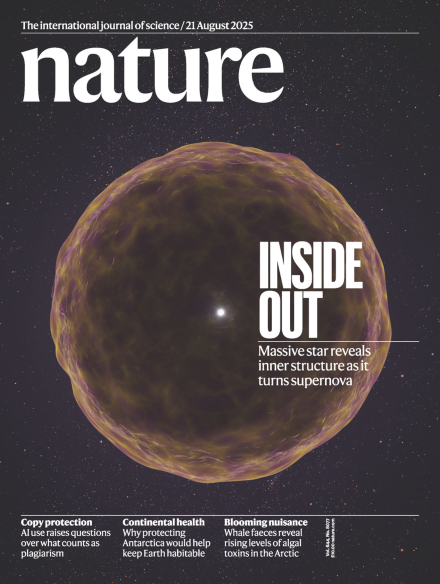
On the Trump 2.0 administration’s attack-on-science front, an editorial exposes the irresponsibility of cancelling grants for mRNA studies (which Trump 1.0 supported during the COVID crisis). And a longer article points out the radical switch in managing federal grants, committees moving from scientists to political appointees, searching for “anti-American values”… And another one on the backlash following the report from said administration about climate change and global warming. (As blogged recently.)
At a more conceptual (and international) level, an article questions the usual stand on declining birth rates as being problematic. While acknowledging that public incentives have a highly variable mileage, the article remains vague on how supporting an ageing population while keeping an homogeneous welfare support will prove feasible. A second socio-economic article muses about the lack of a downward curve in the cost of electric cars, despite the drop in battery costs, pointing out the inefficiency of state support that creates profit bubbles for the manufacturers. Stricter policies on combustion vehicles similarly seem inefficient, given the violent reactions of car owners (as in the Gilets Jaunes revolt). The EU has alas recently backed down on its goal of prohibiting new combustion engines by 2035.
 In shark contrast, a review paper document the rising probability of a climate catastrophe induced by the melting Antarctica, which could prove of a higher magnitude than the melting Arctic. (Even though the introduction article is rather confusing, mixing this issue with the pollution brought by Antarctic tourism and mentioning indigenous populations that do not exist on the 7th Continent).
And on the (weekly) AI front, the announcement of the downloadable gpt-oss from OpenAI, which I plan to check. And the debate on whether or not AI generated papers can plagiarise, again a poorly focussed article mostly missing the issues of the scientific worth of such papers (and the basic fact that they 100% plagiarise the literature dataset they learned from!).
Nature (statistical) tidbits
Posted in Statistics with tags academic misconduct, AI, archiving, Australia, big data, bioscurity risks, ChatGPT, concentration of power, contamination, cover, design of experiments, digital preservation, exploratory data analysis, Google Scholar, hypothesis testing, megafires, Nature, NHS, Nice, open AI, OpenAI, quantum computing, Ryugu, statistical hypotheses, Trump administration, wallaby, widlfire on January 3, 2025 by xi'an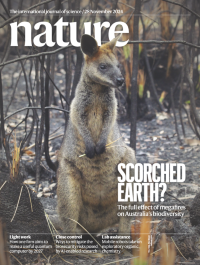
- a call for a general digital preservation of research documents, since many articles have gone awol,
- another tribune on the importance of experimental design (!), with basic recommendations such as running longitudinal studies, using the right statistical models, ensuring that findings are statistically significant and reproducible…
- yet another column on the importance of open-ended, exploratory, research, rather than sticking to confirmatory studies and “thinking of hypothesis testing as the main job of a (social science) researcher¨,
- a reanalysis of the Ryugu microbes brought back to Earth by Hayabusa2, found to be the result of a contamination,
- several entries on the scary prospect of the incoming Trump administration on the NHS, health, reproductive care, &tc.
- a prospective article on the incoming demise of Google scholar when faced with more advanced (AI) alternatives, as well as the scary possibility that AIs may lead to the creation of uncontrollable pathogens, although the call for companies taking responsibility sounds both naïve and insecure, as does the AI Action Summit in Paris next February, as well as a perspective paper on how open AI is far from open,
- and several entries on quantum computing, like AlphaQubit,
anything and everything and ChatGPT
Posted in Books, Kids, Statistics, University life with tags AI, artificial intelligence, chatbots, ChatGTP, Jensen's inequality, language processing, LaTeX, OpenAI, Turing's test on December 21, 2022 by xi'anJust another run at the veneer of logic (and LaTeX) in nonsensical replies from ChatGPT!

versus

deGPTed
Posted in Books, Kids, Statistics, University life with tags chatbots, exponential families, mathematical statistics, OpenAI, Stack Exchange, undergraduates on December 20, 2022 by xi'an
As shown above, automated chatbots are becoming a nuisance on fori such as Stack Exchange. To illustrate the nuisance capacity, here is a question / answer I produced there:

It sounds completely correct except for the core issue of not explaining why the Uniform density is not expressible as an exponential… And the answer is exactly the same when substituting Gamma for Uniform!


