 The paper Prequential posteriors Shreya Roy wrote as part of her PhD thesis at Warwick U, under the supervision of Rito Dutta, Richard Everitt and myself, got published on-line after earlier acceptance by the Japanese Journal of Statistics and Data Science, an official journal of the Japanese Federation of Statistical Science Associations. Coïncidental but unrelated to my Akaike Memorial Lecture prize. The paper will be part of a special issue on Recent Advances in Dynamical Monte Carlo Methods. Congrats to Shreya, soon to defend her viva in Warwick!
Archive for generative models
prequential posteriors in the Japanese Journal of Statistics and Data Science
Posted in Books, Statistics, Travel, University life with tags Akaike Lecture, data assimilation, deep generative forecasting models, defense, generalised Bayesian inference, generative models, intractable likelihood, Japan, Japanese Federation of Statistical Science Associations, Japanese Journal of Statistics and Data Science, Monte Carlo methods, prequential loss, prequential priors, publication, sequential Monte Carlo, special issue, viva on September 22, 2026 by xi'an[Split] Frontiers in Statistical Machine Learning [reposted]
Posted in pictures, Statistics, Travel, University life with tags AISTATS, Croatia, deep learning, generative models, ICLR, ICML, ICSDS 2026, JMLR, NeurIPS, satellite workshop, Split, Statistical frontiers, statistical machine learning, TMLR, UAI on September 19, 2026 by xi'an In connection with the IMS conference ICSDS 2026, an IMS Frontiers in Statistical Machine Learning (FSML) satellite workshop takes place on Monday, December 14, 2026 (also) in Split, Croatia, the day before the main conference.
This year’s themes are generative and foundation models for statistics, and the science of deep learning. The keynote speakers are Yuxin Chen, Alexander Henzi, Andrej Risteski, Pragya Sur, Yan Shuo Tan, and Yuexi Wang.
There are two ways to present a poster, both non-archival:
– Workshop Track: short papers of 3 to 5 pages, work in progress welcome. Ten US$500 travel awards for students and postdocs.
– Fast Track: papers already accepted at NeurIPS, ICLR, AISTATS, ICML, UAI, JMLR, or TMLR since August 2025. No additional review.
The deadline for both tracks is Monday, October 19
FSML 2026 organizers are:
Yuansi Chen, ETH Zurich
Sophie Langer, Ruhr University Bochum
Feng Liu, University of Melbourne
Xinwei Shen, University of Washington
Susan Wei, Monash University
Nature tidbits [28 Aug 25]
Posted in Books, Kids, pictures, Travel, University life with tags AI, antivaxers, Basse-Terre, biobank, chocolate, climate modelling, cocoa, Congo, drainage, forcing dataset, generative models, image generator, Jules Verne, Mars, moon, Nature, Parc National de la Guadeloupe, quantum physics, rainforest, Svalbarði, theories of cognition, urban gullies, variational autoencoders, Vincent Van Gogh, volcanoes on September 24, 2025 by xi'an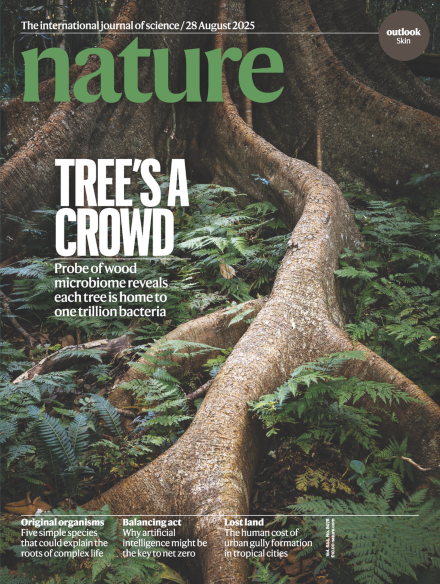
- an editorial call for “hazardous” research, namely the relevance of studies on urban gullies that endanger surrounding populations and have unpredictable dynamics, albeit scientists alone cannot provide solutions.
- a Columbian study on how the microbial communities acting during the fermentation of cocoa and could be controlled towards finer chocolat).
- the alas now usual articles on the impacts of Trump.2.0 on science and academia, with US Minister of Health Kennedy launching a call for finding the environmental cause of autism. When most researchers blame primarily genetics and associate the rise in cases with a rise in detection and awareness. And pointed out at the earlier drop in NIH funds for autism research, the overall balance being negative.
- plus a useful debunking of five quantum theory myths! Along with the story of a 2020 Science paper by Vaitiekėnas et al. on Majoranas that raised enough questions for Science to publish an expression of concern, now lifted after the publication of a long correction.
- (a video of) rappelling robots diving into a lava tube!!
- a Verne-esque proposal to create a lunar biodepository, a (dubious imho) mix between Noah’s Ark and the (unscientific) faith in cryogeny
- a more sobering call for more frequent data inputs (forcing datasets) to calibrate climate models, with no mention made of statistics or machine learning…
- an operative “mind-reading” device… with a protection password (and a 74% efficiency)!
- two research articles on AI unification of cognitive theories.

- Another one on the (revolutionary) construction of an optical encoder-decoder network towards generating images.
Congrats to Arnak Dalalyan for his ERC advanced grant!
Posted in Statistics, University life with tags CREST, ERC, ERC Advanced Grant, EU, Europe, European Research Council, generative AI, generative models, Horizon Europe, Statistics on July 17, 2025 by xi'an
6th Workshop on Sequential Monte Carlo Methods
Posted in Mountains, pictures, Statistics, Travel, University life with tags #ERCSyG, Arthur's Seat, auxiliary particle filter, Bayes Centre, Da Vinci Code, Edinburgh, Gaussian processes, generative models, gradient algorithm, Hamiltonian, ICMS, MALA, maximal coupling, multilevel Monte Carlo, neural network, Ocean, ODE, particle filter, Pentland Hills, public transportation, robots, Rosslyn Chapel, Scotland, SMC, SMC 2024, snippet, trail running on May 16, 2024 by xi'an Very glad to be back to an SMC workshop as it has been nine years since my attending SMC 2015 in Malakoff! The more for the workshop taking place in Edinburgh and at the Bayes Centre. It is one of these places where I feel somewhat returning to familiar grounds with accumulated memories. Like my last visit there when I had a tea with Mike Titterington…
The overall pace of the workshop was quite nice, with long breaks for informal discussions (and time for ‘oggin’!) and interesting poster late afternoons, helped by the small number of them at each instance, incl. one on reversible jump HMC. Here are a few scribbled entries about some talks along the first two days.
 After my opening talk (!), Joaquín Míguez talked about the impact of a sequential (Euler-Marayama) discretisation scheme for stochastic differential equations on Bayesian filtering with control of the approximation effect. Axel Finke (in a joint work with Adrien Corenflos, now an ERC Ocean postdoc in Warwick) built a sequence of particle filter algorithms targeting good performances (high expected jumping distance) against both large dimensions and high time horizon, exploiting gradient shift MALA-like, as well as prior impact, with the conclusion that their jack-of-all-trades solutions, Particle-MALA and Particle-mGRAD, enjoyed this resistance in nearly normal models. Interesting reminder of the auxiliary particle trick and good insights on using the smoothing target, even when accounting for the computing time, but too many versions for a single talk without checking against the preprint.
The SMC sampler-like algorithm involves propagating N “seed” particles z(i), with a mutation mechanism consisting of the generation of N integrator snippets 𝗓:=(z,ψ(z),ψ²(z),…) started at every seed particle z(i), resulting in N×(T+1) particles which are then whittled down to a set of N seed particles using a standard resampling scheme. Andrieu et al., 2024
Christophe Andrieu talked about Monte Carlo sampling with integrator snippets, starting with recycling solutions for the leapfrog integrator HMC and unfolding Hamiltonians for moving more easily. With snippets representing discretised paths along the level sets being used as particles, picking zero, one, or more particles along each path, since importance weights are connection with multinomial HMC
This relatively small algorithmic modification of the conditional particle filter, which we call the conditional backward sampling particle filter has a dramatically improved performance over the conditional particle filter. Karjalainen et al., 2024
Anthony Lee looked at mixing times for backward sampling SMC (CBPF/ancestor sampling) cf Lee et al. (2020), where the backward step consists in computing the weight of a randomly drawn backward or ancestral history. Improving on earlier results to reach mixing time O(log T) and complexity O(T log T) (with T the time horizon). Thanks to maximal coupling and boundedness assumptions on the prior and likelihood functions.
Neil Chada presented a work on Bayesian multilevel Monte Carlo on deep networks. À la Giles, with a telescoping identity. Always puzzling to envision a prior on all parameters of a neural network. Achieving a computational cost inverse to the order of the MSE, at best. With a useful reminder that pushing the size of the NN to infinity results in a (poor) Gaussian process prior (Sell et al., 2023).
 On my first evening, I stopped with a friend in my favourite Blonde [restaurant], as in almost every other visit to Edinburgh, enjoyable as always, but I also found the huge offer of Asian minimarkets in the area too tempting to resist, between Indian, Korean, and Chinese products. (Although with a disappointing hojicha!). As I could not reach any new Munro by train or bus within a reasonable time range I resorted to the nearer Pentland Hills, with a stop by Rosslyn Chapel (mostly of Da Vinci Code fame!, if classic enough). And some delays in finding a bus getting there (misled by google map!) and a trail (misled by my poor map reading skills) up the actual hills. The mist did not help either.


