In this 20 August edition, a wealth of data analysis papers, with many highly informative graphs. A call for China to better balance recognition for its junior scientists, another call for (US?) universities to treat bullying complaints in-depth rather than as a public relation exercise. The “compulsory” current status of the Trump 2.0 wreckage of US science with the Senate blocking the appointment of politicians for grant reviews. And with the absurd, ungrounded, health threatening split of the MMR vaccine.  Another “compulsory” entry on climate change with a scary graph on the ocean surface temperatures rising way way above the confidence band represented by the previous measurements over 50 years. An interview (why?) of a CEO of the startup QED Science that claims an ability to automatically rank preprints and select the top 1% (why?!). Coïnciding with me receiving an email with a review by Claude of our Bayesian Adversarial Privacy paper! A report on the (defunct Starmer) UK Government cutting on fundamental physics projects. An article featuring the predicted rise in the use of exoskeletons, which I read on my way back from the lodge on Mount Fudji that was renting an exoskeleton to help with the climb! With an optimistic view on the consequences on people’s health and muscles. A short book review on Slobodian’s and Tarnoff’s Muskism, concluding that Musk(ism) lacks a coherent philosophy. (A Musk-read according to the Economist!) A long comment on the sleepless summer of the heatwaves, which led me clearly more tired than usual at the end of the summer break. (With a lot of should. And a focus on methodology.) Another one on the Middle East prospects as a sustainable aviation fuel (SAF) hub, which sounds paradoxical in the current geopolitic situation. It made me wonder how sustainable are these SAFs? True, they recycle oils, gases and biomass, rather than extracting “new” oils, but they still pollute the air. And, true, they can fill empty returning tankers, but they divert investment and research from more renewable and less polluting alternatives. Among the actual scientific articles, a long review on the safety and security of LLMs in healthcare (but useless pictures).
  One on the massive floods that occurred in Europe in 1342-1343, possibly caused by volcanic eruptions plus Arctic sea ice retreat, nothing that could occur today of course! With massive socio-economic consequences. (And a great graph, except I do not see the point for the 2D projections. Or for modern state borders.)
  An analysis of intergenerational mobility in Europe with the unsurprising conclusion that it impacts innovation. (Go, Erasmus!) With a multivariate regression I did not investigate (using NUTS but not Andrew’s NUTS!). And graphs of intergenerational mobility per European country, with too many colours to be readable (and the regression line to make sense?). Another data analysis of the Pakistan Genome Resource, with distinctive traits of the many ethnicities of Pakistan. And the discovery of many clinically relevant genes (with a massive avalanche of p-values!).
Archive for Pakistan
Nature tidbits
Posted in Books, Kids, Statistics, Travel, University life with tags AI, AI Act, British Columbia, cognitive biases, common mycorrhizal networks, conferences, Data science for social good, developping countries, Ecology, error correcting codes, EU, European Union, forestry, fungal science, gender inequalities, Himalayas, image generator, India, ISBA 2024, mother tree, murmuration, Nature, Pakistan, quantum comuting, qubit, racism, TED talk, The Guardian, training data, trees, University of Warwick, Venezia, visa, Wood Wide Web on June 10, 2024 by xi'an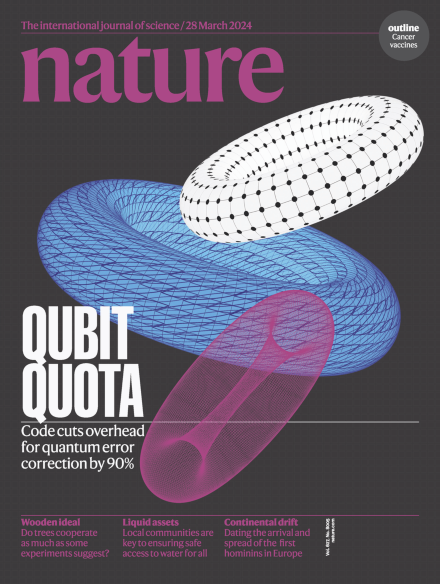
In News in focus, the development of a revolutionary (CAR-T) cancer therapy by a Munbai company at 1/10 the cost of similar products in the US, with several impressive innovations (and a clinical trial over 33 people). The coverage of Michel Talagrand’s 2024 Abel prize, the deteriorating state of scientific research in Russia, a review on how the Big Bang got its name (hint: it was on BBC 3), and remembering India’s Chipko tree-hugging women of Western Himalayas of 50 years ago. The development of signs for scientific terms to add to the Indian and American sign languages.
 There is also an almost sleuthing story on the debates in the ecology community about the theory of “Mother Tree”, introduced by Suzanne Simard, about trees communicating among themselves by underground fungal networks, and thus creating a “wood wide web“. With mature trees favouring their own kin, a theory that critics in the field deem incompatible with evolutionary theory and more crucially missing supporting evidence. (Arguments from Simard that “the European male society hates the mother tree” concept do not help towards a rational denate. The Guardian now has a podcast about this debate.)
 And another story on the (racial and gender) bias of AI image generators. With the conclusion that removing such biases goes through open sourcing. And regulation like the EU’s AI Act. that requires technical documentation on the training datasets. Plus a retrospective on the theory of bird-flight origins, with John Ostrom proposing in 1974 that the evolution to flight was ground-up rather than tree-down.
A cover-paper on IBM error correcting code for quantum computing that only requires each qubit to connect with six others (just like birds in murmuration only keep track of seven neighbours) for an error threshold less than 1%. (With the property that 12 logical qubits can be preserved for 10⁶ cyclces using 288 qubits in total.)
a journal of the plague year³ [beginning of the end?]
Posted in Books, Kids, pictures, Travel, University life with tags 000ers, 14, BD, book review, border worker, borders, Britain, Broad Peak, Caravaggio, Cayenne, chiaroscuro, China, Cho Oyu, COVID-19, Dhaulagiri, Everest, film review, French Guiana, Gasherbrum, Gurkhas, Guyane, Journal of the Plague Year, K2, Kanchenjunga, Lhotse, Makalu, Nanga Parbat, Nepal, Netflix, Nirmal Purja, Pakistan, pandemics, PCR test, Reinhold Messner, sherpas, Shishapangma, side-effects, Tibet, University of Warwick, vaccination on January 29, 2022 by xi'an Made my first trip to Warwick this year despite the travel restrictions imposed by the omnipresent Omicron version. My flights got repeatedly cancelled, meaning I had to fly through Schipol (thanks for the Gouda cumin cheese and stroopwafelen!) and leave at more-than-early hours (even by my standards!). But had more conversations than usual, plus delivered my lecture masked-face-to-masked-face to 19 Warwick students, the first time in 709 days!
Read [in French] the two BDs of Milo Manara on Michelangelo [Merisi or Amerighi da] Caravaggio, which was a Xmas gift!, with as always great in the large scale and character drawings, if not Caravaggio’s chiaroscuro, but less in the scenario, esp. the second part and even more esp. given the agitated life of the artist. And another BD taking place in Cayenne, in 1742, whose drawings also appear in local guides.
Watched 14 Peaks: Nothing is impossible on Netflix, following Nepalese mountaineer Nirmal Purja [of Everest jam fame!] and his team as they manage to climb all 14 eight thousander peaks over 6 months. Including Shishapangma in Tibet, with the added hardship to procure a climbing permit from Chinese authorities for that mountain. The documentary focuses a wee bit too much on Purja’s persona and not enough on the team of sherpas and on the climb itself. Except for the summitings there is very little about the technical difficulties of each summit and the hardships and failed attempts. For instance, the amazing feat of first installing fixed ropes for all 14 summits is only alluded to. Despite reservations about the use of supplementary oxygen (without which, as stressed by Messner, the attempt of climbing all 8000ers in one season would have proved truly impossible and suicidal) and heliporting from one base camp to another, the enormity of the achievement of this team of sherpas remains a monument in the climbing world. (Even only considering that Everest, Lhotse and Makalu were climbed in two days total!)
Siem Reap conference
Posted in Kids, pictures, Travel, University life with tags Arkhangelsk, Bayes factors, Bayesian model choice, Bayesian model comparison, Cambodia, conference, CREST, Data Science and Finance conference, geometric ergodicity, group picture, Hyvärinen score, India, krama, Langevin MCMC algorithm, NGO, Pakistan, Sala Baï school, Siem Reap, Wasserstein distance on March 8, 2019 by xi'an As I returned from the conference in Siem Reap. on a flight avoiding India and Pakistan and their [brittle and bristling!] boundary on the way back, instead flying far far north, near Arkhangelsk (but with nothing to show for it, as the flight back was fully in the dark), I reflected how enjoyable this conference had been, within a highly friendly atmosphere, meeting again with many old friends (some met prior to the creation of CREST) and new ones, a pleasure not hindered by the fabulous location near Angkor of course. (The above picture is the “last hour” group picture, missing a major part of the participants, already gone!)
 Among the many talks, Stéphane Shao gave a great presentation on a paper [to appear in JASA] jointly written with Pierre Jacob, Jie Ding, and Vahid Tarokh on the Hyvärinen score and its use for Bayesian model choice, with a highly intuitive representation of this divergence function (which I first met in Padua when Phil Dawid gave a talk on this approach to Bayesian model comparison). Which is based on the use of a divergence function based on the squared error difference between the gradients of the true log-score and of the model log-score functions. Providing an alternative to the Bayes factor that can be shown to be consistent, even for some non-iid data, with some gains in the experiments represented by the above graph.
Arnak Dalalyan (CREST) presented a paper written with Lionel Riou-Durand on the convergence of non-Metropolised Langevin Monte Carlo methods, with a new discretization which leads to a substantial improvement of the upper bound on the sampling error rate measured in Wasserstein distance. Moving from p/ε to √p/√ε in the requested number of steps when p is the dimension and ε the target precision, for smooth and strongly log-concave targets.
This post gives me the opportunity to advertise for the NGO Sala Baï hostelry school, which the whole conference visited for lunch and which trains youths from underprivileged backgrounds towards jobs in hostelery, supported by donations, companies (like Krama Krama), or visiting the Sala Baï restaurant and/or hotel while in Siem Reap.


