Archive for University of Calcutta

A passage to India & to 2025

Posted in Kids, pictures, Running, Travel with tags , , , , , , , , , , , , , , , , , , , , , , , , , , , , , , , , , , , , , , , , , , , , , on January 16, 2025 by xi'an

Another great trip to India in association with the bi-yearly Winter IISA (International Indian Statistical Association) conference, including the opportunity to visit Kerala since the conference was taking place in Kochi (formerly Cochin). And a relatively smooth and relaxing trip as well! (And involuntarily repeating the Forsterite title of the earlier post.)

We left (as earlier) Paris on Xmath day, with de Gaulle airport busier than expected, including by the staff there, since a shortage of both border police officers and of luggage handlers caused a one-hour delay, with a full airplane to Bengaluru. Our flight took a rather circuitous route to avoid less secure air spaces, namely Ukraine, Israël, Syria, Iraq, and Iran, but also staying away from Houtis, hence turning sharply over the Sinaï to fly over Saudi Arabia. Massala chai onboard! My next seat neighbours sounded busy rescheduling their vacations (or others’?) to a visa-free country as some members of their party had apparently been denied boarding for that reason. (And I indeed had to frantically search through emails to recover the confirmation message from the Indian e-visa service provider at the boarding gate. But I had a great time reviewing grant proposals for most the flight!)

We were hoping for a smoother e-visa processing in Bengaluru than at our earlier visit for IISA 2022, and were indeed rewarded by no wait at all, leaving us more than five hours to switch between terminals for the leg to Kochi (and only too late realising too late there was an hotel inside the airport)! Single checked-in luggage was there at arrival in Kochi and prebooked taxi as well, to take sleep-deprived-us to a remote lodge in Mamalakkandam, at the foothill of the Western Ghats. Had some horrendous drives in this area, with small roads ill-equipped for crossing tourist buses, requiring several minutes and people directing vehicle choreographies from the pavement at times.Very relaxing stay, with tolerable temperatures, although we missed the elephants if not their multiple and fresh tracks and droppings! And managed to see a couple of Sri Lanka frogmouths, who really look like ChatGPT rendering of a chimera between a frog and a starling! And visited a small rubber farm thanks to the half-taxi-half-farming owner (with cocoa, cardamom and pepper parting gifts!).

This passage was also a foodie’s dream trip, as we discovered many new dishes, like a spicy chicken cooked in bamboo stick in an open fire and many local breads, e.g., illyappams, parathas, idlis, vellayapams, puttus, challas, and orottis, plus plenty of local dishes. Bought all kinds of spices. Celebrated New Year’s eve in Kochi by a light dinner with friends, at a local Saravana Bhavan branch that actually differed much from the one around the corner from Gare du Nord, Paris! I could not recognise most items in the menu, besides their landmark dosas and chaats, and some orders proved quite unexpected if pleasant surprises (albeit too spicy for my companions!) and was awaken a wee bit later by fireworks all over Kochi that seemed to get on forever. I could not reach a tea plantation near Munnar and further found it impossible to buy local tea, until reaching Kochi where some shops had green teas of unclear origin. It proved equally impossible to spot Munnar tea sold by reliable online tea companies.

The last station was Kuramakom, on the shores of the huge Vembanad Lake—longer than the Finger lakes surrounding Ithaca, New York—, where we saw plenty of birds as we were ferried through the backwaters at dusk. Visited the local bird sanctuary, at dawn to optimize our chances, but they remained low enough to only see a … tortoise crossing the path and a large fruit bat flying away. Day temperatures were such as making reading in the shade almost compulsory, which helped cleaning the pile of books I had taken with me.

The trip back was uneventful and reasonably delayed, considering that Delhi airport was shrouded in heavy fog and pollution, and as cold as Paris. With the incredible coïncidence of Didier Fraix-Burnet (IPAG) travelling the same flight Delhi-Paris as me, him returning from visiting Asis Chattopadhyay at the University of Calcutta—whom I visited over New Year’s Eve almost a decade ago And made it back to Paris, with our bags of groceries, with a -23⁰ temperature drop, instead of the -38⁰ drop we would have experienced a day earlier.

Tanuka Chattopadhyay (26 Jan 1963 – 16 Oct 2023)

Posted in Statistics, Travel, University life with tags , , , , , , , , , , , , , , on November 25, 2023 by xi'an

Most sadly, I learned today that applied mathematics Professor Tanuka Chattopadhyay, from the University of Calcutta, had passed away last month. We had been briefly collaborating after I met her and her husband Asis Chattopadhyay, also Professor of Statistics at the University of Calcutta, following a Franco-Indian workshop in Bangalore. Discussing research directions in astrostatistics in Kolkata and later in Paris, when they visited. We had not been in touch for a few years and I was not aware she was severely ill. Dedicated researcher and mentor, as well as contributing to the administration of the University in many ways, she was versed in classical Indian culture and I will keep the memory of our conversations, esp. the one on New Year’s Ewe in Kolkata.

What follows is an obituary written by Professor Ajit Kembhavi.

Professor Tanuka Chattopadhyay (née Kanjilal), a member of the Astronomical Society of India, passed away on October 16th this year, at the age of 60, after a long and heroic battle with cancer.  She was a Professor in  the Department of Applied Mathematics of the University of Calcutta.  She  has been Head of the Department and Dean, Faculty of Science, Calcutta University. At her demise she was  Director, Center for Research in Nanoscience and Nanotechnology of the University.

Tanuka was from  an early age very interested in mathematics. To take that interest further, she joined Presidency College, Kolkata from where she completed her degree  in  Mathematics with  Honours in 1983. For post graduate studies she joined the Department of Applied Mathematics  where she got interested in Astrophysics. She later worked for a  Ph.D. under the supervision of Professor Baidyanath Basu on Explosion in the central region of the Galaxy, the consequent star formation, formation of molecular clouds and structure of shocks.

Over the years Tanuka worked on a variety of topics. Her earliest  papers were on  squalls, thunderstorms and convective instability.  From these terrestrial considerations her interest soon shifted to molecular clouds, star formation and density waves in the Galaxy. In later years she worked on globular clusters, galaxies with special interest in dwarf and ultra-compact galaxies, Gamma-ray bursts, statistical simulation and computation.  In much of her work she used advanced statistical methods to get the most out of available astronomical data.  She has published about 50 papers in international journals, and written four books,  including Statistical Methods for Astronomical Data Analysis written with her husband Professor Asis Kumar Chattopadhyay, published by Springer and awarded an outstanding publication award in Astrostatistics  by the International Astrostatistics Association. Tanuka successfully completed several national and international funded projects and was a frequent visitor to several leading universities in Canada, France and the USA, where she had long collaborations.  She  supervised a number of Ph.D.  students and was a respected teacher and mentor.
Tanuka was a Visiting Associate of IUCAA, Pune from 2002 until she passed away. I met her during her first visits to IUCAA, and  we soon became friends and collaborators.  We were later joined by her husband Asis Chattopadhyay,  who is a Professor at the Department of Statistics in the University of Calcutta and was a Pro-Vice Chancellor and Acting Vice Chancellor of the University.  Asis soon became a Visiting Associate of IUCAA and the three of us organised a number of workshops in Kolkata and other places on statistical methods and their application to the analysis of astronomical data.  Tanuka was a Fellow of West Bengal Academy of Science and member of several organisations including  the  International Astronomical Union (IAU), Astronomical Society of India, and the International Astrostatistics Association.
Using funds obtained under the DST PURSE programme, Tanuka obtained a 14” optical telescope.  This was installed in 2015 on the terrace of a building in Rajabazar College and was used  for sky watching, as well as carrying our research projects,  by students of the Department of Applied Mathematics and other departments of the University. She was also planning to start an outreach programme for school children in Kolkata.  Making the telescope available was an exemplary initiative from a person who was a mathematician and a theoretical astrophysicist.
In spite of her illness, which stretched over several years, Tanuka remained brave, cheerful and full of spirit, and continued to work very hard.  A few months ago, she, Dipankar Banerjee and I were speakers at a meeting celebrating the birth centenary of Professor M. K. Dasgupta.  It was impossible for me to then  believe that the dynamic speaker was gravely ill, with further treatment not really possible.  She talked to me about a visit to IUCAA in December and I was sure she would really come.  But about five weeks after the event, she had to be admitted to hospital one night, after having spent the evening attending a meeting in the Vice-Chancellor’s office.  She did not return.
Tanuka  had many interests outside astrophysics.  She wrote two Bengali novels  Bibashan and Gandhari Santoti.  She was  completing her first English novel when she passed away, which her family hopes to publish posthumously. She had an artistic nature, had formal training in music and dance and was greatly interested in  travel and culture. She was a wonderful wife, mother and mother-in-law,  a great hostess and beloved friend, and respected guide and mentor to many.  She will be greatly missed.
Ajit Kembhavi
IUCAA and Pune Knowledge Cluster

Calyampudi Radhakrishna Rao (1920-2023)

Posted in Books, pictures, Statistics, University life with tags , , , , , , , , , , , on August 26, 2023 by xi'an


Just heard that C.R. Rao had passed away on Wednesday. Above is a 1941 picture I photographed while attending the jubilee of the Department of Statistics of the University of Calcuta. Showing R.A. Fisher and P.C. Mahalanobis surrounded by faculty and students from the Department. Including a very young Rao who would a few years later go to Cambridge and write a PhD thesis on ANOVA under the supervision of R.A. Fisher. While my own interactions with C.R. Rao have been quite limited, from attending a seminar dinner with him when he visited Purdue University in 1988, to writing a critical assessment of Pitman nearness that he reportedly disliked, to writing chapters in some of the handbooks he edited and a review paper on Rao-Blackwellisation for the International Statistical Review special issue for his 100th birthday (which almost coincided with mine, one day off), he stood as a giant of the field, having impacted statistics and beyond in many and profound ways. The Hindu published an obituary immediately after his death, while Current Science has a longer if older biography full of pictures and Significance a series of articles on “C.R. Rao’s Century”. However, I’d like to recall this quote of his’, acknowledging his mother for his work habits.

‘For instilling in me the quest for knowledge, I owe to my mother, A. Laxmikanthamma, who, in my younger days, woke me up every day at four in the morning and lit the oil lamp for me to study in the quiet hours of the morning when the mind is fresh.’

optimal Bernoulli factory

Posted in Statistics with tags , , , , , , , , , , on January 17, 2017 by xi'an

One of the last arXivals of the year was this paper by Luis Mendo on an optimal algorithm for Bernoulli factory (or Lovàsz‘s or yet Basu‘s) problems, i.e., for producing an unbiased estimate of f(p), 0<p<1, from an unrestricted number of Bernoulli trials with probability p of heads. (See, e.g., Mark Huber’s recent book for background.) This paper drove me to read an older 1999 unpublished document by Wästlund, unpublished because of the overlap with Keane and O’Brien (1994). One interesting gem in this document is that Wästlund produces a Bernoulli factory for the function f(p)=√p, which is not of considerable interest per se, but which was proposed to me as a puzzle by Professor Sinha during my visit to the Department of Statistics at the University of Calcutta. Based on his 1979 paper with P.K. Banerjee. The algorithm is based on a stopping rule N: throw a fair coin until the number of heads n+1 is greater than the number of tails n. The event N=2n+1 occurs with probability

{2n \choose n} \big/ 2^{2n+1}

[Using a biased coin with probability p to simulate a fair coin is straightforward.] Then flip the original coin n+1 times and produce a result of 1 if at least one toss gives heads. This happens with probability √p.

Mendo generalises Wästlund‘s algorithm to functions expressed as a power series in (1-p)

f(p)=1-\sum_{i=1}^\infty c_i(1-p)^i

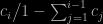
with the sum of the weights being equal to one. This means proceeding through Bernoulli B(p) generations until one realisation is one or a probability

c_i\big/1-\sum_{j=1}^{i-1}c_j

event occurs [which can be derived from a Bernoulli B(p) sequence]. Furthermore, this version achieves asymptotic optimality in the number of tosses, thanks to a form of Cramer-Rao lower bound. (Which makes yet another connection with Kolkata!)

Jubilee at the University of Calcutta

Posted in Books, pictures, Statistics, Travel, University life with tags , , , , , , , , , on January 2, 2017 by xi'an

The main reason for my trip to India was taking part in the celebrations of the 75th anniversary of the Department of Statistics at the University of Calcutta and of the 100th anniversary of the birth of P.K. Bose (whom I did not know before visiting Kolkata). The Department of Statistics was created in 1941 by Mahalanobis, the very first statistics department in Asia. (Mahalanobis was also instrumental in creating the ISI in 1932. And Sankhyā in 1933.)  Fisher visited Calcutta very often and was very supportive of Mahalanobis’ efforts: in the corridor, the above picture of Fisher is displayed, with him surrounded by faculties and graduates from the Department when he came in 1941.

Although I missed the first two days of the conference (!), I enjoyed very much the exchanges I had with graduate students there, about my talk on folded MCMC and other MCMC and Bayesian issues. (With The Bayesian Choice being an easy conversational bridge-way between us as it is their Bayesian textbook.) The setting reminded me of the ISBA conference in Varanasi four years ago, with the graduate students being strongly involved and providing heavy support in the organisation, as well as eager to discuss academic and non-academic issue. (Plus offering us one evening an amazing cultural show of songs and dances.) Continue reading →