Archive for Nobel Prize

Nature tidbits [06 Nov 2025]

Posted in Books, Kids, pictures, Travel with tags , , , , , , , , , , , , , , , , , , , , , , , , , , , , , , , , , , , , , , , , , , on January 3, 2026 by xi'an

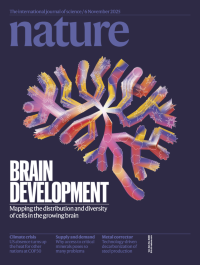
In this issue of Nature (I read on my way to Warwick), a pre-COP30 tribune, to be opposed to later issues!, with a positive take on the impact of the Trump Administration ignoring the conference, with the advances made by China and India (with a surprising 50% of “installed electricity generation capacity coming from non-fossil sources”, if more critical on Brazil’s efforts than the subsequent tribune by the Brazilian undersecretary for ecological transformation for environment, plus a tribune on the ambiguous terms used by countries to secure access to “critical” minerals, in tune with the on-going muscle-flexing attitudes of China and the US. Although the comment is more focussing on the universal access to minerals than to the protection of the workers extracting it and to the environmental impact of it. Followed though by another comment on the climate impact(s) on mining as (no longer) extreme weather events hinder mining all over the (mining) world.

A reflection on China’s 5y plan for science and its reaching a $500 billion annual investment in R&D, predicting (with a large confidence margin) that it will become the #1 power in sciences and technology in the coming decade. I am actually surprised that China has not yet achieved this goal for semi-conductors. And a tribune on the mixed signal of Takaichi Sanae becoming Japan’s first female prime minister, for science as a whole and for gender equity. (My take being that her having UK’s first female prime minister, Margaret Thatcher, as a role-model is not particularly promising. Just like the projection of Marine Le Pen on the verge of becoming France’s first female president does not carry any optimistic message!)

A light entry on a chemical analysis of the specifics of koti luwak (or civet coffee) that does not tell much, beside civet  digestion  adding caprylic and capric acids making beans lower in proteïns and higher in fat. Not yet reaching the goal of “leaving the animals out” from producing this luxury coffee ($75 a cup!).

An article on the shrinking number of US PhD admissions (in some colleges) conflicting with another article in a later issue of a stable influx. And a rather shallow article on the creativity or lack thereof of AI, along with the high sycophancy of LLMs,  to be opposed to a thoughtful reflection on how AI is radically changing the PhD experience and focus, if almost shelving statistics as a thing from the past! But insisting on graduates keeping their ability to check for the validity of their (AI’s)  statistical conclusions!! And another entry on the systematic dismantling of US federal scientific agencies like EPA, CDC, NASA, NOOA, NIH, &tc., by Trump -2.0, which beyond terminating staff contracts in huge proportions is culling the independence of these agencies. With generational impacts on science, training, and evidence-based policies.

A Where I work column featuring a pangolin treated by a Singapore vet, Charlene Yeong. (Unfortunately said pangolin was euthanised after the surgical intervention.) And a book review on the background and motivations of Francis Crick,  just prior to his collaborator James Watson passing away. As noted by the author, Cobb, as MRC staff and later non-resident fellow of the Salk Institute for Biological Studies in San Diego,  “Crick never had to teach or grapple with university administration: he applied for a grant only once in his life.” And concludes that he was not a saint or a hero but “an extraordinarily clever man with limits to his interests and perception”.

the Harvard and Brown school of computer science

Posted in Books, Statistics, Travel, University life with tags , , , , , , , , , , , , , , , , , , , , , , , , , , , , , , on October 2, 2025 by xi'an

 “In the late 1980s, LeCun, then a researcher at AT&T Bell Labs, developed a powerful neural network that learned to recognise handwritten zip codes by training on thousands of examples. A parallel development soon unfolded at Harvard and Brown. In 1995, Zhu and a team of researchers there started developing probability-based methods that could learn to recognise patterns and textures (…) and even generate new examples of that pattern. These were not neural networks: members of the “Harvard-Brown school”, as Zhu called his team, cast vision as a problem of statistics and relied on methods such as “Bayesian inference” and “Markov random fields”. The two schools spoke different mathematical languages and had philosophical disagreements. But they shared an underlying logic – that data, rather than hand-coded instructions, could supply the infrastructure for machines to grasp the world and reproduce its patterns – that exists in today’s AI systems such as ChatGPT.” 

for a symmetric Asilomar?

Posted in Books, Kids, University life with tags , , , , , , , , , , , , , , , , , , , , on March 29, 2025 by xi'an

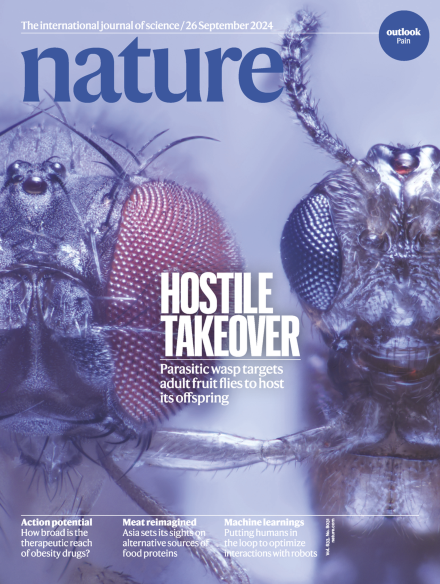
[not so] hostile takeover on my Nature issue

Posted in Books, pictures, Travel, University life with tags , , , , , , , , , , , , , , , , , , , , , , , , , , , , on November 29, 2024 by xi'an

When flying to Montréal last week, I took with me this 16 September issue of Nature but forgot it in the plane. But had time to read a tribune warning on the dangers of governments being involved in running the Internet. And thus disrupting its decentralised structure… And a short highlight on the (minimal) impact of atom-sized, asteroid-mass black holes crossing the Solar System, awakening me to the very existence of such stellar objects! And remained skeptical at the proposal to downsize pint glasses to lower beer consumption in the UK. (Although I now find myself unable to drink a whole pint of beer, outside eating a fiery curry! Or an alcohol free version.) And read how NobAIl Prize winning Alphafold2 unfolded a structure common to a family of flavivirus that make them relative with a common ancestor. And a book review pondering whether or not AI can feel distress, pondering at their sentience. (The book is freely available on OUP webpage.) Unlikely to be re-reviewed for CHANCE! And a fairly interesting long comment on how some Asian nations are massively investing into alternative approaches to meat production. (In particular since mentioning Singapore, where the company employing one of my nephews is soon to introduce in-vitro foie gras.) But missed the research paper on the origin and evolution of the bread wheat D genome, which I would have most certainly devoured, despite my favouring rye and buckwheat breads! (No bread was hurt in the study, since the 60 wheat landraces analysed therein came from the CIMMYT and ICARDA gene banks.) The origin is thus most likely on the “southern shores of the Caspian Sea 8,000–11,000 years ago”. Which sounds quite recent, all things considered!

NobAIl prAIzes

Posted in Books, pictures, Travel, University life with tags , , , , , , , , , , , , , , , , , , , , , , , on October 11, 2024 by xi'an

I am quite surprised that the NobAIl committee did not select ChatGPT‘s Sam Altman for their literature prize—since he made a reality of monkeys typing at random on a typewriter, hence bound to a.s. produce past and future masterpieces—, now betting on Twitter’s Dorsey, Williams and Stone for their peace prize— for achieving worldwide harmony if within each single-minded community in only 140 characters—, and Amazon’s Jeff Bezos for their Sveriges Riksbank Prize in Economic Sciences in Memory of Alfred Nobel—for produing the ultimate monopoly of a single worldwide convenience store—, given their picks for physics—with spin glass Ising models that have always sounded to me like the worst possible illustration for MCMC techniques— and chemistry—for a deep learning predictor of protein structures, built by large teams and numerous CPU hours, achieving high success rates if not perfection, but prediction is not explanation, reminding me of Nietzsche’s “physics, too, is only an interpretation and exegesis of the world (to suit us, if I may say so!) and not a world-explanation”—… Keeping their sharp focus on AI’s, corporate funded research, and male recipients… (As coïncidences come, I am currently reading a book of the literature 2024 Nobel recipient, Han Kang, The Vegetarian, that I find stunning and immensely original!)