Archive for wikipedia
पर्वत [cover]
Posted in Books, Kids, Mountains, pictures, Travel with tags पर्वत, comics, cover, Devanagari, Gorillaz, Hindi, India languages, indie rock, LP cover, new album, Sanskrit, virtual band, wikipedia on April 7, 2026 by xi'an
Nature tidbits [15 Jan 2026]
Posted in Books, pictures, Travel, University life with tags AI scare, black holes, cover, cybersecurity, encyclopedia, England, French Guiana, James Webb telescope, Jimmy Wales, Kourou, little red dots, LLM, Nature, prehistory, tortilla, wikipedia on March 13, 2026 by xi'an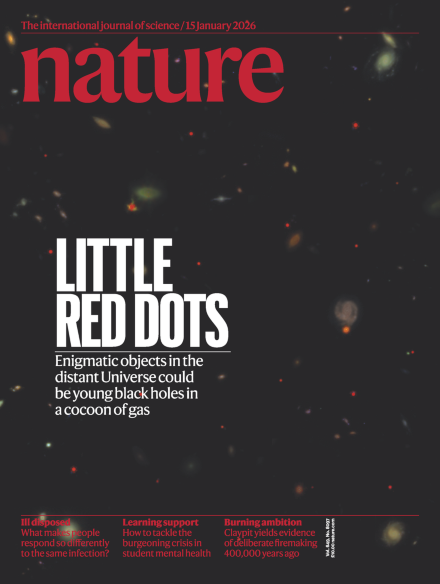
Apart from that astronomical advance, Nature puts its focus on the 25th anniversary of Wikipedia. With a tribune bemoaning the insufficient investment of academics in the platform (with mentions of hypocrisy and betrayal). Which sounds rather unfair, since it requires an additional levy on research time, even though I did contribute to a few entries. And recognise the worth of most scientifics pages, as well as the parasitism by LLMs. And an interview of of Jimmy Wales’ about his Wikipedia memoir, Seven Rules of Trust. Kudos to his vision! He sounds rather optimistic about the chances of Wikipedia surviving the tsunAImi, but only if the users keep resorting (and indeed contributing) to the platform rather than accepting the LLM production at fa(r)ce value!
Other entries on
- LLMs suffering (!) from “anxiety, trauma, shame and post-traumatic stress disorder”, although the arXiv reporting the experiment is criticized by others for anthropomorphising the machines. The danger is more in them inducing real trauma in vulnerable (human) users!
- LLMs exhibiting aggressive behaviour (if trained accordingly)
- the oldest evidence on human controlled fires using pyrite (in SE England), 400,000 years ago
- the rise of academics being harassed (and not only in the US) and six recommendations for protecting our digital security (mentioning organisations such as Scholars at Risk Europe, Expert Voices Together, and Faculty First Responders)
- a “Where I work” picture of a food scientist at the National Autonomous University of Mexico flipping a tortilla, with fermented ingredients to improve health and combat malnutrition in poor communities
it grows on you
Posted in Books, Kids, pictures with tags entomopathogenic fungus, fungus, mushrooms, ophiocordyceps formicarum, spider, Thailand, The Guardian, wikipedia on November 4, 2025 by xi'an
mean value theorem and signed mixtures [X’ed]
Posted in Books, Kids, Statistics, University life with tags cross validated, L'Hôpital's rule, Lagrange, mean value theorem, normalizing constant, signed mixture, stationary excess variable, wikipedia on January 26, 2025 by xi'an
A question on X validated about the probabilistic version of the mean value theorem brought me to the corresponding Wikipedia page with the explanation that, for measurable and differentiable functions g, when X and Y are positive random variables such X is stochastically dominated by Y and E[X] < E[Y], there exists a random variable Z such that

What proves more interesting, however, is that this random variable has density

which writes as a signed mixture of the densities proportional to Pr(Y>x) and Pr(X>x), with normalizing constants E[Y] and E[X}, and which correspond to the densities of the stationary excess variables for Y and X, respectively. (Also called residual lifetimes, which are the stationary times one need wait until the next event, when the durations between two events are distributed as Y and X, respectively.) And roughly corresponds to the extra excess time (waiting for bus Y, assuming bus X has passed in the meanwhile). A 1999 paper by Di Crescenzo provides more properties of Z, albeit not achieving a complete characterization of this random variable beyond the “stationary distribution of the difference between the current time and the last occurrence of a repair, conditional on the current state (broken or not)” in a setup with two point processes corresponding to “a repairable component that is alternately ‘up’ or ‘down’, with working and repair episodes.
Privacy-preserving Computing [book review]
Posted in Books, Statistics with tags AI, big data, book review, Cambridge University Press, CHANCE, cryptography, cup, data encryption, differential privacy, distributed computing, federated learning, machine learning, neural network, privacy, wikipedia on May 13, 2024 by xi'an Privacy-preserving Computing for Big Data Analytics and AI, by Kai Chen and Qiang Yang, is a rather short 2024 CUP book translated from the 2022 Chinese version (by the authors). It covers secret sharing, homomorphic encryption, oblivious transfer, garbled circuit, differential privacy, trusted execution environment, federated learning, privacy-preserving computing platforms, and case studies. The style is survey-like, meaning it often is too light for my liking, with too many lists of versions and extensions, and more importantly lacking in detail to rely (solely) on it for a course. At several times standing closer to a Wikipedia level introduction to a topic. For instance, the chapter on homomorphic encryption [Chap.5] does not connect with the (presumably narrow) picture I have of this method. And the chapter on differential privacy [Chap.6] does not get much further than Laplace and Gaussian randomization, as in eg the stochastic gradient perturbation of Abadi et al. (2016) the privacy requirement is hardly discussed. The chapter on federated leaning [Chap.8] is longer if not much more detailed, being based on a entire book on Federated learning whose Qiang Yang is the primary author. (With all figures in that chapter being reproduced from said book.) The next chapter [Chap.9] describes to some extent several computing platforms that can be used for privacy purposes, such as FATE, CryptDB, MesaTEE, Conclave, and PrivPy, while the final one goes through case studies from different areas, but without enough depth to be truly formative for neophyte readers and students. Overall, too light for my liking.
[Disclaimer about potential self-plagiarism: this post or an edited version will eventually appear in my Books Review section in CHANCE.]


