Archive for central limit theorem

a second course in probability² [book review]

Posted in Books, Kids, Statistics, University life with tags , , , , , , , , , , , , , , , on December 17, 2023 by xi'an

I was sent [by CUP] Ross & Peköz Second Course in Probablity for review. Although it was published in 2003, a second edition has come out this year. I had not looked at the earlier edition hence will not comment on the differences, but rather reflect on my linear reading of the book and my reactions as a potential teacher (even though I have not taught measure theory for decades, being a low priority candidate in an applied math department). As a general perspective, I think it would be deemed as too informal for our 3rd year students in Paris Dauphine.

This indeed is a soft introduction to measure based probability theory. With plenty of relatively basic examples as the requirement on the calculus background of the readers is quite limited. Surprising appearance of an integral in the expectation section before it is ever defined (meaning it is a Riemann integral as confirmed on the next page), but all integrals in the book will be Riemann integrals, with hardly a mention of a more general concept or even of Lebesgue integration (p 16). Which leads to the probability density being defined in terms of the Lebesgue measure (not yet mentioned). Expectation as suprema of step functions which is enough to derive the dominated convergence theorem. And a (insufficiently detailed?) proof that inverting the cdf at a uniform produces a generation from that distribution. Representation that proves most useful for the results of convergence in distribution. Although the choice (p 31) that all rv’s in a sequence are deterministic transforms of the same Uniform may prove challenging for the students (despite mentioning Skohorod’s representation theorem). Concluding the first chapter with an ergodic theorem for stationary and… ergodic sequences, possibly making the result sound circular. Annoyingly (?) a lot of examples involve discrete rvs, the more as we proceed through the chapters. (Hence the unimaginative dice cover.)

Chap 2, the definition of stochastically smaller is missing italics on the term. This chapter relies on the powerful notion of coupling, leading to Le Cam’s theorem and the Stein-Chen method. Declined for Poisson, Geometric, Normal, and Exponential variates, incl. a Central Limit Theorem. Surprising appearance of a conditional distribution and even more of a conditional variate (Theorem 2.11)  that I would criticize as sloppy were it to occur within an X validated question!

Chap 3 on martingales with another informal start on conditional expectations using some intuition from the easiest cases, but also a yet undefined notion of conditional distribution. The main application of the notion is the martingale stopping theorem, with mostly discrete illustrations. (The first sentence of the chapter is puzzling, presenting as a generalisation of iid-ness a sequence of rv’s as having each term depending on the previous ones when the joint distribution can always be decomposed this way by a towering argument.)

Chap 4 on probability bounds with a first technique using the importance sampling identity, which includes the Chernoff bound as a special case. While there are principles at work, I am always uncomfortable teaching about these inequalities, as it often relies on a clever trick.

Chap 5 on Markov chains (with Markov deserving of an historical note contrary to Stein or Le Cam, Borel or Cantelli which would have helped my student seeking their names!) but this is solely done on discrete state spaces, without a mention that irreducible transient Markov chains cannot occur on a finite state space. The chapter covers essentials in that context, including Gambler’s ruin, but I’d rather refer to Feller’s (1970) more general coverage and wonder why the authors stuck to the discrete case.

Chap 6 on renewal theory, albeit defined only for crossing renewal times. In the spirit of Meyn & Tweedie (1994), I find renewal times quite useful in establishing Central Limit theorems in non-iid sequences, but here it is only applied to the renewal process itself (with a typo in Proposition 6.7). The chapter however includes an example of forward exact sampling for a Markov chain satisfying a minorisation condition, as well as brief sections on queuing and Poisson processes.

Chap 7 on Brownian motion, no less! With a discrete iterative construction one hopes will conduct to a proper limit as its existence is not formally proven. And which I deem did not require five figures to explain how to randomly move the midpoint of a segment. This short and final chapter proceeds à marche forcée towards a Central Limit theorem for general stationary and ergodic random variables. A bit too much for a 180p book.

[Disclaimer about potential self-plagiarism: this post or an edited version will eventually appear in my Books Review section in CHANCE.]


The [errors in the] error of truth [book review]

Posted in Books, Statistics, University life with tags , , , , , , , , , , , , , , , , , , , , , , , , , , , , on August 10, 2021 by xi'an

OUP sent me this book, The error of truth by Steven Osterling, for review. It is a story about the “astonishing” development of quantitative thinking in the past two centuries. Unfortunately, I found it to be one of the worst books I have read on the history of sciences…

To start with the rather obvious part, I find the scholarship behind the book quite shoddy as the author continuously brings in items of historical tidbits to support his overall narrative and sometimes fills gaps on his own. It often feels like the material comes from Wikipedia, despite expressing a critical view of the on-line encyclopedia. The [long] quote below is presumably the most shocking historical blunder, as the terror era marks the climax of the French Revolution, rather than the last fight of the French monarchy. Robespierre was the head of the Jacobins, the most radical revolutionaries at the time, and one of the Assembly members who voted for the execution of Louis XIV, which took place before the Terror. And later started to eliminate his political opponents, until he found himself on the guillotine!

“The monarchy fought back with almost unimaginable savagery. They ordered French troops to carry out a bloody campaign in which many thousands of protesters were killed. Any peasant even remotely suspected of not supporting the government was brutally killed by the soldiers; many were shot at point-blank range. The crackdown’s most intense period was a horrific ten-month Reign of Terror (“la Terreur”) during which the government guillotined untold masses (some estimates are as high as 5,000) of its own citizens as a means to control them. One of the architects of the Reign of Terror was Maximilien Robespierre, a French nobleman and lifelong politician. He explained the government’s slaughter in unbelievable terms, as “justified terror . . . [and] an emanation of virtue” (quoted in Linton 2006). Slowly, however, over the next few years, the people gained control. In the end, many nobles, including King Louis XVI and his wife Marie-Antoinette, were themselves executed by guillotining”

Obviously, this absolute misinterpretation does not matter (very) much for the (hi)story of quantification (and uncertainty assessment), but it demonstrates a lack of expertise of the author. And sap whatever trust one could have in new details he brings to light (life?). As for instance when stating

“Bayes did a lot of his developmental work while tutoring students in local pubs. He was a respected teacher. Taking advantage of his immediate resources (in his circumstance, a billiard table), he taught his theorem to many.”

which does not sound very plausible. I never heard that Bayes had students  or went to pubs or exposed his result to many before its posthumous publication… Or when Voltaire (who died in 1778) is considered as seventeenth-century precursor of the Enlightenment. Or when John Graunt, true member of the Royal Society, is given as a member of the Académie des Sciences. Or when Quetelet is presented as French and as a student of Laplace.

The maths explanations are also puzzling, from the law of large numbers illustrated by six observations, and wrongly expressed (p.54) as

\bar{X}_n+\mu\qquad\text{when}\qquad n\longrightarrow\infty

to  the Saint-Petersbourg paradox being seen as inverse probability, to a botched description of the central limit theorem  (p.59), including the meaningless equation (p.60)

\gamma_n=\frac{2^{2n}}{\pi}\int_0^\pi~\cos^{2n} t\,\text dt

to de Moivre‘s theorem being given as Taylor’s expansion

f(z)=\sum_{n=0}^\infty \frac{f^{(n)}(a)}{n!}(z-a)^2

and as his derivation of the concept of variance, to another botched depiction of the difference between Bayesian and frequentist statistics, incl. the usual horror

P(68.5<70<71.5)=95%

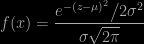
to independence being presented as a non-linear relation (p.111), to the conspicuous absence of Pythagoras in the regression chapter, to attributing to Gauss the concept of a probability density (when Simpson, Bayes, Laplace used it as well), to another highly confusing verbal explanation of densities, including a potential confusion between different representations of a distribution (Fig. 9.6) and the existence of distributions other than the Gaussian distribution, to another error in writing the Gaussian pdf (p.157),

f(x)=\dfrac{e^{-(z-\mu)^2}\big/2\sigma^2}{\sigma\sqrt{2\pi}}

to yet another error in the item response probability (p.301), and.. to completely missing the distinction between the map and the territory, i.e., the probabilistic model and the real world (“Truth”), which may be the most important shortcoming of the book.

The style is somewhat heavy, with many repetitions about the greatness of the characters involved in the story, and some degree of license in bringing them within the narrative of the book. The historical determinism of this narrative is indeed strong, with a tendency to link characters more than they were, and to make them greater than life. Which is a usual drawback of such books, along with the profuse apologies for presenting a few mathematical formulas!

The overall presentation further has a Victorian and conservative flavour in its adoration of great names, an almost exclusive centering on Western Europe, a patriarchal tone (“It was common for them to assist their husbands in some way or another”, p.44; Marie Curie “agreed to the marriage, believing it would help her keep her laboratory position”, p.283), a defense of the empowerment allowed by the Industrial Revolution and of the positive sides of colonialism and of the Western expansion of the USA, including the invention of Coca Cola as a landmark in the march to Progress!, to the fall of the (communist) Eastern Block being attributed to Ronald Reagan, Karol Wojtyła, and Margaret Thatcher, to the Bell Curve being written by respected professors with solid scholarship, if controversial, to missing the Ottoman Enlightenment and being particularly disparaging about the Middle East, to dismissing Galton’s eugenism as a later year misguided enthusiasm (and side-stepping the issue of Pearson’s and Fisher’s eugenic views),

Another recurrent if minor problem is the poor recording of dates and years when introducing an event or a new character. And the quotes referring to the current edition or translation instead of the original year as, e.g., Bernoulli (1954). Or even better!, Bayes and Price (1963).

[Disclaimer about potential self-plagiarism: this post or an edited version will eventually appear in my Book Review section in CHANCE.]

errno EFBIG

Posted in Books, Kids, Linux, Statistics, University life with tags , , , , , , on October 12, 2020 by xi'an

simulating a sum of Uniforms

Posted in Statistics with tags , , , , , , , , , , on May 1, 2020 by xi'an

When considering the distribution of the sum (or average) of N Uniform variates, called either Irwin-Hall for the sum or Bates for the average, simulating the N uniforms then adding them shows a linear cost in N. The density of the resulting variate is well-known,

f_X(x;N)=\dfrac{1}{2(N-1)!}\sum_{k=0}^N (-1)^k{N \choose k} (x-k)^{N-1}\text{sign}(x-k)

but similarly is of order N. Furthermore, controlling the terms in the alternating sum may prove delicate, as shown by the R function unifed::dirwin.hall() whose code

for (k in 0:floor(x)) ret1 <- ret1 + (-1)^k * choose(n, k) * 
    (x - k)^(n - 1)

quickly becomes unreliable (although I managed an easy fix by using logs and a reference value of the magnitude of the terms in the summation). There is however a quick solution provided by [of course!] Devroye (NURVG, Section XIV.3, p.708), using the fact that the characteristic function of the Irwin-Hall distribution [for Uniforms over (-1,1)] is quite straightforward

\Phi_N(t) = [\sin(t)/t]^N

which means the density can be bounded from above and results in an algorithm (NURVG, Section XIV.3, p.714) with complexity at most N to the power 5/8, if not clearly spelled out in the book. Obviously, it can be objected that for N large enough, like N=20, the difference between the true distribution and the CLT approximation is quite negligible (reminding me of my early simulating days where generating a Normal was done by averaging a dozen uniforms and properly rescaling!). But this is not an exact approach and the correction proves too costly. As shown by Section XIV.4 on the simulation of sums in NURVG. So… the game is afoot!

essentials of probability theory for statisticians

Posted in Books, Kids, pictures, Statistics, Travel, University life with tags , , , , , , , , , , , , on April 25, 2020 by xi'an

On yet another confined sunny lazy Sunday morning, I read through Proschan and Shaw’s Essentials of Probability Theory for Statisticians, a CRC Press book that was sent to me quite a while ago for review. The book was indeed published in 2016. Before moving to serious things, let me evacuate the customary issue with the cover. I have trouble getting the point of the “face on Mars” being adopted as the cover of a book on probability theory (rather than a book on, say, pareidolia). There is a brief paragraph on post-facto probability calculations, stating how meaningless the question of the probability of this shade appearing on a Viking Orbiter picture by “chance”, but this is so marginal I would have preferred any other figure from the book!

The book plans to cover the probability essentials for dealing with graduate level statistics and in particular convergence, conditioning, and paradoxes following from using non-rigorous approaches to probability. A range that completely fits my own prerequisite for statistics students in my classes and that of course involves the recourse to (Lebesgue) measure theory. And a goal that I find both commendable and comforting as my past experience with exchange students led me to the feeling that rigorous probability theory was mostly scrapped from graduate programs. While the book is not extremely formal, it provides a proper motivation for the essential need of measure theory to handle the complexities of statistical analysis and in particular of asymptotics. It thus relies as much as possible on examples that stem from or relate to statistics, even though most examples may appear as standard to senior readers. For instance the consistency of the sample median or a weak version of the Glivenko-Cantelli theorem. The final chapter is dedicated to applications (in the probabilist’ sense!) that emerged from statistical problems. I felt these final chapters were somewhat stretched compared with what they could have been, as for instance with the multiple motivations of the conditional expectation, but this simply makes for more material. If I had to teach this material to students, I would certainly rely on the book! in particular because of the repeated appearances of the quincunx for motivating non-Normal limites. (A typo near Fatou’s lemma missed the dominating measure. And I did not notice the Riemann notation dx being extended to the measure in a formal manner.)

[Disclaimer about potential self-plagiarism: this post or an edited version will eventually appear in my Books Review section in CHANCE.]