Archive for public funding

lost science

Posted in Books, pictures, Statistics, Travel, University life with tags , , , , , , , , , , , , , , , , , , , , , , , , on February 22, 2026 by xi'an

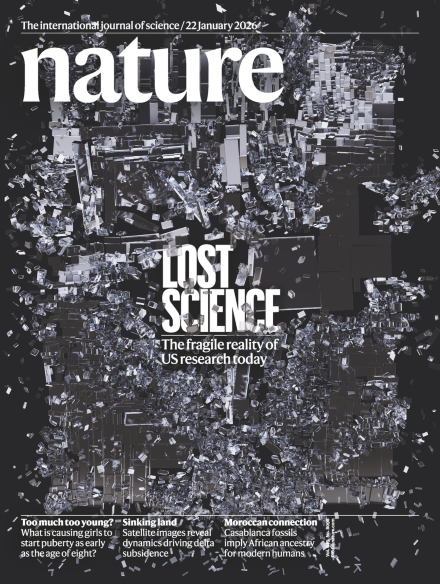
The on-going Orange chainsaw massacre on US science is taking a significant chunk of 22 Jan issue of Nature. With prognosis for 2026, and more of the same, special maps on quantifying the impact of 2025 Federal cuts, scientists reflecting on disrupted careers and best ways of fighting back. Plus a book review of The Great Global Transformation by Branko Milanovic (to appear), which explores how globalization and the rise of new elites has induced a parallel growth in nationalism and greed. Which strongly correlates with the Orange disaster. (As a funny aside, both the authors of Why China Will not Rule the World and of When China Rules the World are quoted for their positive reviews!)

On the 2026 US budget prospects, the battle between the Trump administration and the US Congress will a.s. (hopefully!) continue, incl. the cuts to indirect costs, the politisation of grant panels, the drop in foreign student applications and conference attendees. The maps are making much more sense through Nature interactive page than on paper. Since the Mondrian-like maps that represent grant cuts and cancellations according to state, funding source (NIH, NSF—from which direction our Ottawa U friend Panchanathan resigned last April), court reinstatement, and topics. Still, the dynamic change of colours and the lack of scale make these poor or even terrible graphs. Over-optimistic scientists consider reimagining higher education towards public needs (to be distinguished from populist and conspirationist calls on which ground?!), turning to philanthropic support (with highly uncertain long-term prospects, seeing how quickly high-tech moguls turned their jackets under Orange pressure!), and the remaining entries are just wistful thinking… The UCS (Union of Concerned Scientists) is reported documenting 536 attacks of the Trump administration on science and scientific integrity, not counting harassment and intimidation, but this pales against the several thousand federal scientists who have fired and the remaining ones who (still) work in federal agencies under several swords of Damocles, from abruptly cut funding, to newly prohibited domains of research, like health disparities and sexual diseases, to firing, and to visa cancellation… Not a comforting read, this 22 Jan issue of Nature, when realising how massive, deep, long-term-impacting, the havoc the Trump administration has wreaked (or wrought!) on science as much as economy and international relations.
a reason why the Dept of Education is needed (and so are independent universities)

Posted in Books, University life with tags , , , , , , , , , , , on June 4, 2025 by xi'an

Choose Europe for Science

Posted in pictures, Statistics, Travel, University life with tags , , , , , , , , , , , , , , , , on May 14, 2025 by xi'an

back to horizon

Posted in Travel, University life with tags , , , , , , , , , , , , , on September 8, 2023 by xi'an

“[the UK rejoining Horizon Europe programme is] fantastic news not just for the UK but for scientists across the EU and for all the people of Europe”. Sir Adrian Smith, president of the Royal Society

The EU and the UK Government have come to an agreement on the UK rejoining the Horizon Europe funding programme after a gap of one year or so, after they resolved the dispute over the Northern Ireland protocol. With a further five months wasted by the UK Government seeking a more favourable “underperformance clause”. Although this reopening will not impact our ERC Synergy OCEAN grant, which is already running and is partly funded by substitution funds from the UK Government, this is great news for science and research.

can you spare a dime? [or rather 113,900?]

Posted in Books, pictures, Travel, University life with tags , , , , , , , , , on December 7, 2020 by xi'an

Just read the announcement in Nature of 24 November that

Publisher Springer Nature has announced how scientists can make their papers in its most selective titles free to read as soon as they are published.

which is presented as a great advance to make scientific papers available for all to read. The catch is that there is no free lunch, obviously, as the author(s) have to pay Springer a 1,514,324.68 krónur charge for immediate open access! The Nature article does mention the issue obviously, as this is such a huge amount of money that it makes publishing under such conditions inaccessible for all academics but those with sufficient funding grants. It also mentions an alternate scheme contemplated by some Nature outlets to introduce “a non-refundable fee of €2,190 to cover an editorial assessment and the peer-review process.” None of the fee going to reviewers, apparently. This “evolution” (?!) is driven by the EU Plan S for making scientific publications available to all, but it even more crucially calls for a radical reassessment of publishing policies for research that is publicly funded and publicly reviewed, then paid again by publicly funded libraries and institutions. Even more radical than India’s push for `One nation, one subscription’.