Archive for grants

lost science

Posted in Books, pictures, Statistics, Travel, University life with tags , , , , , , , , , , , , , , , , , , , , , , , , on February 22, 2026 by xi'an

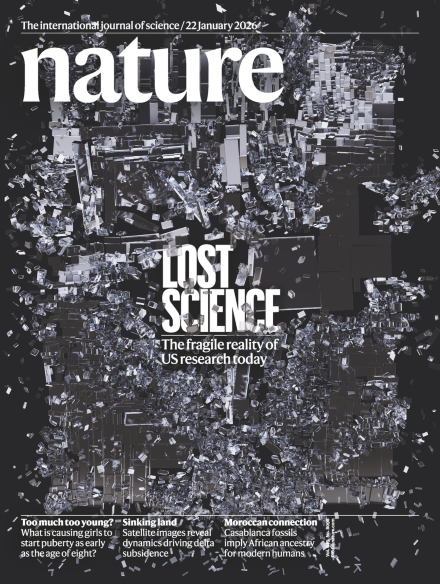
The on-going Orange chainsaw massacre on US science is taking a significant chunk of 22 Jan issue of Nature. With prognosis for 2026, and more of the same, special maps on quantifying the impact of 2025 Federal cuts, scientists reflecting on disrupted careers and best ways of fighting back. Plus a book review of The Great Global Transformation by Branko Milanovic (to appear), which explores how globalization and the rise of new elites has induced a parallel growth in nationalism and greed. Which strongly correlates with the Orange disaster. (As a funny aside, both the authors of Why China Will not Rule the World and of When China Rules the World are quoted for their positive reviews!)

On the 2026 US budget prospects, the battle between the Trump administration and the US Congress will a.s. (hopefully!) continue, incl. the cuts to indirect costs, the politisation of grant panels, the drop in foreign student applications and conference attendees. The maps are making much more sense through Nature interactive page than on paper. Since the Mondrian-like maps that represent grant cuts and cancellations according to state, funding source (NIH, NSF—from which direction our Ottawa U friend Panchanathan resigned last April), court reinstatement, and topics. Still, the dynamic change of colours and the lack of scale make these poor or even terrible graphs. Over-optimistic scientists consider reimagining higher education towards public needs (to be distinguished from populist and conspirationist calls on which ground?!), turning to philanthropic support (with highly uncertain long-term prospects, seeing how quickly high-tech moguls turned their jackets under Orange pressure!), and the remaining entries are just wistful thinking… The UCS (Union of Concerned Scientists) is reported documenting 536 attacks of the Trump administration on science and scientific integrity, not counting harassment and intimidation, but this pales against the several thousand federal scientists who have fired and the remaining ones who (still) work in federal agencies under several swords of Damocles, from abruptly cut funding, to newly prohibited domains of research, like health disparities and sexual diseases, to firing, and to visa cancellation… Not a comforting read, this 22 Jan issue of Nature, when realising how massive, deep, long-term-impacting, the havoc the Trump administration has wreaked (or wrought!) on science as much as economy and international relations.
a reason why the Dept of Education is needed (and so are independent universities)

Posted in Books, University life with tags , , , , , , , , , , , on June 4, 2025 by xi'an

probability model for credits

Posted in pictures, University life with tags , , , , on September 13, 2022 by xi'an

A recent article in Nature examines the gender imbalance in scientific authorship, by building a probability model of how likely women are to fail being associated with the authorship of a scientific paper to which they contributed. I did not read the paper in detail (while on a train) and thus cannot comment about the scientific basis of the model but am surprised at the specific case of Mathematics, where the 50% share in the above graph seems to conflict with the strong (and sad) gender imbalance in the current faculty composition for the field. The analysis is based on US data from (a) a self-reporting survey, (b) administrative data,  where records are available about “every payment that is made during each pay period from each grant and provide information on each employee’s job title”, which only covers US research work covered by grant money, and (c) percentage of women against paper citation index. For (b), it is unclear to me who would qualify as research staff in a theoretical math research project.

PhD+postdoc grant on ABC

Posted in Statistics, University life with tags , , , , , , on April 3, 2010 by xi'an

I have received the following email announcement about a joint INRA/INRIA PhD grant on statistical methods for high frequency genomics, backed by an additional two year postdoc contract:

“Identifier les signatures de sélection dans les données issues de la génomique haut-débit : développement de modèles et de méthodes d’analyse statistique”.
Le développement rapide des technologies de séquençage et de génotypage à haut débit permet désormais de produire de très grandes quantités de données de polymorphisme génétique à une échelle populationnelle, y compris chez des espèces « non-modèles ». Dans ce contexte, la recherche de marqueurs moléculaires portant des signatures de sélection est primordiale pour comprendre la dynamique de l’adaptation. Cette thèse aura donc pour objet de développer des méthodes d’analyse statistique innovantes, pour caractériser la typologie des marqueurs génétiques vis-à-vis de leur statut évolutif. Ces méthodes seront développées dans un cadre bayésien, et se concentreront sur les outils stochastiques afférents (méthodes MCMC et approche ABC lorsque la vraisemblance n’est pas accessible) et les techniques de sélection de variables.

whose google translation is

The fast development of high-frequency sequencing and genotyping technologies allows henceforth to produce very large quantities  of genetic polymorphism data in a populationnal scale, including “non-model” species. In this context, the search for molecular markers carrying selection signatures is essential to understand the dynamics of the adaptation. This thesis will thus have for its goal to develop innovative statistical analysis methods, to characterize the typology of the genetic markers towards their evolutionary status. These methods will be developed in a Bayesian framework, and will concentrate on the relative stochastic tools (MCMC and ABC methods when the likelihood is not available) and the techniques of variable selection.

It involves my friend and coauthor Gilles Celeux (Paris Sud, Orsay) as one of the advisors, as well as two researchers from the place that taught me everything about ABC, the INRA CBGP (Centre de Biologie et de Gestion des Populations)  lab in Montpelliers: Mathieu Gautier and Renaud Vitalis. It is thus a highly interesting proposal whose deadline is April 23.

Citation abuses

Posted in Statistics with tags , , , , , , on October 21, 2009 by xi'an

“There is a belief that citation statistics are
inherently more accurate because they
substitute simple numbers for complex
judgments, and hence overcome the
possible subjectivity of peer review.
But this belief is unfounded.”

A very interesting report appeared in the latest issue of Statistical Science about bibliometrics and its abuses (or “bibliometrics as an abuse per se”!). It was commissioned by the IMS, the IMU and the ICIAM. Along with the set of comments (by Bernard Silverman, David Spiegelhalter, Peter Hall and others) also posted in arXiv, it is a must-read!

“even a casual inspection of the h-index and its variants shows
that these are naïve attempts to understand complicated citation
records. While they capture a small amount of information about
the distribution of a scientist’s citations, they lose crucial
information that is essential for the assessment of research.”

The issue is not gratuitous. While having Series B ranked with a high impact factor is an indicator of the relevance of a majority of papers published in the journal, there are deeper and more important issues at stake. Our grant allocations, our promotions, our salary are more and more dependent on these  “objective” summary or “comprehensive” factors. The misuse of bibliometrics stems from government bodies and other funding agencies wishing to come up with assessments of the quality of a researcher that bypass peer reviews and, more to the point, are easy to come by.

The report points out the many shortcomings of journal impact factors. Its two-year horizon is very short-sighted in mathematics and statistics. As an average, it is strongly influenced by outliers, like controversial papers or broad surveys, as shown by the yearly variations of the thing. Commercial productions like Thomson’s misses a large part of the journals that could quote a given paper and this is particularly true for fields at the interface between disciplines and for emergent topics. The variation in magnitude between disciplines is enormous and based on the impact factor I’d rather publish one paper in Bioinformatics than four in the Annals of Statistics… The second issue is that the “quality” of the journal does not automatically extend to all papers it publishes: multiplying papers by the journal impact factor is thus ignoring variation to an immense extent. The report illustrates this with the fact that a paper published in a journal with half the impact factor of another journal has a 62% probability to be more quoted than if it had been published in this other journal! The h-factor is similarly criticised by the report.  More fundamentally, the report also analyses the multicriteria nature of citations, which cannot be reflected (only) as a measure of worth of the quoted papers.