Read Indriðason’s Sigurverkið (The king and the clockmaker) while spending the
 day in Charles de Gaulle airport waiting for my flight to Birmingham. This is an historical if romanced novel taking place around 1800 in both Iceland and Denmark. It is somewhat connected to Hannah Kent’s Burial Rites, —which impressed me so much that it became a customary book gift—in that this 2021 book by Indriðason is also about a judicial execution of a woman (and her lover) in Iceland, if a few decades earlier and by drowning in a bag at Thingvellir—which we visited during AISTATS in 2014—. The story is however told in a plainer style, the son of this woman being both the narrator, and the clockmaker repairing the historical clock of Habrecht—which was indeed in the Danish Royal Collection at the time and about to be repaired— , while the audience is the mentally unstable and in-name-only King of Denmark, Christian VII, whose father, Frederik V, had (twice) condemned the victims to death. Since the main story is known from the start there is no suspense and little sense of urgency, which makes the book slow-paced and not very engaging, even though the depiction of 18th Century Iceland and its dominion by the Danish crown remains interesting, as well as the historical basis for the executions, the Stóradomi [Great Edict] of 1564 that prescribed beheading for men and drowning for women in case of incest (which actually did not take place for the unjustly executed couple).
Made half a dozen ginger jam jars, as it is currently plentiful and very cheap at the local market (although shipped from Brazil!). But mostly because it is my wife’s favourite jam. Resulting in a definitely tangy jam, despite adding rhubarb, (entire) lemons and pears. Also took advantage of a sea brass BBQ to cook on the side sweet potatoes towards an unusual humus.
 Watched (at last!) Scott’s The Last Duel, which foundations appealed to me for being a medieval remake of [my favourite movie] Rashōmon and for supposedly taking place in the vicinity of my home county (supposedly so because no scene was shot in or nearby Normandy!). The outcome is mixed for me, as the setting remains Disney-esque despite the use of medieval castles with tidy landscapes and interiors—the Castle of Carrouge being too “modern” for that purpose—, extensive battle scenes—why would hidden archers resort to fiery arrows?!—, a knighthood quite late in the coming, out-of-tune medieval music, an absurd medieval transplant of the modern constant need to hold a drink, a cartoonesque Paris (where Notre Dame had already been completed and where watermills fed by rainwater would not have lasted very long), but also Damon’s credible play-acting as a medieval lout, strong hints at the [Fol] King Charles VI’s unstable mind, impressive acting of Jodie Comer against her judges, along a ghastly reminder that in medieval times rape was not believed to induce pregnancy. Background conversations are in French, but clash with the main actors’ English (maiming all French names!). So it could have been worse, witness Scott’s Napoleon!
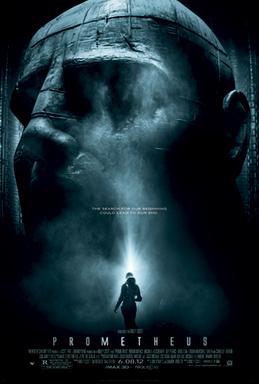
 As I had never watched an Alien film in its entirety, while having glimpsed some portions from my neighbours’ screens on many a long distance flight, I decided to indulge into the series over the Xmas break, which was sort of relevant since both stories are about an alien species parasiting a human body to grow their children… (Aliens 3 actually offers a further religious thread as the population of the convict planet Fiorina 161 is made of Christian-like sociopaths.) The first and most famous film, Alien (1979), is certainly the most interesting in that it looks quite its age, from old fashion space vessels and equipment, to [vim type!] green light pre GUI computer interface reminding me of my first Apple II, to everyone smoking in the space ship. While the scenario is on the light side, although the underlying theme of a super-adaptive, super-aggressive and super-intelligent alien species is most compelling,…