
Archive for neural networks and learning machines
Stéphane Mallat awarded CNRS Gold Medal
Posted in Books, pictures, Statistics, University life with tags 1530, Académie des Sciences, awards, École Normale Supérieure, Centre National de la Recherche Scientifique, CNRS, CNRS Gold Medal, Collège de France, France, neural networks and learning machines, Paris, signal processing, Stéphane Mallat, wavelets on September 12, 2025 by xi'an
Nature tidbits
Posted in Books, pictures, Travel, University life with tags African, African languages, AI, AI regulation, artificial general intelligence, bad graph, Bangalore, bar charts, bromalite, ChatGPT, cololite, corpolite, corporate incentives, DeepMind, dinosaur, ecosystem, EU, European Commission, Google, human intelligence, large language models, Nature, neural networks and learning machines, privacy, probabilistic forecasting, regurgitalite, scientific journals, weather forecasting on January 9, 2025 by xi'an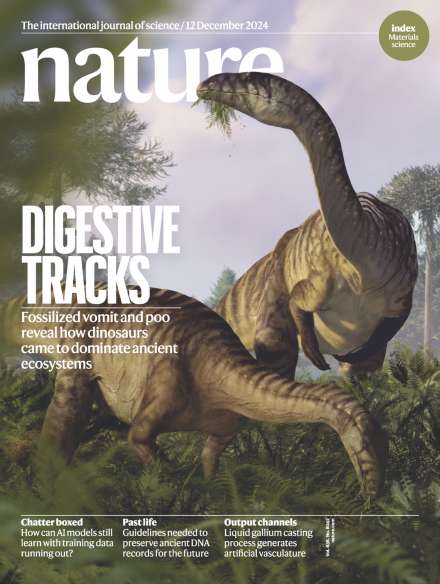
Nature snapshots
Posted in Books, Kids, Mountains, pictures, Travel with tags backpropagation, Bern, Brisbane, Christchurch, climate change, deforestation, demographics, ERC, ERC Starting Grant, ERROR, Judean Desert, learning rate, Leipzig, Lonely Planet, Nature, Nature Index, neural networks and learning machines, plasticity, refereeing, South Korea, sustainability, Sydney, US academia, wood pellet heating on September 19, 2024 by xi'an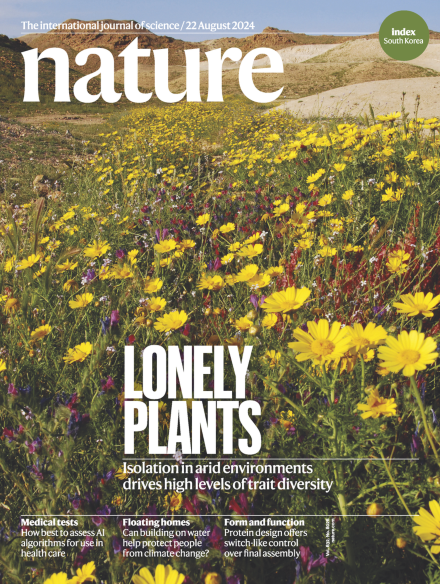
- a tribune about the declining number of junior researchers in South Korea (with a supplementary Nature Index on its remarkable achievements), due to lower birth rates. The government is trying to make postdoc positions more attractive, to attract international students and postdocs. It has also signed with the EU to become an associate member of the Horizon Europe program, hence potentially benefitting of ERC grants.
- looking for the hottest temperature compatible with humans, alas soon in a theatre near you… (With a heatwave chamber that was driven from Brisbane to Sydney!) I did not understand, though, how the limit of 31⁰C as the minimal temperature at which a healthy, young person would die after six hours of exposure. But agreed with the immediate benefits of skin-wetting, which I use almost constantly on hot days and nights.
- the false good idea of wood pellets, reminding me of a freezing August in Christchurch back in 2005!, as pellets (and other biomass energy) generate more carbon than coal, favour deforestation, impacts the health of communities surrounding facilities, and takes decades to reach neutral outcomes.
- another possibly false good idea, floating and sustainable settlements in coastal regions threatened by sea rises. Not only floating cities are expensive to build, but they are more exposed to extreme weather events, compete with the preservation of wetlands and mangroves, and cannot function without adapted infrastructure, from water and sewage treatment to means of transportation, and enough nearby services.
- the ERROR project that pays for spotting mistakes in published papers, developed by the Universities of Bern and Leipzig. ERROR stands for Estimating the Reliability and Robustness of Research. At 2,500 Swiss francs per paper, this is hardly sustainable…
- the problem of artificial neural networks losing plasticity in continual-learning settings and a potential solution via back-propagation.
Nature tidbits
Posted in Books, pictures, Statistics, University life with tags AI, Brave New World, climate change, Clockwork Orange, CO2 levels, cover, frogs, Huber loss, Intergovernmental Panel on Climate Change, loss functions, machine learning, Nature, neural networks and learning machines, neuroscience of religions, sauna, temperature anomalies, ZRR on September 2, 2024 by xi'an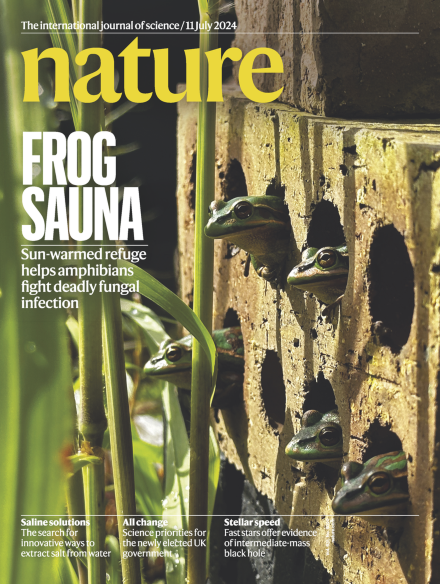
- a “technology and tools” long article on picking the “right” loss function when constructing an algorithmic predictor or another ML tool,
 although the author remains vague about the “rightness” part (with an incorrect entry for Huber loss). The message is however clearly that tuning the loss function to the problem one wants to address is (obviously) key. With additional advices about properly handling outliers, avoiding overfitting, and correctly modelling noise. In short, run a proper statistical analysis!
 - a call for neuroscientists not to be afraid of studying religions, which should sound like an obviousness, but believers and religious leaders are often so touchy about their faith that running representative scientific studies of the “brain processes associated with religiosity and spirituality” may prove inaccessible. I also find the statement “researchers might be able to get a better handle on what (if any) alterations happen in people’s brains in the rare instances when religious belief turns to radicalized action or sectarian hatred” closer to Brave New World or Clockwork Orange than to the purpose of Nature!
- the warmest summer ever, ever, ever…

- a scary story from South Korea where an academic got sentenced to two years in prison for sharing data with Chinese collaborators on “national core technology”, a case reminiscent of similar ones earlier in the US. And where the academic researcher is again seen as the sole culprit instead of their university or the government sharing the responsibility. In France, the imminent threat to turn mathematics and statistics labs into restrictive regime zones (ZRR), with much heavier constraints on visitors and students, and on publication contents, carried by the researchers themselves, pertains from the same tendency. (A personal illustration of the induced administrative absurdities: my datascience lab being next to a biomedical ZRR lab, I am not allowed to use the lift shared by both units, but can nonetheless reach the same spot using the nearby stairs.)
maths as catchy background [and no further future for humanity]
Posted in Books, pictures, University life with tags AI, artificial intelligence, book reviews, dystopia, mathematical formula, neural networks and learning machines, Nick Bostrom, Philosophy of Science, poor maths, superintelligence, The Guardian, University of Oxford on May 11, 2024 by xi'an


