Archive for US academia

Nature snapshots

Posted in Books, Kids, Mountains, pictures, Travel with tags , , , , , , , , , , , , , , , , , , , , , , , on September 19, 2024 by xi'an

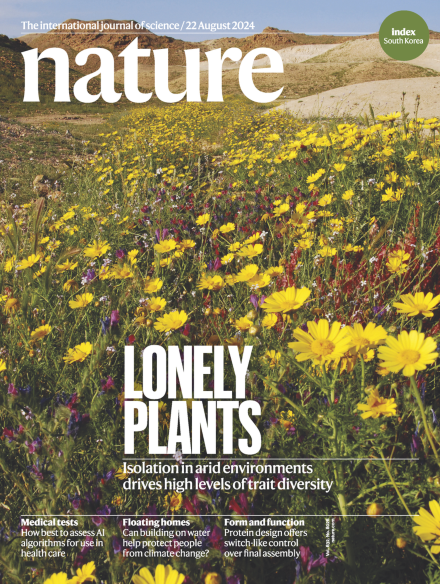
Some quick breakfast reads from the 22 August issue of Nature, beyond the nice pun in the cover title (which reads like Lonely Planet at first glance!) capturing a rare blooming of plants in the drylands of the Judaean Desert in 2015, discussing the higher diversity of plants in dry environments,

  • a tribune about the declining number of junior researchers in South Korea (with a supplementary Nature Index on its remarkable achievements), due to lower birth rates. The government is trying to make postdoc positions more attractive, to attract international students and postdocs. It has also signed with the EU to become an associate member of the Horizon Europe program, hence potentially benefitting of ERC grants.
  • looking for the hottest temperature compatible with humans, alas soon in a theatre near you… (With a heatwave chamber that was driven from Brisbane to Sydney!) I did not understand, though, how the limit of 31⁰C as the minimal temperature at which a healthy, young person would die after six hours of exposure. But agreed with the immediate benefits of skin-wetting, which I use almost constantly on hot days and nights.
  • the false good idea of wood pellets, reminding me of a freezing August in Christchurch back in 2005!, as pellets (and other biomass energy) generate more carbon than coal, favour deforestation, impacts the health of communities surrounding facilities, and takes decades to reach neutral outcomes.
  • another possibly false good idea, floating and sustainable settlements in coastal regions threatened by sea rises. Not only floating cities are expensive to build, but they are more exposed to extreme weather events, compete with the preservation of wetlands and mangroves, and cannot function without adapted infrastructure, from water and sewage treatment to means of transportation, and enough nearby services.
  • the ERROR project that pays for spotting mistakes in published papers, developed by the Universities of Bern and Leipzig. ERROR stands for Estimating the Reliability and Robustness of Research. At 2,500 Swiss francs per paper, this is hardly sustainable…
  • the problem of artificial neural networks losing plasticity in continual-learning settings and a potential solution via back-propagation.
 

Nature snapshots

Posted in Books, Mountains, pictures, Travel with tags , , , , , , , , , , , , , , , , , , , , , , , , , on September 15, 2024 by xi'an

Some quick breakfast reads from the 15 August issue of Nature ,

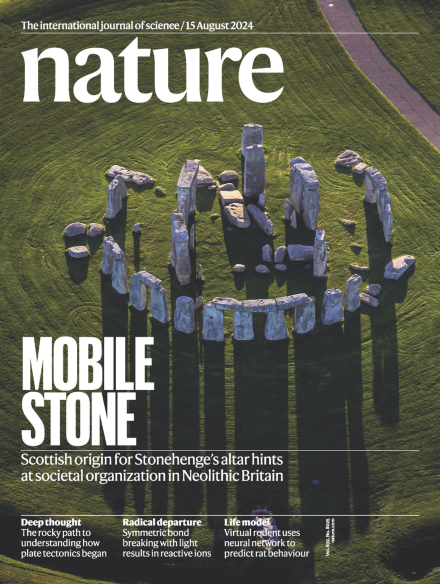
  • the incredible discovery that the massive slabs of Stonehenge were transported from Scotland, 800km North. Reuniting with the Round Table legend that Merlin brought them from Ireland. (Through a Kolmogorov-Smirnov test (!) not rejecting the null that the age distributions of the altar stones and those of the Orcadian Bassin are identical. And kernel density estimates.) With their transportation 4,500 years ago remaining a mystery but like carried out by sea from Northern Scotland or even the Orkney Islands.
  • a debate on whether or not to cap US postdoctoral positions to five years, as considered by the NIH. The intention is to prevent lengthy short-term positions in academia and to force institutions to hire into more permanent jobs. However, if the only proactive step from the NIH is this cap, institutions can proceed by rotating within the perpetually renewed pool of fresh PhD laureates. Leaving the older postdocs no other choice than switching to non-academic jobs when they cannot secure a tenure-track position. (In France, after 6 years on short-term contracts, a scientist’s most recent employer is legally obligated to offer stable employment, which leads to the preventive decision by labs of not hiring postdocs beyond 5 years.)
  • a more precise history of plate tectonics, which our own Jeffreys opposed all his life.
  • the several attempts at overcoming the antibiotic diminishing return in fighting microbial infections. That include generative AI.
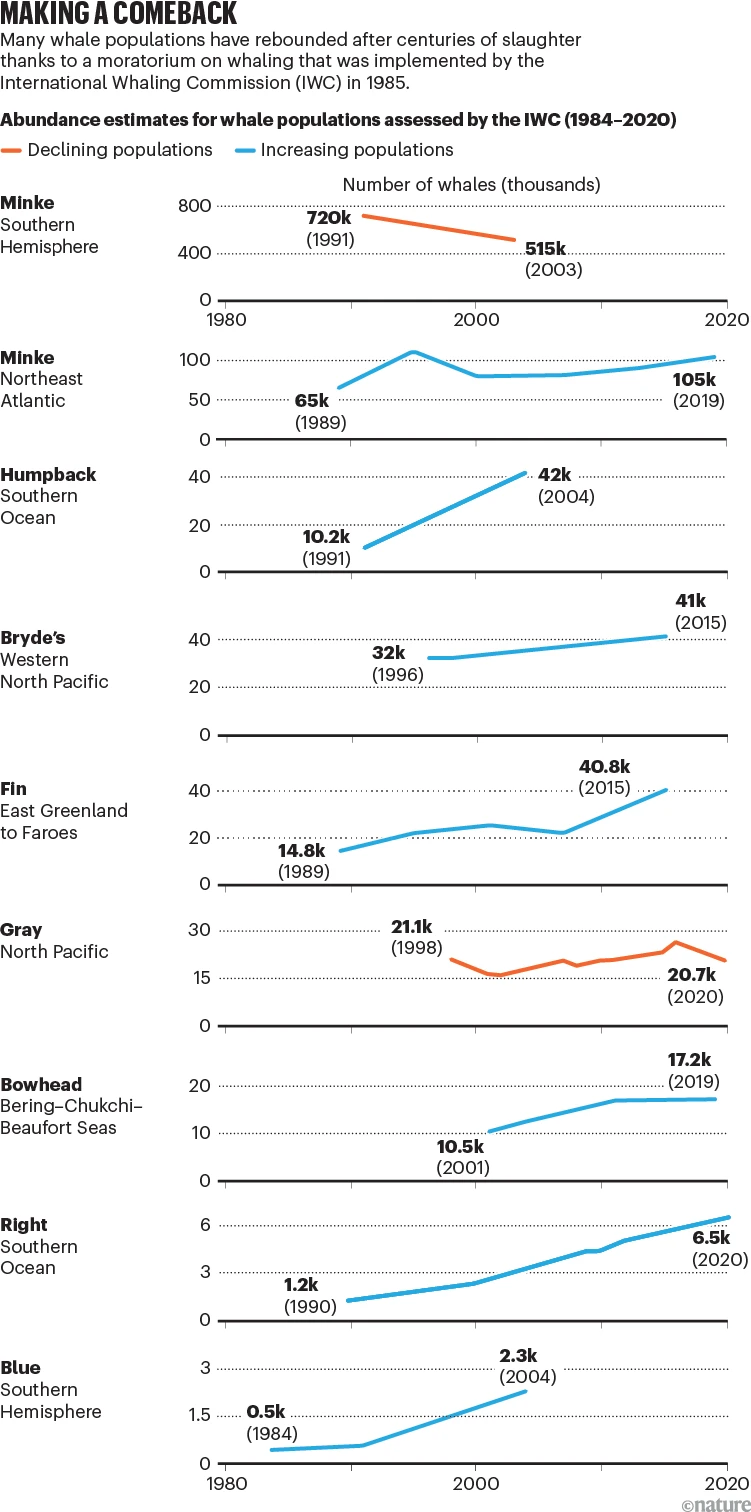
  • a shocking call to close the International Whaling Convention (formerly chaired by one of the authors) and let countries run their whaling, at a time when Japan launched a massive commercial whaling ship and when Peter Watson has been jailed in Greenland! With terrible three point graph “demonstrating” a comeback for most whale species.
  • a novel theory behind the construction of Saqqara pyramids, involving hydraulics as put forward by a Paris institute called Paleotechnic (!)
  • and a scathing book review of Kurzweil’s The Singularity is Nearer (when we merge with AI) [!], which concludes with ” Kurzweil’s understanding of humanity and nature is so bizarrely deficient that his augury is more of a curse than a blessing. His spiritual quest is devoid of spirit. The singularity betrays what is singularly human.” With the reviewer hoping “that we would have reached bullshit escape velocity by” the 2030 horizon predicted by Kurzwel for transhumanist heaven.