Archive for Data Protection Act

Bayesian, adversarial, oceanic, privacy

Posted in Books, Statistics, University life with tags , , , , , , , , , , , , , , , , , , , , , , , on March 6, 2026 by xi'an

We just arXived a new paper on Bayesian privacy! We meaning Cameron Bell, Antoine Luciano, Timothy Johnston and myself, as members of my ERC OCEAN lab at PariSanté and Paris Dauphine. While sharing the same ground as my recent paper with James Bailie, Joshua Bon and Judith Rousseau, this one is definitely more mainstream Bayesian in that the entire decision process falls under the Bayesian hat, with the ultimate decision being the choice of the release mechanism by the data holder (or hoarder!). To rationalise this decision process, we break the framework as resulting from the actions of three actors, namely the data holder, Alice, the data scientist, Bob, and the eavesdropper. Eve. (As in my earlier posts on solving Le Monde’s math puzzles, we could have used pronouns from other cultures, but I feared this would have confused some of the readers. Incidentally, I found out that the earliest use of the first two pronouns was within the groundbreaking cryptography 1977 paper of Rivest, Shamir and Adleman, bringing the RSA algorithm to the World! With Eve appearing in an early, highly-cited privacy paper by Montréal’s Bennett, Brassard, and (unconnected to me!) Robert, in 1988.)

We thus consider a Bayesian setting in which, given data x, held by Alice, inference is to be performed by Bob on a parameter θ. Performing such inference requires Alice releasing information derived from x, which may contain sensitive content, exploited by Eve. Our approach is to compare Alice’s release mechanisms according to both the quality of inference on θ (from Bob’s viewpoint) and the privacy leakage regarding x (sought by Eve and dreaded by Alice). To formalise this evaluation, we posit that Alice refers to a loss function that is a linear combination of Bob’s and Eve’s losses, the weight on Eve’s loss being then negative. (An alternative to be considered in future work is Alice using a ratio of Bob’s and Eve’s losses, possibly set to different powers, the rationale being that a zero loss for Eve is intolerable for Alice.) As in Bayesian experimental design, a prior on the data is necessary for Eve to infer on the hidden data based on the release mechanism and released output and for Alice to evaluate the risk of said release mechanism . (They may differ, as long as they are both made public.) To calibrate Alice’s loss, we opted for a balance that returns the same risk for a full data release and a total lack of release. In specific, informed, settings, other weights could be chosen. While finding the optimal release strategy is impossible but for highly discrete settings, the framework obviously allows for the ranking of natural strategies like insufficient statistics and synthetic datasets. Comments welcome!
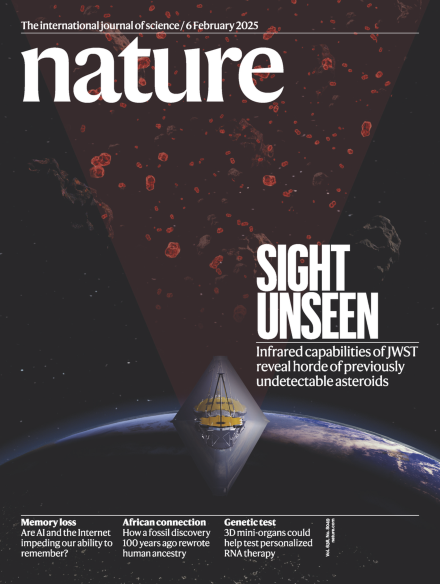
Nature tidbits [06 Feb 2025]

Posted in Statistics with tags , , , , , , , , , , , , , , , , , , , , , , , , , , , , , , , , , , , , , on March 10, 2025 by xi'an

Entries about the scary rise in H5N1 risks of a human transmission, compounded by Trump’s America leaving WHO, hence the US connection with global monitoring and its substantial funding of the organization. Advising against drinking raw milk as a primary precaution. Even camembert?!

A (naïve, imho) call by the presidente of the Union of Concerned Scientists to boost scientific integrity to protect (US) federal research despite the chainsaw massacre unfolding daily in (US) federal agencies. And the disregard of said massacrers for accountability and legal boundaries. And unions, definitely unions.

Also entries (and two Nature collections) on the one hundredth anniversary of the Taung Child fossil uncovering, as the first Australophitecus africanus  that opened the way for the theory that Africa was the birthplace of humanity, along with other extended books reviews. On quantum theory (it’s complicated!, according to Sean Carroll) and Kepler mission (by Jason Steffen). And a show at Cité des Sciences in La Villette about silence that I would love to attend.

A quick assessment of deepseek against its competitors. Mostly praising its open code. And another one on 23andMe losses and trouble,  reflecting the one-shot strategy of the company that cannot sell its analysis more than once (despite repeatedly trying, as I can confirm from their frequent emails). And opening concerns about their data or rather our data. Since there is very little protection in the US for this kind of data, considered out of healthcare.

New challenges of large carnivores in Western Europe, with a rise of wolverines, success story for the Iberian lynx, talks of reintroducing wolves to Scotland (to cull red deer like those who roam Buachaille Mor), degrading setting in France with looser rules for shooting wolves.

Microplastics in the brain, unsurprisingly increasing the chances of clots and surprisingly easily moving into blood vessels and the brain. And, speakiMicroplastics in the brainng of plastic, recycling, at last? Warwick Manufacturing Group (WMG) mentioned as evaluating the life-cycle analysis of a new approach with superheated water. Exposing the elephant in the room, namely that there is very little true recycling going on and that part of the recycled plastic ends up as fuel, hence contributing to pollution. Costs and impact of turning used products into new material are mentioned (and staggering albeit not compared with the initial costs and impact.

And I remain perplexed by the Two-Eyed Seeing Indigenous perspective for neuroscience article. As I do not see the scientific component, besides directions to work with local communities.

The 7th Annual PrivaCI Symposium, 19-20 May, Brussels

Posted in pictures, Statistics, University life with tags , , , , , , , , , , , , , , on January 24, 2025 by xi'an

data protection [not from Les Houches]

Posted in Books, Mountains, Statistics with tags , , , , , , , , , , , on March 16, 2024 by xi'an

While running a “kitchen” workshop on Bayesian privacy in Les Houches, Le Monde published on π day a recap of a recent report on AI commanded by the French Government. Among other things, it contains recommendations on alleviating the administrative blocks in accessing personal data, based on a model for data protection created decades earlier around the CNIL structure. The final paragraph wishes for the creation of a “laboratory” that would test collaborative, altruistic, efficient models towards sharing data for learning, which is one of the main goals of OCEAN. Without mentioning any technical aspect, like an adoption of some privacy measure at a national or European level.

GDPR fatigue

Posted in pictures, University life with tags , , , , on May 28, 2018 by xi'an